
A practical low-carb pantry contains staple foods that keep carbohydrate intake low while supporting regular meals, snacks and basic cooking. It should prioritise minimally processed ingredients over branded “keto” products, which often cost more and add little nutritional value. This guide outlines which cupboard, fridge and freezer items are worth keeping, how to read labels without confusion, and how to stock the pantry in a way that is flexible, affordable and easy to maintain.
Key takeaways
- Set a fixed daily or per-meal carb limit before buying any pantry item.
- Use UK labels to compare total carbohydrate per 100g, then check serving size.
- Stock staples that cover protein, fat and fibre for faster everyday low-carb meals.
- Choose shelf-stable dry goods and tins, but check for sweeteners and starch thickeners.
- Ignore front-of-pack claims and scan ingredients for syrups, maltodextrin, rice flour and starch.
- Skip pricey keto bars, mixes and supplements unless they fit regular meals.
- Organise shelves by meal function and rotate older stock forward first.
Set a Clear Carb Limit Before You Buy Anything
Set a firm daily or per-meal carb limit before you add a single item to your trolley. That number decides which foods belong in the pantry and stops “low-carb” marketing from doing the sorting for you.
Use a limit you can apply on labels, not a vague goal. In the UK, nutrition panels list carbohydrate per 100g and per serving, which makes products easy to compare. Check the total carbohydrate line first, then confirm whether the serving size is realistic. A cereal labelled low in sugar can still carry a high starch load, while sauces, soups and protein bars often hide more carbohydrate than their front-of-pack claims suggest.

Keep the rule simple enough to repeat every time you shop. A product that fits your limit can stay; one that exceeds it does not need a second look. If you want a benchmark, review guidance from the NHS and then set a stricter personal target only if it matches your health needs, budget and eating habits.
Stock Core Protein, Fat and Fibre Staples That Support Everyday Meals
Keeping a short list of reliable staples on hand makes low-carb meals quicker to assemble and less dependent on expensive speciality products. Build the pantry around foods that cover three jobs at once: **protein** for fullness, **fat** for cooking and flavour, and **fibre** to make meals more satisfying.
Start with practical basics such as tinned tuna or salmon, nut butters with no added sugar, olive oil, coconut milk, chia seeds, ground flaxseed, nuts, seeds, and low-sugar stock or broth. These foods work across breakfast, lunches, sauces, soups, and simple dinners, so they earn their shelf space more often than bars, shakes, or branded “keto” treats.
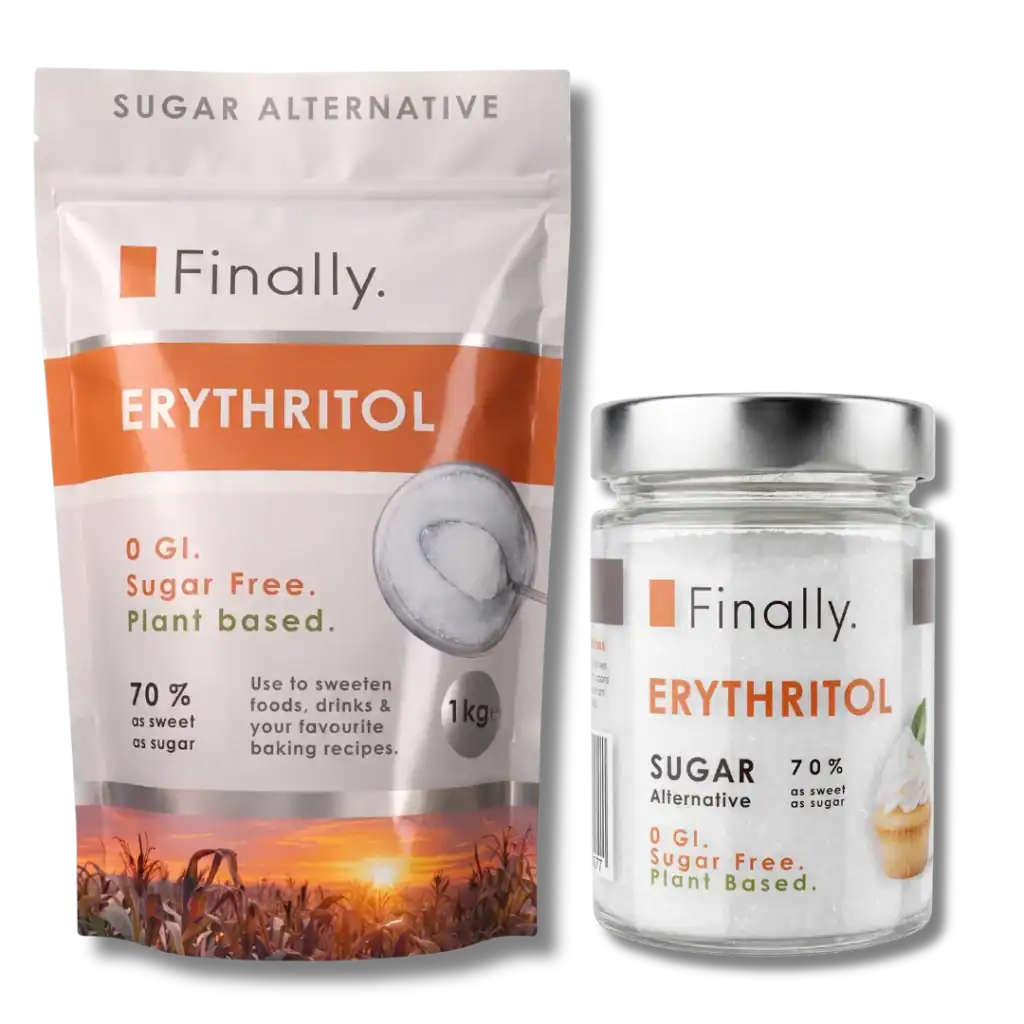
Sweet products fit best as supporting items, not pantry foundations. If you bake or sweeten yoghurt and drinks, keep a small supply from Healthy Sugar Alternatives. Erythritol can help with occasional recipes, but everyday meals stay more consistent when the core shelf stock supports cooking first.
Choose Low-Carb Dry Goods and Tinned Foods With Long Shelf Life
Short shelf life can turn a low-carb pantry into wasted stock, especially when niche products expire before use. Prioritise dry goods and tins that stay stable for months, then check ingredients before front-of-pack claims. Moisture, added sugars and starch thickeners shorten usefulness, even when a product looks suitable.
Choose plain tinned tomatoes in small amounts, coconut milk without sweeteners, olives, fish, and pulses if they fit your carb target in measured portions. For dry storage, keep chia seeds, ground flaxseed, unsweetened cocoa, nuts and baking ingredients with more than one use. Check sweeteners too: monk fruit suits drinks and baking, while a soft brown sugar alternative helps in sauces and baking where texture and colour matter.
This keeps the cupboard useful for everyday cooking, not just occasional recipes, and cuts impulse buys dressed up as essentials.

Read Labels Closely to Spot Hidden Sugars, Starches and Marketing Claims
The front of the pack sells the promise, but the ingredients list and nutrition panel tell the truth. Check total carbohydrate per 100g first, then scan for sugar, honey, syrups, maltodextrin, dextrose, rice flour, potato starch and modified starch.
Keep it simple. Compare similar products side by side, ignore vague claims such as “keto-friendly” or “no added sugar”, and check serving sizes that make carb counts look smaller. If a sweetener is included, confirm that it fits your plan. Products made with Stevia may suit a low-carb pantry better than versions built around sugar or starch fillers.
Do not assume savoury foods are low in carbs. Sauces, nut mixes, spice blends and tinned soups often contain hidden thickeners or sugars. Short ingredient lists often make better pantry choices, and repeated label checks will show which brands stay consistent.
Skip Expensive Trend Products That Add Cost Without Much Use
Food costs drop and pantry waste falls when you skip trendy low-carb products that solve no real problem. Most packaged “keto” bars, biscuits, baking mixes and sweet spreads cost more than whole foods, yet offer small portions, short shelf life and limited use elsewhere.
Keep speciality items only if they fit regular meals. Almond flour can make sense if you bake often. MCT oil, exogenous ketones and branded snack packs rarely do, because they raise costs without replacing staples such as eggs, tinned fish, nuts, seeds and olive oil.
Use a simple test: if a product does not support two repeat meals each month, leave it on the shelf. That rule limits impulse buys and keeps more of the budget for ingredients used across the week.
Organise Your Pantry Around Simple Meal Building and Regular Stock Rotation
Arrange the pantry by meal function, not package type. Keep everyday fats, proteins, sauces, seasonings and low-carb sides in fixed zones so you can build meals fast without searching every shelf. Put the foods you use most at eye level, and group items that work together, such as tinned fish with olive oil, vinegar and spices.
This layout cuts waste and friction. Use simple first-in, first-out rotation: move older stock forward, place new stock behind it, and check date labels monthly. Clear jars or open-front bins help, but visibility and regular use matter more than storage gadgets.
If space is tight, one shelf with labelled sections works well. Keep speciality products from Keto Shop separate from daily staples so occasional items do not crowd out the foods you reach for each week.
Frequently Asked Questions
Which pantry staples support a practical low-carb diet without relying on speciality products?
Base it on everyday foods: tinned fish, eggs, nuts, seeds, olive oil, vinegar, herbs, spices and stock. Add low-sugar essentials such as passata, coconut milk and nut butter. Keep beans, lentils and oats only if they fit your carb target and portion them carefully.
How can you read ingredient labels to spot hidden sugars and starches in low-carb pantry foods?
“Low-carb” on the front does not guarantee a low-carb ingredient list. Check total carbohydrate per serving, then scan ingredients for sugar, maltodextrin, starches, syrups and flours near the top. Compare serving sizes as well, since small portions can make sugary products appear lower in carbs.
What are the best low-carb alternatives to flour, pasta and rice for everyday cooking?
Stock almond flour, coconut flour and flaxseed meal for baking, then keep courgetti, shirataki noodles and cauliflower rice for quick meals.
These swaps cut starch sharply and cover most everyday uses. Almond flour works for coating and cakes, while vegetable and konjac-based options suit stir-fries, bowls and side dishes.
How can you build a low-carb pantry on a budget without buying heavily marketed products?
Keep cost as the main filter. Build around cheap, naturally low-carb staples such as eggs, tinned fish, frozen vegetables, plain yoghurt, nuts, seeds and dried herbs.
Skip branded bars, shakes and “keto” snacks. Buy own-label basics, compare unit prices, and cook simple meals from whole ingredients.
Which shelf-stable fats, seasonings and snacks are worth keeping in a low-carb pantry?
Three pantry staples do most of the work: stable fats, unsweetened seasonings and simple low-carb snacks. Keep olive oil, coconut oil or ghee, plus salt, pepper, dried herbs, spices and mustard.
For snacks, choose nuts, seeds, pork rinds and olives. Skip flavoured products with added sugar, starches or seed-oil-heavy coatings.
Collagen supplements may support skin elasticity and joint comfort, but the evidence varies widely by type, dosage, and the health outcome measured. Research separates hydrolysed collagen peptides, which the body absorbs more readily, from other forms with weaker supporting data. This article reviews what clinical studies show about efficacy, which populations may benefit most, and where the evidence remains inconclusive.
Key takeaways
- Hydrolysed collagen is a pre-broken protein. The gut absorbs it like any other amino acid source.
- Controlled trials found that daily doses of 2.5g to 10g improved skin hydration and elasticity.
- Studies recorded reductions in joint pain and stiffness in patients with mild to moderate osteoarthritis.
- Most trials run for under 24 weeks and include fewer than 100 participants, which limits broader conclusions.
- Manufacturer-sponsored studies dominate the published evidence, which raises concerns about industry bias.
- Products need to include vitamin C, because it is required for collagen synthesis in connective tissue.
- Women over 45 and athletes with tendon issues show the clearest measurable benefits.
What Collagen Supplements Actually Contain and How the Body Processes Them
Check the label on almost any collagen supplement and you will find hydrolysed collagen, also called collagen peptides. Manufacturers break whole collagen protein into short amino acid chains through a process called hydrolysis. This makes the molecules small enough to absorb through the gut lining. Standard dietary protein goes through the same breakdown during digestion, so the supplement simply delivers that step in advance.
Once absorbed, those amino acids enter the bloodstream alongside amino acids from any other protein source. The body does not send them directly to skin, joints, or cartilage. Cells draw on the available amino acid pool and use it wherever demand is highest. Physiological need determines that demand, not supplement origin. Collagen is rich in glycine, proline, and hydroxyproline. These are the specific amino acids fibroblasts use to synthesise new collagen tissue. Whether that abundance influences output is where the evidence, reviewed by sources like Health Help, becomes genuinely contested.
Skin, Joint, and Bone: What Clinical Research Has Found
| Area | What the article says |
|---|---|
| Skin | Shows the most consistent gains, with modest but statistically significant improvements in hydration and elasticity across multiple trials. |
| Joint | Some trials report reduced discomfort in osteoarthritis and exercise-related pain, but study quality is variable and direct human evidence is limited. |
| Bone | Has the weakest evidence, with only small trials in postmenopausal women suggesting possible benefit when combined with calcium and vitamin D. |
Skin hydration and elasticity show the most consistent gains in collagen supplementation trials. A 2019 systematic review published in the Journal of Drugs in Dermatology examined 11 randomised controlled trials. It found that daily doses of 2.5g to 10g of hydrolysed collagen improved skin hydration and elasticity compared with placebo over 8 to 24 weeks. The effect size was modest but statistically significant across multiple studies.
Joint outcomes are less consistent. Several trials in people with osteoarthritis and exercise-related joint pain report reduced discomfort after 3 to 6 months of supplementation, though study quality varies considerably. Researchers propose that circulating collagen peptides stimulate cartilage cells to produce more extracellular matrix, but direct evidence for this in humans remains limited.
Bone density has the weakest evidence of the three. A small number of trials in postmenopausal women suggest collagen peptides may slow bone mineral density loss when combined with calcium and vitamin D, but sample sizes are too small to draw firm conclusions. Larger, longer trials are needed before bone health becomes a well-supported claim for these supplements.
Where the Evidence Falls Short
Most collagen trials run for 8 to 24 weeks and include fewer than 100 participants. That makes it hard to apply the findings broadly. Small samples also increase the chance that positive results reflect chance rather than a genuine effect, and whether benefits persist beyond trial periods remains unconfirmed.
A significant proportion of published trials are sponsored by supplement manufacturers. That can introduce bias in study design and outcome reporting. Independent replication of commercially funded findings remains limited, and peer review does not fully neutralise that influence.
Outcome measures also vary considerably between studies. Researchers assess skin elasticity, joint pain, and biomarker levels with different tools, which makes direct comparison unreliable. The Cochrane Collaboration has not produced a systematic review on hydrolysed collagen supplementation, signalling the evidence has not reached that threshold. Claims around gut health, hair growth, and cognitive benefits have the least rigorous clinical support.
How Supplement Quality and Dosage Affect Results
- Hydrolysed collagen peptide content is clearly stated.
- Daily dose falls within the 2.5g to 10g range used in supporting trials.
- Vitamin C is included, which is required for collagen synthesis in connective tissue.
- The product makes it easy to distinguish peptide content from total protein weight.
- Total protein weight may be highlighted instead of actual peptide content.
- Anything below 2.5g per serving falls outside the range where the article says evidence begins.
- Source and peptide molecular weight vary between products.
- Products without vitamin C may underdeliver relative to clinical trial doses.
Peptide molecular weight, source (bovine, marine, or porcine), and vitamin C content vary between products. Since vitamin C is required to synthesise collagen in connective tissue, products without it often underdeliver relative to clinical trial doses.
Trials supporting skin and joint benefits used 2.5g to 10g of hydrolysed collagen daily. Check the label for peptide content, not just total protein weight. The two figures often differ, and anything below 2.5g per serving falls outside the range where measurable effects were observed.
Dose alone is not enough. Timing and consistency matter as well. Taking collagen with vitamin C supports the enzymatic reactions that convert proline into hydroxyproline, a key structural component of collagen fibres. Irregular use disrupts the steady peptide supply that evidence suggests is necessary for tissue-level changes.
UV exposure, smoking, and chronic stress each accelerate collagen degradation or suppress synthesis. No supplement offsets these factors if they go unaddressed. Third-party tested products carrying NSF or Informed Sport certification give greater confidence that stated peptide content matches the label.
Who Is Most Likely to Benefit from Collagen Supplementation
Skin and joint outcomes tend to shift most in people whose collagen synthesis is already declining. Natural production drops from the mid-twenties onward and accelerates after menopause. That is why women over 45 show the clearest measurable changes in skin elasticity trials.
Clinical trials recorded meaningful reductions in stiffness and pain in people with mild to moderate osteoarthritis, and in athletes with tendon and ligament stress. Results were strongest when people took collagen with vitamin C around 30 minutes before exercise.
People with low animal protein intake may absorb peptides less efficiently. Gut microbiome disruption can reduce uptake further. Addressing hormone balance alongside supplementation may improve the baseline environment for collagen synthesis in perimenopausal and postmenopausal women.
Younger adults without joint pathology or significant skin changes have the least clinical support for supplementation. Existing evidence reflects populations with measurable deficits. In that group, dietary protein from bone broth, fish, or egg whites delivers the same amino acid precursors without the supplement cost.
Frequently Asked Questions
What does current research show about the benefits of collagen supplements?
Evidence supports modest benefits for skin elasticity and joint comfort when collagen is taken consistently over 8 to 12 weeks. Clinical trials show the strongest results for hydrolysed collagen peptides. The gains are real, but they are incremental rather than transformative.
Which types of collagen supplements have the strongest evidence behind them?
Hydrolysed collagen peptides (Types I and III) have the strongest clinical support. Most trials that show benefits for skin elasticity and joint comfort use this form. Type II collagen, typically from chicken cartilage, has separate evidence for joint-specific outcomes.
How long does it usually take to see results from collagen supplements?
Use it consistently every day for at least 8 to 12 weeks before you assess any change. Skin hydration and elasticity usually show the earliest shifts, typically from week 8 onwards. Joint comfort often takes longer to improve, with some studies noting effects after 12 to 24 weeks of supplementation.
Are collagen supplements safe, and who should avoid taking them?
Most healthy adults tolerate collagen supplements well at standard doses of 2.5–15g daily. Side effects are uncommon, but some people may notice mild digestive discomfort. People with fish, shellfish, or egg allergies should check the source carefully, since many products derive collagen from these ingredients. Anyone with kidney disease or taking medication should consult a doctor before use.
Can collagen supplements improve skin, joints, and bones, or are the effects limited?
Clinical trials lasting 8–24 weeks show measurable gains in skin hydration and elasticity. Evidence also supports joint pain reduction, especially for osteoarthritis and exercise-related discomfort. Studies suggest bone benefits as well, but results are less consistent across studies. Skin and joint applications remain the stronger evidence-backed uses.
Vitamin D deficiency affects an estimated one in five people in the UK. That makes it one of the most common nutritional shortfalls in the country. The UK’s northern latitude limits sunlight exposure for much of the year, which reduces the skin’s ability to synthesise the vitamin naturally. This article examines why deficiency is so widespread, which groups face the greatest risk, and what the evidence says about diet, supplementation, and public health guidance.
Key takeaways
- UVB rays are too weak for vitamin D synthesis in the UK from October to April.
- People with darker skin tones face higher deficiency risk due to reduced UVB absorption.
- Adults over 65 produce less vitamin D because skin synthesis capacity declines with age.
- Persistent fatigue, bone pain, and muscle weakness are the most consistent deficiency symptoms.
- The NHS recommends 10 micrograms (400 IU) daily for adults through autumn and winter.
- Those who rarely go outdoors or cover their skin should supplement year-round.
- Oily fish provides the highest dietary vitamin D, but diet alone rarely meets daily needs.
Why the UK Climate Makes Vitamin D Deficiency Almost Inevitable
Check your latitude before you rely on sunlight for vitamin D synthesis. The UK sits between 50° and 60° North. At that latitude, UVB rays do not reach the Earth’s surface at sufficient intensity for roughly seven months of the year, from October through to April. During those months, no amount of time outdoors will trigger meaningful vitamin D production in the skin, regardless of how sunny the day feels.
Summer does not remove the problem. Cloud cover, air pollution, and the UK’s famously overcast skies can reduce UVB exposure well below what skin needs. The UK Health Security Agency estimates that a significant proportion of the population has low vitamin D levels by the end of winter. Researchers see a similar pattern with other micronutrients: like magnesium, vitamin D deficiency is not a niche concern but a widespread population-level gap driven by geography and modern indoor lifestyles.
Who Is Most at Risk of Low Vitamin D in the UK
| Group | Why risk is higher |
|---|---|
| People with darker skin tones | Higher melanin reduces UVB absorption, so more sun exposure is needed to produce equivalent vitamin D. |
| Adults over 65 | Ageing skin synthesises less vitamin D, and reduced mobility or indoor time can further limit exposure. |
| Pregnant and breastfeeding women | Requirements are elevated, increasing the chance of low status without supplementation. |
| Infants | Breast milk provides very little vitamin D, which is why supplements are recommended in early life. |
| People who cover most of their skin | Limited skin exposure reduces opportunities for vitamin D synthesis. |
| Indoor workers | Daylight hours are often spent inside, restricting UVB exposure regardless of season. |
Darker skin tones need significantly more sun exposure to produce equivalent vitamin D levels because higher melanin concentrations reduce UVB absorption. In the UK’s already limited sunlight conditions, this raises the risk of deficiency for people of South Asian, African, and Caribbean heritage.
Adults over 65 face a separate physiological limit. The skin’s capacity to synthesise vitamin D declines with age, so older adults produce less even under identical sun exposure. Reduced mobility and more time spent indoors add to the problem, and this group consistently shows lower serum levels in national surveys.
Pregnant and breastfeeding women have elevated requirements. Infants fed exclusively on breast milk receive very little vitamin D through feed alone. The NHS recommends supplements for all babies from birth to age one for this reason. People who cover most of their skin for cultural or religious reasons, and those who work indoors during daylight hours, also have limited opportunity for synthesis regardless of season.
How to Recognise the Signs of Vitamin D Deficiency
Vitamin D deficiency rarely shows itself clearly. Its symptoms overlap with many common conditions, so low levels often go unnoticed for months or even years until a blood test confirms the cause.
The most consistent physical signs are persistent fatigue, bone or muscle pain, and general weakness. Vitamin D regulates calcium absorption, so without adequate levels, bones lose density and muscles contract less efficiently. In adults, lower back pain and aching joints are particularly common.
Mood changes, including low mood and increased irritability, are linked to vitamin D’s role in serotonin regulation. Some research also links prolonged deficiency to impaired immune function. Frequent infections or slow recovery from illness can act as indirect indicators.
The only reliable way to confirm deficiency is a 25-hydroxyvitamin D blood test, available through a GP or privately. The NHS considers levels below 25 nmol/L deficient and levels between 25 and 50 nmol/L insufficient for most adults. Symptoms alone are not diagnostic, so testing is the only route to an accurate picture of your status.
What the NHS Recommends for Vitamin D Supplementation
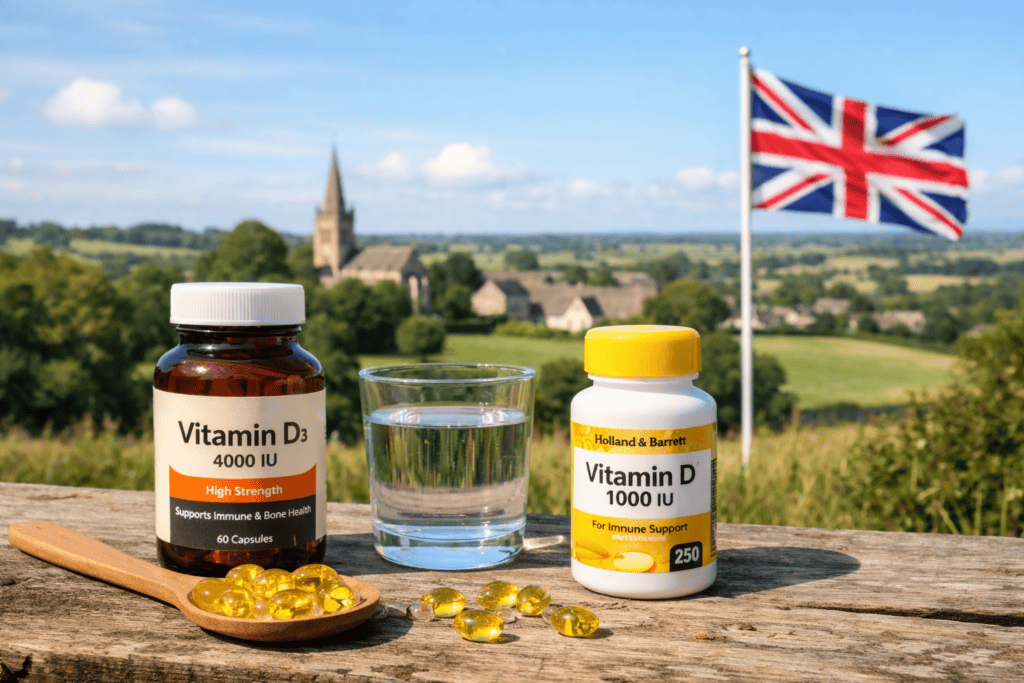
The NHS advises adults and children over four to take 10 micrograms (400 IU) of vitamin D daily through autumn and winter. People who rarely go outdoors, cover most of their skin, or have darker skin tones should take the same dose year-round.
Infants from birth to one year need 8.5 to 10 micrograms daily, unless they drink more than 500ml of formula, which is already fortified. Children aged one to four need 10 micrograms daily. If a blood test confirms deficiency, a GP may prescribe higher amounts.
Vitamin D3 (cholecalciferol) raises blood levels more effectively than D2 (ergocalciferol), so it is the standard clinical choice. Take it with a fat-containing meal because vitamin D is fat-soluble.
A common mistake is stopping supplementation once symptoms ease or summer arrives. Blood levels can drop again within weeks, particularly in high-risk groups. Sustained intake above 100 micrograms per day risks hypercalcaemia, a condition caused by excess calcium in the blood. Stick to 10 micrograms daily unless a clinician advises otherwise.
Food Sources and Lifestyle Changes That Support Vitamin D Levels
Diet cannot match sunlight, but it can build a useful baseline. Oily fish such as salmon, mackerel, and sardines provide the highest dietary concentrations of vitamin D3. Eggs and liver contribute smaller amounts. Reaching 10 micrograms through diet alone requires deliberate choices across most meals.
Fortified cereals, plant-based milks, and some dairy products can help close part of the gap, though levels vary by brand. Vegans depend mainly on fortified foods and supplements, since D2 from UV-exposed mushrooms absorbs less efficiently than D3.
Between April and September, time outdoors from 11am to 3pm with forearms and lower legs exposed supports skin synthesis. Brief, regular sessions work better than occasional longer ones. Maintaining a healthy body weight also matters, as vitamin D is fat-soluble and becomes less available when stored in excess adipose tissue.
These strategies support health year-round, but they do not replace supplementation in autumn and winter, when UVB synthesis stops entirely across the UK. The Health and Wellbeing Blog covers evidence-based approaches to combining diet, sun exposure, and supplementation across different life stages.
Frequently Asked Questions
Why is vitamin D deficiency so common in the UK?
The UK’s latitude means sunlight is too weak to trigger vitamin D synthesis in skin for roughly six months of the year. Few foods contain meaningful amounts naturally. Combined with time spent indoors, this makes deficiency the default for a large share of the population without supplementation.
Who is most at risk of low vitamin D levels in the UK?
Risk is highest among people who get little direct sun exposure. This includes older adults, those with darker skin tones, people who cover most of their skin outdoors, and anyone housebound or living in care. Pregnant women, infants, and people with conditions affecting fat absorption also face elevated risk.
How much vitamin D do adults and children in the UK need?
Adults and children over one year old need 10 micrograms (400 IU) of vitamin D daily, according to NHS guidance. Children under one year need 8.5–10 micrograms. The UK government recommends supplements for most people, particularly during autumn and winter when sunlight is too weak to trigger adequate skin synthesis.
What are the signs and health effects of vitamin D deficiency?
Many cases produce no obvious symptoms until deficiency becomes severe. Fatigue, bone pain, muscle weakness, and low mood are the most reported effects. Prolonged deficiency raises the risk of osteomalacia in adults, rickets in children, and may impair immune function.
When should people in the UK take vitamin D supplements?
From October through to March, UK sunlight lacks the UVB intensity needed for the skin to produce vitamin D. The NHS recommends 10 micrograms daily throughout this period for most adults. People with darker skin tones, limited sun exposure, or those who are housebound should supplement year-round.
After 40, men’s nutritional needs begin to shift as testosterone declines, muscle mass reduces, and metabolism slows. These changes affect how the body processes protein, fat, and micronutrients, and they tend to build over time. This article covers the key biological changes, the nutrients that become more important, and ways to adjust daily intake to support long-term health, body composition, and energy levels.
Key takeaways
- After age 40, reduce daily calorie intake by roughly 100 calories per decade.
- From around age 30, men lose 3–5% of muscle mass per decade, which reduces resting metabolism.
- Consume at least 1.6g of protein per kilogram of bodyweight each day to limit muscle loss.
- Spread protein across three to four meals to strengthen the muscle protein synthesis response.
- After 40, Vitamin D deficiency is directly linked to reduced testosterone and faster muscle loss.
- When lowering calories, cut refined carbohydrates and alcohol before reducing protein or vegetables.
- The Mediterranean dietary pattern has the strongest evidence for long-term health in men over 40.
How Male Metabolism Shifts After 40 and What Drives It
Cut your daily calorie intake by roughly 100 calories per decade after 40. Resting metabolic rate declines as lean muscle mass falls. From around age 30, men lose between 3% and 5% of muscle mass per decade, a process called sarcopenia, which directly reduces the energy the body burns at rest.
Testosterone levels fall by approximately 1% per year after 35. That slows protein synthesis and makes muscle harder to retain, even with consistent training. Lower testosterone also pushes the body towards storing fat, particularly around the abdomen, which further suppresses metabolic activity.
Insulin sensitivity also tends to decrease after 40, so cells respond less efficiently to glucose. That raises the risk of blood sugar spikes and encourages fat storage, especially when carbohydrate intake stays unchanged from younger years. Sleep quality can make this worse. Poor or fragmented sleep, including the kind that causes men to wake up repeatedly overnight, elevates cortisol, which accelerates muscle breakdown and worsens insulin resistance the following day.
Muscle Loss, Testosterone, and the Role of Protein Intake
Men over 40 who consume less than 1.6g of protein per kilogram of bodyweight daily lose measurably more muscle mass than those who meet or exceed that threshold, according to research in the British Journal of Nutrition. As testosterone falls, each meal triggers a weaker muscle protein synthesis response. Older muscle then needs a stronger stimulus to rebuild after exercise.
Spread protein across three to four meals instead of saving most of it for dinner. Aim for 30 to 40g of high-quality protein in each serving to trigger the leucine-driven anabolic response. Eggs, Greek yoghurt, lean meat, and whey protein meet this standard efficiently. Plant-based sources deliver lower leucine per gram, so men following a plant-forward diet should target closer to 2.0g per kilogram to offset reduced bioavailability.
Resistance training strengthens the effect of higher protein intake. Without a mechanical stimulus, elevated consumption offers limited protection against sarcopenia. Two to three progressive resistance sessions per week, combined with adequate daily protein, give the body the conditions it needs to maintain lean mass through midlife hormonal changes.
Micronutrients That Become Critical in Your 40s and Beyond
| Nutrient / factor | Why it matters in older men | What the article says affects it |
|---|---|---|
| Vitamin D | Linked to testosterone production and muscle retention | Skin thins with age and kidneys convert it to its active form less readily |
| Magnesium | Supports testosterone synthesis and insulin sensitivity | Age reduces gut absorption and elevated cortisol increases urinary losses |
| Zinc | Essential for testosterone and immune function | Phytates in wholegrains and legumes reduce absorption and it competes with calcium |
| Microbiome | Supports B-vitamin synthesis, mineral absorption, and inflammation control | Age-related microbial decline can reduce what the diet delivers |
Most men eating a broadly adequate diet still run low on several micronutrients after 40. Absorption becomes less efficient, and physiological demand shifts. Vitamin D synthesis drops as skin thins with age, and the kidneys convert it to its active form less readily. Low vitamin D is directly linked to reduced testosterone production and faster muscle loss.
Magnesium drives over 300 enzymatic reactions, including those that govern testosterone synthesis and insulin sensitivity. Age reduces gut absorption, while elevated cortisol increases magnesium excretion through urine. Zinc follows a similar pattern. It is essential for testosterone and immune function, but phytates in wholegrains and legumes reduce its absorption, and it competes directly with calcium.
The microbiome sits beneath all of this. Gut bacteria synthesise B vitamins, regulate mineral absorption, and influence systemic inflammation. Age-related microbial decline means even a micronutrient-rich diet delivers less than it should. Fermented foods and dietary fibre help address the absorptive bottleneck, not just the dietary gap.
Adjusting Calorie Intake Without Sacrificing Energy or Performance
Eating fewer calories after 40 does not mean settling for lower energy. It means changing where those calories come from. The 100-calorie-per-decade reduction addresses the metabolic shift, but the quality of the remaining calories determines whether performance holds.
Cut refined carbohydrates and alcohol first, not protein or vegetables. Both add calories with limited hormonal or structural benefit. Removing two alcoholic drinks weekly to create a 200-calorie deficit costs nothing in muscle, energy, or recovery.
Place the largest carbohydrate portions within two hours of training sessions. This keeps glycogen available when needed. It also reduces the chance that those calories convert to fat during inactivity.
The most common error is cutting total food volume instead of adjusting food composition. Smaller portions of the same diet can create micronutrient shortfalls on top of a calorie deficit. That compounds the absorption issues that worsen after 40. Tracking intake for two to four weeks using MyFitnessPal gives an accurate baseline before making reductions and prevents accidental protein and magnesium shortfalls.
Dietary Patterns Linked to Long-Term Health in Older Men
Men who eat regular, structured meals built around whole foods, lean protein, and fibre show measurably slower rates of cardiovascular disease, type 2 diabetes, and cognitive decline. Three daily meals that each contain protein help stabilise blood glucose and reduce cortisol spikes that accelerate muscle breakdown and abdominal fat accumulation.
For men over 40, the Mediterranean dietary pattern has the strongest evidence base. It centres on oily fish, legumes, olive oil, vegetables, and whole grains, while limiting red meat to two or three portions per week. These foods reduce systemic inflammation, which rises with age and drives joint deterioration, arterial stiffening, and insulin resistance. Chronic stress amplifies that inflammatory load, so dietary consistency becomes especially important during high-pressure periods.

Alcohol above 14 units per week suppresses testosterone, disrupts sleep architecture, and adds calories with no hormonal benefit. Men with persistent fatigue or poor concentration should also review the signs of burnout, since nutritional deficits and exhaustion often compound each other.
Cohort data from the BMJ shows that ultra-processed foods raise cardiovascular risk independently of total calorie intake. Swapping crisps for nuts, white bread for sourdough, and sugary cereals for oats reduces that risk without a complete dietary overhaul. Over time, small, sustained substitutions compound into meaningful health outcomes.
Frequently Asked Questions
How do nutritional needs change for men after age 40?
As muscle mass declines and metabolism slows, calorie needs drop. Protein, vitamin D, calcium, and magnesium become both harder to absorb and more important to maintain. Processed carbohydrates and saturated fats also carry greater cardiovascular risk than in younger years, so food quality matters more than quantity.
Why does muscle mass tend to decline in men over 40, and how can diet help?
From around age 30, testosterone levels fall gradually. That weakens the signals that trigger muscle protein synthesis. The result is sarcopenia, a steady loss of muscle tissue that speeds up without resistance training. Eating 1.6–2.2g of protein per kilogram of bodyweight daily, spread across meals, gives muscles the raw material they need to maintain and rebuild.
Which nutrients deserve more attention in a diet for men over 40?
Prioritise protein, vitamin D, magnesium, and omega-3 fatty acids. Muscle loss speeds up after 40, and protein helps counter it directly. Vitamin D and magnesium support testosterone production and bone density, both of which decline with age. Omega-3s help manage cardiovascular risk, which rises steadily through midlife.
How does metabolism change after 40, and what does that mean for daily calorie intake?
From age 40 onward, resting metabolic rate typically falls by 1–2% per decade, driven largely by gradual muscle loss. With less muscle, the body burns fewer calories at rest. As a result, most men need to reduce daily intake by 100–200 calories compared to their 30s, unless they actively build or maintain muscle through resistance training.
What eating habits support heart, bone and prostate health in men over 40?
After 40, the same dietary changes can support three organ systems at once. Oily fish twice weekly supports cardiovascular function and reduces arterial inflammation. Calcium-rich foods combined with vitamin D protect bone density. Limiting red meat and increasing tomato-based foods containing lycopene is associated with lower prostate cancer risk.
Waking up at 3am often reflects a disruption in the normal sleep cycle, commonly linked to stress, blood sugar changes, hormones, alcohol, medication, or sleep disorders. An occasional early waking episode is common, but repeated waking at the same time can point to a pattern worth examining. This article explains the most likely causes, when the timing may signal an underlying issue, and which symptoms suggest a need for medical advice.
Key takeaways
- Keep a two-week sleep diary to track triggers, patterns and repeated 3am waking.
- Sleep is lighter around 3am, so heat, reflux, pain or a full bladder can wake you.
- Stress often extends time awake after 3am by keeping the nervous system too alert.
- Cortisol should stay low at night, but stress can shift that pattern and disrupt sleep.
- Repeated 3am waking can signal fragmented sleep, even when total sleep time seems normal.
- Track sleep continuity, morning alertness and daytime function for two weeks to judge sleep quality.
- Seek medical help if waking lasts weeks or comes with snoring, choking, reflux, pain or low mood.
Common Sleep Cycle Changes That Trigger 3am Wake-Ups
Keep a two-week sleep diary with bedtime, wake time, alcohol, caffeine, stress, room temperature and any 3am waking. It helps separate a one-off disturbance from a repeat pattern.
Around 3am, many people spend more time in lighter sleep than earlier in the night. Sleep pressure has dropped, so smaller triggers can wake you fully. A warm bedroom, a full bladder, reflux, pain, anxiety or low blood sugar can all break sleep then.
Hormones shift across the night. Cortisol starts rising in the early morning to prepare the body for waking, and stress can make that rise feel stronger. Oestrogen and progesterone changes can also lighten sleep, especially during perimenopause and menopause.
Digestion can play a part. Late meals, alcohol and spicy food raise the chance of reflux when you are lying flat. Ongoing digestive symptoms may also point to a broader issue worth reviewing, including the gut microbiome.
If 3am waking happens most nights for more than a few weeks, look for the trigger before changing everything. Move your evening meal earlier, cut alcohol for a week, keep the bedroom cool and avoid checking the time. If you also snore loudly, gasp in sleep, sweat heavily or feel exhausted in the day, ask a GP to assess sleep apnoea, reflux or hormone-related sleep disruption.
Stress, Cortisol and Night-Time Alertness Around 3am
Higher stress levels often mean longer periods awake after a 3am waking, not just more frequent waking. The most useful first step is to look at stress and arousal patterns across the whole day, because night-time alertness often reflects a nervous system that has stayed switched on into the evening.
Cortisol, a hormone that helps regulate alertness, normally falls at night and rises again towards morning. When stress remains high, that pattern can shift enough to make a brief wake-up feel sharp and fully alert. Racing thoughts, a faster heart rate and a sense of being “wide awake” at 3am often fit this pattern more closely than simple sleep disruption.
This explanation fits best when 3am waking appears alongside daytime anxiety, ongoing pressure, poor wind-down habits or irregular sleep hours. Guidance from the NHS and sleep advice from the Sleep Foundation both point to stress reduction, steady sleep timing and a calmer pre-bed routine as practical ways to reduce night-time arousal.
Other causes still fit in some cases. Alcohol, pain, reflux, medication effects and menopause can also trigger waking around this time, and they may overlap with stress rather than replace it. If 3am waking comes with snoring, choking, low mood, panic symptoms or persists for weeks despite routine changes, a GP review is the sensible next step.
Medical and Lifestyle Factors Linked to Waking at 3am
Not every 3am waking points to stress. Medical and lifestyle factors can interrupt sleep at the same time night after night. The key question is whether the waking follows a body signal such as pain, airway blockage, reflux, hormonal change or a substance effect.
Sleep is easier to break in the second half of the night, so underlying problems often show up then. Obstructive sleep apnoea can trigger brief awakenings when the airway narrows. Acid reflux may worsen during sleep. Chronic pain, menopause-related hot flushes, thyroid overactivity and some medicines, including steroids and certain antidepressants, can also raise night waking.

Lifestyle factors can create the same pattern through a different route. Alcohol may help with sleep onset, but it fragments sleep later as blood alcohol levels fall. Caffeine taken in the afternoon or evening can still block adenosine several hours later. Nicotine stimulates the body, and heavy evening meals can worsen reflux and discomfort.
Repeated 3am waking can feel mysterious but often has a clear cause. If it comes with loud snoring, choking, chest burning, drenching sweats, regular pain, or a recent medication change, review it with a GP or sleep specialist. The NHS and the Sleep Foundation both list these as recognised causes of broken sleep.
What Repeated 3am Wake-Ups Can Reveal About Sleep Quality
- A repeat pattern rather than a one-off disturbance
- That sleep is becoming easier to break in the second half of the night
- Possible links with stress, reflux, pain, hormones, alcohol or medication effects
- Whether daytime exhaustion or other symptoms point to a broader sleep-quality problem
- That stress is always the cause
- That one bad night means a chronic sleep issue
- That changing everything at once is the best response
- That symptoms such as snoring, gasping or choking should be self-diagnosed without GP review
Repeated 3am wake-ups often point to fragmented sleep, even when total sleep time looks normal. The key question is not just how often you wake, but how restored you feel the next day. Heavy fatigue, poor focus, irritability or a strong need for caffeine can signal falling sleep quality before sleep hours drop.
Check three markers for two weeks: sleep continuity, morning alertness and daytime function. Note how long it takes to fall back asleep, whether you wake more than once, and how you feel in the first hour after getting up. A simple 1 to 5 rating for energy, mood and concentration can reveal patterns.
Then look for signs that sleep becomes shallow later in the night. Dry mouth can suggest mouth breathing or snoring. Morning headaches can point to poor overnight breathing. A racing mind on waking may fit chronic stress, while unrefreshing sleep despite enough time in bed can justify a clinical review.
The most common mistake is judging sleep quality by clock time alone. Eight hours in bed does not guarantee deep or uninterrupted sleep. Avoid changing several habits at once, keep bedtime and wake time steady, and seek medical advice if repeated 3am waking comes with loud snoring, gasping, chest discomfort, low mood or daytime sleepiness that affects driving or work.
When to Seek Help for Frequent 3am Waking
Sleep often improves once the cause of repeated 3am waking is found and treated, but ongoing disruption needs medical review when it affects daytime function, mood or safety. Seek help if it lasts more than a few weeks, returns often, or comes with loud snoring, choking, chest discomfort, reflux, pain, low mood or severe anxiety.
A GP will usually assess timing, frequency and related symptoms, not the wake-up time alone. This helps separate insomnia from sleep apnoea, reflux, depression, perimenopausal symptoms, medication effects or restless legs. If poor sleep habits or chronic stress drive the problem, structured changes often help, including a steadier sleep schedule, less evening alcohol and a better wind-down routine. The wider health impact is covered in why sleep is underrated.
Urgent assessment is sensible if night waking appears with breathing pauses, sudden weight loss, fainting, severe night sweats, suicidal thoughts or dangerous daytime sleepiness. Sleep clinics may arrange tests such as home sleep apnoea monitoring or actigraphy, which tracks sleep and movement over several days. If worry about sleep has become part of the problem, cognitive behavioural therapy for insomnia, often called CBT-I, has stronger evidence than sleeping tablets for long-term improvement.
Bring a two-week record of bedtimes, wake times, symptoms, caffeine, alcohol and medicines to the appointment. Clear notes can speed up the right treatment.
Frequently Asked Questions
Why do I keep waking up at 3am every night?
Repeated 3am waking often points to disrupted sleep cycles, stress, anxiety, alcohol, caffeine, or a bedroom that is too warm, bright, or noisy. It can also happen during lighter sleep in the early morning hours. If it lasts for weeks or comes with snoring, breathlessness, pain, or low mood, speak to a GP.
Is waking up at 3am a sign of stress or anxiety?
Not always. Waking at 3am can reflect stress or anxiety, especially if your mind feels alert, worried, or restless, but it can also stem from alcohol, caffeine, sleep apnoea, pain, hormones, or normal sleep-cycle changes. If it happens often or affects daytime function, it is worth discussing with a GP.
Can blood sugar, hormones, or sleep cycles cause waking at 3am?
Track the timing for one to two weeks and discuss repeated 3am waking with a clinician if it persists. Blood sugar dips, shifts in cortisol or other hormones, and normal sleep-cycle transitions can all trigger brief awakenings. Stress, alcohol, and late meals can make these wake-ups more noticeable.
When does waking up at 3am suggest an underlying sleep disorder or health issue?
Seek medical advice if waking at 3am happens at least three times a week for several weeks, or leaves you tired in the day. It can point to insomnia, sleep apnoea, anxiety, depression, reflux, pain, or hormone changes. Loud snoring, gasping, early waking with low mood, or night sweats need prompt review.
What can help stop waking up at 3am and make sleep more consistent?
Adults need at least 7 hours of sleep each night. If you keep waking at 3am, a fixed sleep and wake time often helps reset your body clock. Cut caffeine after midday, limit alcohol at night, keep the bedroom cool and dark, and use relaxation methods if stress is a trigger.
No single food reverses ageing, but several nutrients affect the biological processes behind cellular decline. Research links compounds such as polyphenols, omega-3 fatty acids, and carotenoids to lower oxidative stress and reduced systemic inflammation. This article examines what peer-reviewed evidence supports, where marketing overstates the findings, and which dietary patterns appear consistently in longevity research.
Key takeaways
- Cellular ageing is driven mainly by oxidative stress and chronic inflammation.
- Sulforaphane in broccoli activates the Nrf2 pathway and boosts the body’s own antioxidant enzymes.
- EPA and DHA from oily fish lower interleukin-6 and C-reactive protein, which reduces inflammation markers.
- The PREDIMED trial linked Mediterranean diets supplemented with olive oil to fewer cardiovascular events.
- Most supplement studies test isolated compounds in cells or rodents, not humans.
- No single food slows ageing in isolation; dietary patterns show the most consistent longevity signals.
- Shift your plate towards vegetables, legumes, oily fish, and whole grains before adding any supplement.
How cellular ageing creates the biological case for dietary intervention
Track your dietary patterns before you assess any anti-ageing claim. Without a baseline, you cannot tell whether a food change is producing a measurable effect or simply lining up with other lifestyle shifts.
Two well-documented mechanisms speed up cellular ageing: oxidative stress and chronic low-grade inflammation. Free radicals are unstable molecules produced by normal metabolism, UV exposure, and pollution. They damage DNA, proteins, and cell membranes faster than the body can repair them. Telomeres, the protective caps on chromosomes, shorten with each cell division, and oxidative stress speeds that shortening. Shorter telomeres are associated with earlier onset of age-related disease.
Diet intersects directly with both mechanisms. Polyphenols, carotenoids, and long-chain omega-3 fatty acids reduce circulating inflammatory markers and neutralise free radicals at the cellular level. Research published in journals such as Nature Aging consistently links diets rich in these compounds to slower biological ageing, measured by telomere length and epigenetic clocks. The biological pathway exists. The question is how reliably food choices activate it.
Antioxidants, inflammation, and the nutrients with the strongest research backing
Broccoli and Brussels sprouts contain sulforaphane, which reduces oxidative stress markers by activating the Nrf2 pathway. This cellular switch upregulates the body’s own antioxidant enzymes. That endogenous response tends to last longer than consuming antioxidant molecules directly.
Omega-3 fatty acids, particularly EPA and DHA from oily fish, lower circulating interleukin-6 and C-reactive protein. The BMJ and other peer-reviewed sources consistently link higher omega-3 intake to reduced inflammatory load across multiple population studies.
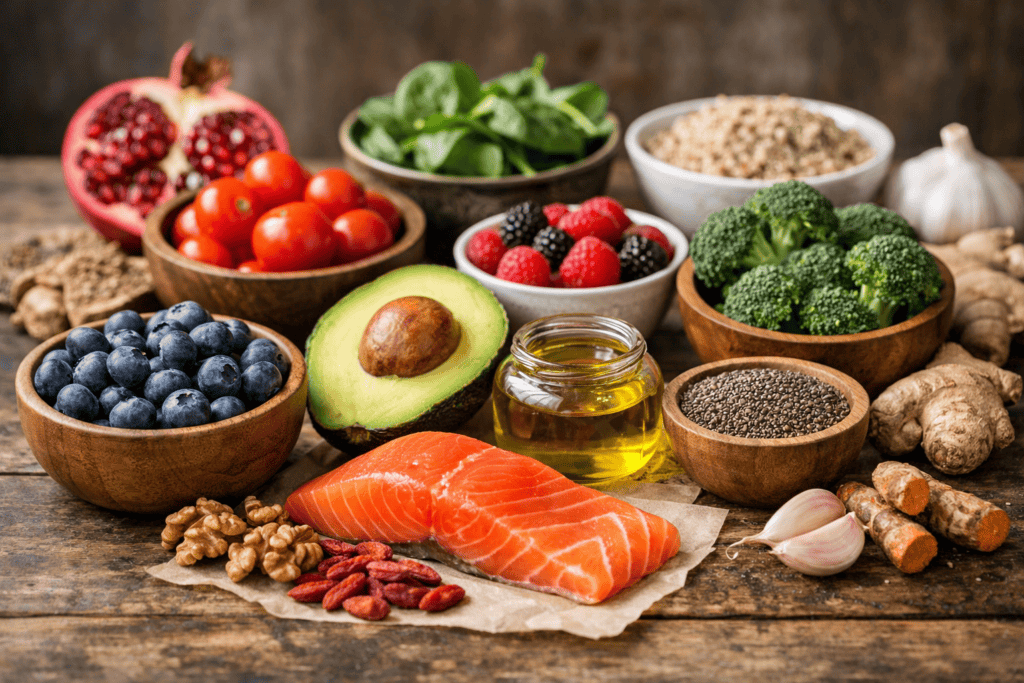
Polyphenols in berries, green tea, and extra-virgin olive oil show credible anti-inflammatory effects in controlled trials. Still, most studies use concentrated extracts rather than whole foods at realistic serving sizes. That gap between laboratory doses and typical dietary intake remains a recurring limitation in polyphenol research.
Vitamin C supports collagen synthesis as a cofactor for prolyl hydroxylase, the enzyme that stabilises collagen’s triple-helix structure. Deficiency accelerates skin ageing measurably. It remains unclear whether supplementing above adequate intake benefits well-nourished adults. Citrus, kiwi, and red peppers reliably meet the threshold where evidence is strongest.
Foods consistently linked to slower ageing markers in human studies
Most food and ageing research relies on observational data, so it shows associations rather than causes. Even so, several foods appear consistently across both study types and show measurable effects on recognised ageing biomarkers.
Extra virgin olive oil has some of the strongest repeat findings. The PREDIMED trial found that Mediterranean diets supplemented with olive oil reduced cardiovascular events and systemic inflammation markers compared with a low-fat control diet. Oleocanthal, a polyphenol in olive oil, inhibits the same inflammatory enzymes targeted by ibuprofen, though at lower concentrations.
Blueberries raise BDNF (brain-derived neurotrophic factor), a protein that helps maintain neurons and declines with age. Multiple small human trials recorded improvements in memory and reductions in oxidative stress markers after regular consumption over 12 weeks or more.
Japanese cohort studies linked green tea catechins, particularly EGCG, to lower all-cause mortality and slower telomere shortening. The association held after adjusting for smoking, BMI, and physical activity, though causality remains difficult to isolate in free-living populations.
Where the science is overstated: supplements, superfoods, and cherry-picked data
Most supplement marketing leans on studies of isolated compounds at doses impossible to get from food. Many of those studies were conducted in cells or rodents rather than humans. Others tracked surrogate markers with no confirmed link to lifespan. Yet the leap from “this molecule reduced oxidative stress in a petri dish” to “this powder slows ageing” routinely goes unchallenged on product packaging.
Resveratrol shows the pattern clearly. Early cell-culture findings generated widespread media coverage, but human trials showed poor bioavailability and no consistent effect on ageing biomarkers. The Cochrane Collaboration reached similar conclusions about popular antioxidant supplements, noting that high-dose isolated antioxidants can interfere with the body’s own adaptive response.
- There are credible biological pathways involving oxidative stress, inflammation, telomeres, and cellular repair.
- Some nutrients and food compounds show anti-inflammatory or antioxidant effects in controlled settings.
- Deficiency correction, such as adequate vitamin C intake, clearly matters for normal tissue maintenance.
- Supplement marketing often cites isolated compounds at doses impossible to get from food.
- Many polyphenol studies use concentrated extracts rather than realistic serving sizes.
- Observational studies can show association without proving causation.
- Cherry-picked data can exaggerate the certainty of anti-ageing effects.
A single small or industry-funded trial can keep a health claim alive for years, even after larger studies fail to replicate it. When reviewing any anti-ageing food claim, check whether the effect appeared in a randomised controlled trial, whether it has been independently replicated, and whether the outcome is a validated ageing proxy. Consistent associations across multiple large cohort studies carry more weight than one striking headline.
Dietary patterns versus single foods: what the evidence actually supports
No single food has been shown to slow ageing in isolation. Research consistently points to eating patterns instead. The Mediterranean, DASH, and traditional Okinawan diets all reduce inflammation and metabolic dysfunction through the same core structure: high vegetable and legume intake, limited ultra-processed food, moderate protein from fish or plant sources, and low added sugar.
The PREDIMED trial and subsequent cohort data track outcomes over years, so they carry more weight than short studies that measure a single biomarker. These dietary patterns act across multiple biological pathways at the same time. No supplement replicates that breadth.
| Approach | What the article says |
|---|---|
| Single nutrients or compounds | Mechanistically plausible, but evidence is often based on isolated compounds, extracts, or doses that are hard to achieve through normal eating. |
| Whole foods | Foods such as oily fish, berries, cruciferous vegetables, green tea, citrus, kiwi, red peppers, and extra-virgin olive oil have more realistic dietary relevance. |
| Dietary patterns | The article points to stronger support for overall eating patterns rich in polyphenols, carotenoids, and omega-3s than for any single anti-ageing food. |
| Supplements and superfoods | This is where the science is most often overstated, especially when marketing relies on cherry-picked studies of isolated compounds. |
Replacing ultra-processed meals with whole foods, vegetables, legumes, and oily fish leads to measurable improvements in inflammatory markers. The evidence supports improving the full dietary pattern and sustaining it long enough for cumulative effects to register, rather than optimising around any one ingredient.
Practical dietary changes with a realistic basis in longevity research
Shift most of your plate towards vegetables, legumes, oily fish, and whole grains before changing anything else. This structural change matches the dietary patterns that have shown the most consistent longevity signals in human research, without relying on any specific superfood or supplement.
Use olive oil as your main cooking and dressing fat. Aim for two to four portions of oily fish per week to keep EPA and DHA within ranges associated with reduced inflammatory markers. Limit ultra-processed foods. Their consistent link to accelerated biological ageing is one of the more robust findings in recent nutritional epidemiology.
Track what you already eat for two to three weeks before making changes. Reviewing your full dietary pattern tells you more than adding one food to an otherwise poor diet. No supplement currently replicates the effect of a whole dietary pattern. Where genuine gaps exist, such as low oily fish intake, an algae-derived omega-3 supplement offers a credible alternative. Otherwise, the evidence favours spending on food quality over concentrated extracts.
Frequently Asked Questions
Which foods have the strongest scientific evidence for supporting healthy ageing?
Berries, leafy greens, oily fish, nuts, and olive oil have the strongest research backing. Most of the evidence comes from large observational studies, especially on Mediterranean-style dietary patterns. Controlled trials on individual foods remain limited, but consistent associations across multiple study types strengthen the case for these plant-rich, omega-3-containing choices.
Can any food or diet actually slow ageing, or do they mainly affect age-related disease risk?
No food directly slows the biological processes of ageing. Diets rich in polyphenols, omega-3s, and fibre can reduce chronic inflammation and oxidative stress. This lowers the risk of age-related diseases such as cardiovascular disease, type 2 diabetes, and cognitive decline. The result is a longer healthspan, not reversed ageing.
What does current research say about antioxidants and anti-ageing claims?
Get antioxidants from whole foods instead of supplements. Large clinical trials, including the SELECT and ATBC studies, found that isolated antioxidant supplements did not replicate the benefits seen in dietary studies and sometimes increased risk. Vegetables, berries, and legumes provide antioxidants along with fibre, polyphenols, and other compounds that appear to work together.
Are supplements marketed for anti-ageing as effective as whole foods?
Whole foods consistently outperform isolated supplements in clinical research. Their nutrients work alongside fibre, phytonutrients, and enzymes in ways supplements cannot replicate. Most anti-ageing supplements also lack robust human trial data to support their marketed claims.
Which popular anti-ageing food claims are not well supported by scientific evidence?
Several widely marketed claims lack rigorous human trial evidence. Brands often promote collagen supplements, activated charcoal, and “superfoods” such as goji berries for anti-ageing effects, yet most supporting studies are small, short-term, or conducted on animals. Resveratrol supplements fit the same pattern, as high-dose extracts have not replicated the results seen in laboratory conditions.
Adaptogens are plant-derived compounds that researchers study for their potential to help the body resist physical and psychological stress. The category includes dozens of herbs, but ashwagandha and rhodiola have the strongest base of clinical research. This article examines how each compound works, what the evidence supports, where the research falls short, and how to interpret the growing number of health claims attached to both.
Key takeaways
- Each adaptogen works through a different mechanism, so the category label alone tells you little.
- A 2019 RCT found that 240mg of standardised ashwagandha root extract reduced cortisol by around 23% over 60 days.
- Most Rhodiola rosea trials are small, short-term, and use inconsistent extract preparations.
- Adaptogens are not a substitute for SSRIs or other licensed treatments for clinical conditions.
- In the UK, adaptogens are sold as food supplements and cannot legally claim to treat any condition.
- Credible ashwagandha supplements state withanolide content, typically 2.5 to 5%, alongside the daily milligram dose.
- Review the clinical evidence for each specific herb before taking an adaptogen supplement.
What adaptogens are and how they are supposed to work
Review the clinical evidence for each herb before taking any adaptogen supplement. The category label tells you very little about likely effects. Adaptogens are plant-based or fungal compounds proposed to help the body resist physical, chemical, and biological stressors, but each herb works through a different mechanism.
The idea traces back to Soviet pharmacologist Nikolai Lazarev, who coined the term in 1947. The theory holds that certain compounds modulate the hypothalamic-pituitary-adrenal (HPA) axis, the hormonal pathway that governs the stress response, without pushing physiology towards a fixed outcome. Rather than sedating or stimulating, they are said to normalise.
That normalising effect is difficult to measure in practice and even harder to separate from placebo. Most human trials test adaptogens alongside lifestyle interventions, which makes it harder to attribute results to the herb alone. If you want to stay active and manage stress effectively, adaptogens work best alongside consistent movement and sleep, not as a replacement for either.

Ashwagandha: the clinical evidence and its limits
Ashwagandha (Withania somnifera) has more published human trial data than most other adaptogens. Cortisol reduction appears most consistently across the research. A 2019 randomised controlled trial published in Medicine found that 240mg of a standardised root extract daily reduced serum cortisol by around 23% over 60 days compared with placebo. Separate trials have also recorded improvements in self-reported stress, sleep quality, and endurance capacity in resistance-trained adults.
The limits of this evidence are significant. Most trials run for 8–12 weeks, involve fewer than 100 participants, and use proprietary extracts such as KSM-66 or Sensoril. These are not interchangeable with generic powders. Dosing also varies widely across studies, from 240mg to 600mg daily, which makes direct comparison difficult.
Cortisol reduction % from a 60-day RCT (600mg extract, n=64). PSS and HAM-A reductions are mean differences from a 2024 systematic review and meta-analysis of RCTs. Global data — UK-specific RCT unavailable.
Sources: Chandrasekhar et al., PMC (2012); BJPsych Open Meta-Analysis, Cambridge (2025)
Safety data at standard doses looks acceptable for short-term use. Still, rare cases of liver injury linked to ashwagandha supplements have been reported to pharmacovigilance databases in Europe and the US. People with thyroid conditions, autoimmune disorders, or those who are pregnant should consult a clinician before use, as the herb may interact with thyroid hormone levels and immunosuppressive treatment.
Rhodiola rosea: what research supports and what remains uncertain
Most published trials on Rhodiola rosea are small, short-term, and based on inconsistent extract preparations. The two active compounds studied most, rosavins and salidroside, appear to affect serotonin and dopamine availability. They may also dampen cortisol output via the hypothalamic-pituitary-adrenal axis. Whether these mechanisms lead to reliable clinical outcomes is where the evidence becomes more cautious.
A 2012 review published in Phytomedicine identified plausible anti-fatigue and cognitive effects under acute stress, but it also noted generally low trial quality. Cognitive performance and physical endurance have the most supporting data, although effect sizes remain modest. Anxiety reduction has been reported, but the evidence base is thinner than for ashwagandha.
| Factor | Ashwagandha | Rhodiola Rosea |
|---|---|---|
| Volume of human RCTs | Higher — multiple RCTs and meta-analyses available | Lower — 11 studies met inclusion in a systematic review; meta-analysis not possible due to inconsistent outcomes |
| Strongest evidence area | Cortisol reduction (statistically significant vs placebo across multiple trials) | Anti-fatigue and mental performance under stress (some positive signals) |
| Evidence quality | Moderate — trials are short (8–12 weeks), small (under 100 participants), often using proprietary extracts | Contradictory and inconclusive — methodological flaws limit accurate efficacy assessment |
| Typical study duration | 60–90 days | 2–8 weeks |
| Key limitation | Most trials use KSM-66 or Sensoril; not interchangeable with generic powder | No two studies measure the same outcomes; risk of bias largely 'unclear' |
| Safety profile | Generally well-tolerated; mild adverse events comparable to placebo | Generally well-tolerated; no serious adverse events reported in trials |
Sources: BJPsych Open Meta-Analysis (2025); Hung et al. – Rhodiola Systematic Review, PubMed (2012)
Standardisation remains the central problem. Products labelled as Rhodiola rosea vary significantly in their rosavin-to-salidroside ratio, and most trials do not disclose the exact preparation used. Until well-controlled trials establish consistent dosing parameters, the therapeutic profile remains promising but unresolved.
How adaptogens compare to conventional stress and fatigue treatments
Adaptogens are not a substitute for prescription medicines. SSRIs and benzodiazepines act on specific receptor systems and have well-characterised effects with regulatory approval. In the UK, adaptogens are sold as food supplements and are not licensed to treat any medical condition.
They may complement sleep hygiene, diet, and exercise for mild, subclinical fatigue or chronic stress that falls below a clinical threshold. These lifestyle measures have stronger and more consistent evidence across larger study populations. If a GP has recommended a pharmaceutical route, adaptogens do not replace it. Some compounds, including ashwagandha, interact with thyroid medications and sedatives, so check with a pharmacist before combining them. When adaptogens do have a role, they work best as a short-term adjunct at a clinically studied dose, using a standardised extract for a defined period rather than open-ended, unsupervised use.
How to evaluate adaptogen products and avoid misleading claims
Sources: HSIS – Food Supplements Regulations (UK); NHS Specialist Pharmacy Service – Understanding Food Supplements; Lexology – ASA & MHRA Wellness Brand Rulings (2025)
Claims like “supports wellbeing” fit within UK food supplement law. The law bans disease claims but allows vague function statements. That label wording tells you nothing about extract quality, dose, or standardisation.
Check the extract ratio and active constituent percentage. A credible ashwagandha supplement states withanolide content, typically 2.5 to 5%, alongside the daily milligram dose. Rhodiola products should declare rosavins and salidroside percentages. Without those figures, you cannot compare the product with the trials underpinning any claimed benefit.
Certification from Informed Sport or NSF International confirms independent testing for label accuracy and contaminant levels. These marks show that you are receiving what the label states, though they do not validate clinical evidence.
Avoid blends that combine six or more adaptogens at low individual doses. Manufacturers can list compounds linked to published research without providing trial-relevant quantities. They still benefit from the positive associations each name carries.
If your interest stems from fatigue, low mood, or disrupted hormone balance, clarify those goals first. Ashwagandha’s cortisol mechanisms differ from Rhodiola’s proposed influence on serotonin availability. The right choice depends on your specific symptom pattern.
Frequently Asked Questions
What are adaptogens, and how are they meant to affect the body?
Adaptogens are plant-based compounds that may help the body resist physical and psychological stress. They are thought to work by modulating the hypothalamic-pituitary-adrenal (HPA) axis, which governs the stress response. Rather than simply stimulating the body, their proposed effect is regulatory: normalising cortisol output and supporting recovery without overstimulating any single system.
What does the current evidence say about ashwagandha for stress, sleep, and performance?
Ashwagandha has more clinical trial data than most adaptogens. Randomised trials show modest reductions in cortisol and self-reported stress. They also report improvements in sleep onset and duration. Evidence for physical performance is thinner. Some studies show small improvements in VO2 max and muscle recovery.
What does research show about rhodiola for fatigue, focus, and exercise recovery?
Take rhodiola when mental fatigue or stress-induced exhaustion is the main concern. Clinical trials show that it reduces perceived effort and improves concentration during cognitively demanding tasks. Evidence for physical exercise recovery is weaker, although some studies report lower fatigue ratings after endurance activity.
Are adaptogens safe to take, and who should avoid ashwagandha or rhodiola?
Pregnant women, people with autoimmune conditions, and those taking thyroid or sedative medications should avoid both ashwagandha and rhodiola unless a clinician advises otherwise. Healthy adults generally tolerate short-term use at recommended doses well. Long-term safety data remains limited, so periodic breaks are advisable.
How can you assess the quality of adaptogen supplements and their claimed benefits?
Third-party testing marks like USP, NSF International, or Informed Sport show that a supplement contains what its label claims. Without them, no independent check confirms ingredient quality or dosage accuracy. Cross-reference any claimed benefits with peer-reviewed research on PubMed, and treat products that cite only animal or in-vitro studies with caution.
Magnesium deficiency is widespread because modern diets, depleted soils, and common medications all reduce the body’s magnesium supply. Most adults consume less than the recommended daily intake, yet symptoms such as muscle cramps, fatigue, and poor sleep are rarely linked to low magnesium levels. This article examines why deficiency is so common, which factors increase your risk, and how to identify whether your intake is insufficient.
Key takeaways
- Milling strips roughly 80% of magnesium from wheat before it reaches shelves.
- Type 2 diabetes triggers urinary magnesium loss, worsening insulin resistance over time.
- Serum blood tests can show normal results despite significant tissue-level magnesium depletion.
- Early deficiency symptoms such as cramps, fatigue, and poor sleep overlap with many other conditions.
- Pumpkin seeds provide around 550mg of magnesium per 100g, exceeding the UK adult daily intake.
- Proton pump inhibitors and loop diuretics are among the medicines that reduce magnesium levels.
- Anyone with inflammatory bowel disease or type 2 diabetes should seek formal assessment before supplementing.
Why magnesium intake often falls short in modern diets
Switch from refined grains to whole grains and you immediately recover a significant source of dietary magnesium. Milling strips roughly 80% of the mineral from wheat before it reaches the shelf, which helps explain why Western diets consistently fall short of recommended intakes.
Soil depletion compounds the problem. Intensive agricultural practices since the mid-20th century have reduced the mineral content of many crops, meaning a portion of spinach or almonds today delivers less magnesium than the same portion grown several decades ago. Relying on food alone to meet targets has become harder, even for people eating a varied diet.
A third pressure comes from common lifestyle factors. Alcohol increases urinary magnesium excretion, as does excess caffeine. Gastrointestinal conditions such as Crohn’s disease reduce absorption in the small intestine. Certain medications, including proton pump inhibitors and diuretics, further lower circulating levels. The result is a wide population group with intakes below the NHS reference value of 300mg per day for men and 270mg for women, without any single obvious cause.
Health conditions and medicines that reduce magnesium levels
Several common chronic conditions actively deprive the body of magnesium, regardless of how much someone consumes through food. Type 2 diabetes is among the most significant: elevated blood glucose triggers increased urinary magnesium excretion, creating a cycle where deficiency worsens insulin resistance and insulin resistance worsens deficiency. Crohn’s disease, coeliac disease, and other conditions affecting the small intestine reduce absorption directly, as magnesium is primarily taken up in the jejunum and ileum.
Estimated magnesium deficiency prevalence across high-risk groups. ICU and hospitalised figures represent midpoints of reported ranges.
Sources: Wikipedia – Magnesium Deficiency (2026); PMC – Subclinical Magnesium Deficiency (2018)
Kidney disease disrupts the renal regulation that normally prevents excess magnesium loss. In healthy kidneys, roughly 95% of filtered magnesium is reabsorbed; damaged tubules cannot maintain this efficiency. Chronic alcoholism depletes magnesium through a combination of poor dietary intake, increased renal excretion, and gastrointestinal losses.
Prescribed medicines are a frequently overlooked cause. Proton pump inhibitors such as omeprazole, taken long-term, impair magnesium absorption in the gut. The MHRA added hypomagnesaemia warnings to all PPI labels following reported cases of severe deficiency. Loop and thiazide diuretics increase urinary
Early signs and longer-term effects of magnesium deficiency
Magnesium deficiency rarely announces itself clearly. Early symptoms such as muscle cramps, fatigue, poor sleep, and low mood overlap with dozens of other conditions, delaying recognition for months or years. Blood serum tests compound this: only around 1% of the body’s magnesium circulates in the blood, so a normal result does not rule out tissue-level depletion.
As deficiency deepens, consequences become more systemic. Magnesium is a cofactor in over 300 enzymatic reactions, including those governing nerve signalling and muscle contraction. Sustained low levels are linked to heightened cardiovascular risk, since magnesium helps regulate blood pressure and heart rhythm. The NHS recognises hypomagnesaemia as a contributor to irregular heartbeat and, in severe cases, seizures.
Bone health also suffers over time. Magnesium regulates parathyroid hormone activity and activates vitamin D, both of which govern calcium metabolism, meaning chronic deficiency undermines bone density independent of calcium intake. Correcting low magnesium through diet or supplementation typically takes several weeks before symptoms measurably improve.
Which foods provide the most magnesium
Pumpkin seeds deliver more magnesium per 100g than almost any other common food, providing around 550mg, which sits well above the adult daily reference intake of 300mg for men and 270mg for women in the UK. A small handful added to porridge or a salad covers a substantial portion of daily needs without any dietary overhaul.
Dark leafy greens, particularly spinach and Swiss chard, rank alongside seeds as reliable sources. Cooked spinach provides roughly 80mg per 100g, and the cooking process concentrates the mineral by reducing water volume. Nuts, especially Brazil nuts, almonds, and cashews, contribute between 150mg and 270mg per 100g and serve as convenient snacks that require no preparation.
| Food | Serving Size | Magnesium (mg) | % of Daily Value (420 mg) |
|---|---|---|---|
| Pumpkin seeds | 1 oz (28 g) | 168 | 40% |
| Cooked spinach | 1 cup (180 g) | 158 | 38% |
| Whole wheat | 1 cup | 160 | 38% |
| Cooked quinoa | 1 cup | 118 | 28% |
| Almonds | 1 oz (28 g) | 80 | 19% |
| Dark chocolate | 1 oz (28 g) | 65 | 15% |
| Avocado | 1 whole | 58 | 14% |
| Cooked spinach | ½ cup | 78 | 19% |
| Low-fat yogurt | 8 oz | 42 | 10% |
| Medium banana | 1 medium | 32 | 8% |
Sources: Cleveland Clinic (2023); Healthline (2024); Wellbeing Nutrition (2025)
Legumes and whole grains form the practical backbone of magnesium intake for most people. Cooked black beans provide around 60mg per 100g, lentils around 35mg, and oats roughly 50mg per 100g in dry weight. Choosing oat-based breakfasts over refined cereals and swapping white rice for brown rice consistently increases intake without requiring supplementation.
Dark chocolate (70% cocoa or higher) contains approximately 230mg per 100g, making it a notable source. Tofu made with nigari (magnesium chloride) also contributes meaningfully, particularly for those following plant-based diets. Fatty fish such as mackerel and salmon provide lower but still useful amounts at around 30 to
When testing, supplements, and medical advice may be needed
Dietary adjustments will not resolve deficiency when an underlying condition drives ongoing losses. Anyone with type 2 diabetes, inflammatory bowel disease, chronic kidney disease, or long-term use of proton pump inhibitors or loop diuretics should request a formal assessment rather than self-treating.
A serum magnesium test is a reasonable starting point, though blood levels can appear normal despite significant tissue depletion. A GP can request a red blood cell magnesium test, which reflects intracellular stores more accurately. The NHS does not routinely offer this, so it may require a private laboratory request.
Magnesium glycinate and magnesium malate absorb better than magnesium oxide, which passes through the gut largely intact. Doses above 400mg per day can cause loose stools; splitting intake across two smaller doses reduces this risk. Those with impaired kidney function should not supplement without medical supervision, as reduced clearance can cause accumulation.
Frequently Asked Questions
Why are magnesium deficiencies so common?
Modern diets rely heavily on processed foods, which lose most of their magnesium during refining. Soil depletion has also reduced magnesium levels in vegetables and grains over recent decades. Alcohol consumption, certain medications, and digestive conditions further reduce absorption, leaving many people chronically short of this mineral.
What are the main causes of low magnesium levels?
Soil depletion has reduced magnesium in food crops significantly over recent decades, so diet alone often falls short. Heavily processed foods lose most of their mineral content during manufacturing. Certain medications, digestive conditions, high alcohol intake, and chronic stress all accelerate magnesium loss through the kidneys or impair absorption in the gut.
Which symptoms can suggest a magnesium deficiency?
Consult a doctor if you notice persistent muscle cramps, fatigue, or irregular heartbeat. Sleep disturbances, low mood, and numbness in the hands or feet are also common indicators. These symptoms overlap with other conditions, so blood testing remains the most reliable way to confirm a deficiency.
Who is most at risk of becoming deficient in magnesium?
Older adults absorb magnesium less efficiently as kidney function declines with age. People with type 2 diabetes, Crohn’s disease, or alcohol dependency lose significantly more magnesium than they take in. Those taking proton pump inhibitors or diuretics long-term also face elevated risk.
How can magnesium deficiency be identified and corrected?
Blood serum tests miss roughly 99% of the body’s magnesium, which is stored in bones and soft tissue. A red blood cell magnesium test gives a more accurate reading. Correcting a deficiency typically involves dietary changes, prioritising nuts, seeds, and leafy greens, alongside a supplement such as magnesium glycinate or citrate, which absorb more readily than oxide forms.
Food can influence hormone balance by affecting insulin, cortisol, thyroid hormones, and sex hormones, but diet alone does not correct every hormonal problem. The strength of evidence varies by condition, nutrient, and eating pattern, and claims about single foods often go beyond the research. This article reviews what studies show about fibre, protein, fats, blood sugar control, body weight, and key nutrient gaps, and where medical assessment is still necessary.
Key takeaways
- Food can support hormone health, but it does not “rebalance” hormones in a simple, universal way.
- Prioritise enough protein, fibre, and healthy fats to support blood sugar control and hormone production.
- Use minimally processed carbohydrates and pair them with protein to reduce sharp glucose and insulin spikes.
- Include oily fish, nuts, seeds, and olive oil to improve dietary fat quality.
- Cruciferous vegetables and high-fibre foods may help oestrogen metabolism through gut and liver pathways.
- Persistent symptoms need medical assessment, since diet alone will not treat thyroid, PCOS, or menopause issues.
How diet influences hormone production, signalling and metabolism
Build meals around protein, high-fibre carbohydrates and unsaturated fats. Hormones need amino acids, fatty acids, vitamins and minerals. Severe restriction can disrupt that supply and alter signals linked to appetite, reproduction, stress and thyroid function.
Diet affects hormones at three levels. Nutrients provide raw materials for steroid hormones, including oestrogen and testosterone. Food intake also changes signalling through insulin, glucagon and gut hormones such as GLP-1, which regulate blood sugar, hunger and fullness. Over time, eating patterns influence body fat, liver function and insulin sensitivity.
Carbohydrate quality matters more than avoiding carbohydrates outright. Minimally processed grains, pulses, vegetables and fruit usually cause a slower glucose rise than refined foods, helping limit repeated insulin spikes. Unsaturated fats from olive oil, nuts, seeds and oily fish support cell membranes, where hormone signalling begins.
Evidence reviews from bodies such as the National Institute for Health and Care Excellence and the British Dietetic Association do not support single “hormone-balancing” foods. Consistent eating patterns, enough energy and a nutrient-dense diet have stronger support than detoxes, supplements and extreme elimination plans.
What the evidence shows on blood sugar control, insulin and meal composition
Meals that slow the rise in blood glucose after eating usually reduce how much insulin the body needs to release. The most reliable pattern is consistent: pair minimally processed carbohydrates with protein, fibre and unsaturated fat instead of eating refined starches or sugary foods alone.
Mixed meals work by slowing gastric emptying and glucose absorption. Fibre from pulses, vegetables, oats and whole grains helps blunt post-meal glucose spikes. Protein also improves fullness and can moderate the blood sugar response when eaten with carbohydrate. For people with insulin resistance or type 2 diabetes, this pattern often supports steadier energy and better glycaemic control over time.
UK adults average just 18g of fibre per day — only 4% meet the recommended 30g target. Adequate fibre from whole grains, pulses and vegetables helps moderate post-meal blood glucose and supports hormonal health. Sources: British Dietetic Association (BDA, 2024); BMJ Fibre & Healthcare Review (2022)
Source: British Dietetic Association – Fibre Fact Sheet (2024) & BMJ – Fibre Intake for Optimal Health (2022)
Guidance from Diabetes UK and the National Institute for Health and Care Excellence supports focusing on meal quality and composition, not single “hormone-balancing” foods. Lower-carbohydrate diets can help some people, especially when refined carbohydrates are replaced with protein, fibre-rich foods and unsaturated fats. They are not necessary for everyone, and very restrictive plans can be hard to maintain. Mediterranean-style eating fits well because it improves meal quality without strict rules.
Body fat, energy intake and their effect on oestrogen, testosterone and cortisol
Food cannot override low energy availability or excess body fat. Both change hormone output through signals from fat tissue, the brain and the adrenal system, even when diet quality is good.
Adipose tissue is hormonally active. It contains aromatase, which converts androgens into oestrogens, so higher body fat can raise oestrogen exposure. Fat tissue also releases leptin and inflammatory signals that disrupt hypothalamic and pituitary signalling, affecting ovarian and testicular hormone production. At the other extreme, chronic under-eating lowers leptin and gonadotropin-releasing hormone activity, which can suppress oestrogen and testosterone.
Cortisol rises with energy stress. Large calorie deficits, hard training without enough fuel, poor sleep and prolonged stress can keep it elevated. That can increase protein breakdown, disturb menstrual function and reduce testosterone production.
The most evidence-based food strategy is steady energy intake, enough protein, and body fat levels that support normal reproductive function. Guidance from the NHS and the National Institute for Health and Care Excellence supports gradual weight change rather than aggressive restriction, because hormone systems respond poorly to repeated energy shortfalls.
Foods, nutrients and dietary patterns studied for PCOS, menopause and thyroid health
No single food fixes PCOS, menopause symptoms or thyroid problems; the strongest evidence supports an eating pattern matched to the condition and the person’s needs.
For PCOS, build meals around pulses, vegetables, fruit, whole grains, nuts, seeds and regular protein. This can support insulin sensitivity, a key issue in many PCOS cases. Extra virgin olive oil, oily fish and higher-fibre carbohydrates fit well, while highly refined snacks and sugary drinks add little value.

For menopause, focus on protein, calcium-rich foods and phytoestrogen-containing foods such as soya. Tofu, tempeh and unsweetened soya yoghurt may help some women with hot flushes. For thyroid health, meet iodine and selenium needs through food where possible, but avoid high-dose supplements unless a clinician advises them. The NHS and the British Dietetic Association stress that thyroid conditions need proper diagnosis, not self-treatment.
Common mistakes include cutting out food groups without a medical reason, relying on “hormone-balancing” powders, and assuming supplements are harmless. Large amounts of seaweed can push iodine intake too high, and many “menopause support” blends have weak evidence. Use blood tests, symptoms and medical history to guide changes, especially for thyroid concerns.
Claims about hormone-balancing foods, supplements and detox diets that do not hold up
Cycles, appetite, energy and symptom tracking often get blamed on “hormone imbalance” when weak evidence sits behind food, supplement or detox claims. Most products sold for “balancing” hormones have not shown consistent benefits in well-designed human trials, and some rely on lab data, animal studies or broad marketing language instead of clinical outcomes.
Detox diets fail basic physiology. The liver, kidneys, gut and lungs already remove metabolic waste, and no juice cleanse or tea has been shown to “flush” hormones out in a meaningful way. Severe cleanses can cut protein, energy and micronutrients needed for normal hormone production and metabolism.
| Market Segment | 2023–2024 Value | Projected Value | Evidence Quality (per regulators) |
|---|---|---|---|
| Women's Hormonal Supplements | USD $4.50 billion (2023) | USD $8.50 billion by 2032 | Lack of robust clinical trial evidence flagged by regulators |
| Hormone-Balancing Supplements (broad) | ~USD $900 million (2023) | ~USD $1.6 billion by 2033 | Many products lack long-term safety or efficacy data |
| Menopause Supplements | USD $1.8 billion (2024) | USD $3.5 billion by 2033 | 70%+ of menopausal women seek alternatives to HRT, but evidence varies widely |
| Hormone Replacement Therapy (clinical) | USD $23.58 billion (2024) | USD $39.42 billion by 2033 | Regulated, evidence-based prescriptions with monitored clinical outcomes |
Source: SNS Insider – Women's Hormonal Supplements Market (2024); Data Horizzon – Hormone Balance Supplements Market (2024); Grand View Research – HRT Market (2024)
Supplement claims need caution. “Natural” does not mean effective or safe, especially for products marketed for cortisol, thyroid support, oestrogen balance or testosterone boosting. The US National Center for Complementary and Integrative Health and the NHS both advise checking ingredients, interactions and evidence before use.
Use a simple standard: look for randomised human trials, clear dosing, safety data and results that match the claim. If a product promises to reset several hormones at once, treat it as a sales signal, not a scientific one.
Frequently Asked Questions
Can food meaningfully affect hormone balance in healthy adults?
Yes, to a degree. Diet can influence insulin, blood sugar, appetite hormones and, over time, sex hormone metabolism through energy intake, fibre, fat quality and body weight. In healthy adults, food supports normal hormone function, but it rarely causes dramatic hormone shifts on its own.
Which dietary patterns have the strongest evidence for supporting hormone health?
No single “hormone diet” has strong proof. The best evidence supports balanced patterns that improve insulin sensitivity and reduce inflammation, especially the Mediterranean diet and other whole-food diets rich in vegetables, fruit, legumes, whole grains, fish, nuts and olive oil.
Patterns high in ultra-processed foods, refined carbs and excess alcohol tend to work against hormone health.
Are there specific foods that help regulate oestrogen, insulin, or cortisol levels?
Build meals around high-fibre plants, protein, and minimally processed carbs. This pattern can improve insulin control and supports healthy oestrogen metabolism by aiding blood sugar stability and regular excretion of excess hormones.
For cortisol, regular meals, enough energy intake, and limiting excess alcohol matter more than any single food. Oily fish, pulses, wholegrains, vegetables, and fermented foods may help by supporting stress response and metabolic health.
How does body weight and energy intake influence hormone balance through diet?
Chronic under-eating or excess body fat can disrupt hormone balance more than any single food. Low energy intake may reduce thyroid hormones, oestrogen, progesterone and testosterone, while raising cortisol. Sustained weight gain, especially around the abdomen, can worsen insulin resistance and alter oestrogen and androgen levels.
What claims about hormone-balancing foods or supplements are not supported by good evidence?
Most “hormone-balancing” food and supplement claims rely on small studies, animal research, or marketing rather than strong human evidence. That includes detox teas, seed cycling, progesterone creams sold over the counter, and supplements said to “reset” cortisol or oestrogen. Food can support hormone health, but no single product reliably balances hormones on its own.
Chronic stress keeps the body in a prolonged state of high alert, disrupting hormone balance, sleep, digestion, immune function, and heart health. Unlike short-term stress, which can help the body respond to immediate demands, chronic stress can wear down multiple systems over time. Diet cannot remove the source of stress, but it can help support blood sugar control, reduce inflammation, and replace nutrients stress may deplete. This article explains the main physical effects of chronic stress and the foods that may help the body cope more effectively.
Key takeaways
- Chronic stress keeps cortisol elevated, which can disrupt sleep, mood, digestion and immune function.
- Stress can raise blood sugar and increase cravings for high-fat, high-sugar comfort foods.
- Eating regular meals with protein and fibre helps steady energy and reduce stress-driven hunger spikes.
- Omega-3 fats, magnesium-rich foods and complex carbohydrates can support the body’s stress response.
- Ultra-processed foods and excess caffeine may worsen jitters, energy crashes and poor sleep.
- Fermented foods and other gut-friendly choices may help because stress and gut health affect each other.
- Small, repeatable habits work best: balanced meals, enough water and fewer skipped meals.
How chronic stress changes hormone levels, heart rate and blood pressure
Track resting heart rate and blood pressure during stressful periods, because chronic stress can shift both before symptoms feel severe. Persistent stress keeps the body’s stress-response system active, raising brain signals that increase cortisol and adrenaline.
These hormones help in short bursts, but constant elevation disrupts normal rhythms. Cortisol can affect blood sugar, appetite, and sleep. Adrenaline keeps the heart beating faster and tightens blood vessels, which can push blood pressure higher over time.
The strain does not stay limited to the heart. Long-term stress can affect insulin response, increase inflammation, and change fat storage, especially around the abdomen. Poor sleep can reinforce the same cycle by raising cortisol again the next day.
Regular checks help spot patterns early. The NHS advises monitoring blood pressure if readings run high, and a clinician can assess whether stress, sleep, diet, or another condition is driving the change. Food cannot stop the stress response, but steady meals, enough protein, and potassium-rich foods can support steadier energy and cardiovascular function.

Why long-term stress disrupts sleep, energy and mental focus
Long-term stress often shows up as broken sleep, afternoon fatigue and slower thinking before any clear illness. The most useful response is a steady daily rhythm with food, light exposure and regular meals, because the brain and body need predictable signals for alertness and rest.
This works better than quick energy fixes. High-sugar snacks, excess caffeine and irregular eating can worsen energy swings, especially when stress has already disturbed sleep. Meals with protein, fibre and slow-digesting carbohydrates help keep blood glucose steadier and concentration more stable.
Sleep often worsens when stress stays active into the evening. Late caffeine, alcohol and heavy meals can deepen that disruption. Guidance from the NHS Every Mind Matters and the Sleep Foundation is consistent: keep a regular sleep schedule, limit stimulants later in the day and support recovery with balanced meals.
Supplements may help in specific cases, but they fit best after the basics are in place. If poor sleep, low energy or brain fog persist, a GP or registered dietitian can check for other causes, including iron deficiency, thyroid problems or medication side effects.
How chronic stress affects digestion, appetite and blood sugar control
Quick fixes often miss the main problem: chronic stress can slow some parts of digestion while overstimulating others. The gut responds directly to stress signals from the brain through the gut-brain axis, a two-way network linking the nervous system, hormones and digestive tract. When stress stays high, the body shifts blood flow and energy away from digestion.
That shift can change stomach emptying, bowel patterns and digestive enzyme release. Stress can also alter appetite signals by affecting hormones linked to hunger and fullness, including ghrelin and leptin. At the same time, cortisol can raise blood glucose, while repeated stress may reduce insulin sensitivity.
The result is a mix of symptoms that can seem inconsistent: nausea, bloating, reflux, constipation, diarrhoea, stronger cravings for high-fat or high-sugar foods, and bigger swings in energy after meals. Guidance from the National Institute of Diabetes and Digestive and Kidney Diseases and Diabetes UK supports the link between stress, digestive symptoms and blood sugar disruption. Regular meals with fibre, protein and minimally processed carbohydrates help provide steadier metabolic signals.
What ongoing stress does to inflammation, immunity and pain sensitivity
Ongoing stress can keep inflammation active, weaken immune defence and make pain feel stronger. Reduce that strain with regular meals built around fibre, protein and unsaturated fats, and avoid long gaps without food followed by highly processed meals.
Choose foods that support a steadier immune and inflammatory response: vegetables, beans, oats, nuts, seeds, olive oil and oily fish such as salmon, sardines or mackerel. Include vitamin C sources like peppers, berries or citrus, plus zinc-rich foods such as shellfish, pumpkin seeds or moderate amounts of beef. If pain flares often, keep alcohol low and limit ultra-processed foods high in refined sugar.
| Risk Factor | Finding | Source |
|---|---|---|
| Heart attack (AMI) risk | Heart attack patients had cortisol levels 2.4× higher than controls in the month before the event (53.2 vs 22.2 pg/mg) | Scientific Reports (2021) |
| Cardiovascular disease (all stress hormones) | Higher stress hormone levels associated with 63% greater cardiovascular disease risk (RR 1.63) | ScienceDirect meta-analysis (2024) |
| Hypertension development | Every doubling of stress hormone levels linked to a 21–31% increased risk of developing high blood pressure | American Heart Association (2021) |
| Abdominal fat & metabolic risk | Elevated cortisol linked to visceral adiposity, insulin resistance, dyslipidaemia and type 2 diabetes | StatPearls / NCBI (2025) |
| Immune & inflammatory markers | High cortisol associated with elevated CRP and leukocyte counts, indicating systemic inflammation | BMC Cardiovascular Disorders (2024) |
Sources: Scientific Reports (2021); ScienceDirect Meta-Analysis (2024); American Heart Association (2021); BMC Cardiovascular Disorders (2024)
Simple routines help. Keep frozen vegetables, tinned beans and wholegrains at home, and eat at similar times each day. The NHS Eatwell Guide and advice from the British Dietetic Association offer practical meal patterns that are easier to follow than restrictive diets.
Skipping meals, relying on caffeine for fatigue and using supplements instead of food are common mistakes. High-dose products can interact with medicines or add little if the diet is poor. If infections become frequent, wounds heal slowly or pain keeps rising, seek medical advice rather than managing it with diet alone.
Nutrients and foods that help support the nervous system under stress
Nerve signalling, muscle relaxation and stress recovery work better when meals supply enough magnesium, omega-3 fats, B vitamins and protein. These nutrients help the nervous system make neurotransmitters, regulate electrical activity and maintain steady communication between the brain and body.
Magnesium helps control how nerve cells fire. Foods such as pumpkin seeds, almonds, spinach, beans and wholegrains can help raise intake. Omega-3 fats in salmon, sardines, mackerel, walnuts and chia seeds support brain cell membranes and may help moderate the stress response.
| Dietary Approach | Key Finding | Source |
|---|---|---|
| Whole-food / Mediterranean-style diet | Associated with lower depression, anxiety and stress vs. a Western dietary pattern, which raised risk of poor mental health | American Society for Nutrition / Harvard (2022) |
| Psychobiotic diet (high prebiotic & fermented foods) | Produced a statistically significant 32% decrease in perceived stress over 4 weeks vs. 17% in the control group | Molecular Psychiatry / Nature (2022) |
| Omega-3 fatty acids (EPA/DHA) | Higher omega-3 intake associated with reduced anxiety via anti-inflammatory and neurochemical mechanisms | PMC / Eat to Beat Stress (2021) |
| Dietary fibre | Diets rich in fibre may reduce risk of depression, anxiety and stress by lowering brain and body inflammation | PMC / Eat to Beat Stress (2021) |
| Magnesium, B vitamins, Vitamin C | Chronic stress depletes magnesium, zinc and B vitamins; replenishing via diet helps regulate cortisol and adrenaline | American Society for Nutrition (2022) |
Sources: American Society for Nutrition (2022); Molecular Psychiatry / Nature (2022); PMC – Eat to Beat Stress (2021)
B vitamins help release energy from food and produce key brain chemicals. Folate, vitamin B6 and vitamin B12 are especially relevant. Eggs, dairy foods, legumes, leafy greens and fortified cereals can help cover these needs, while regular protein intake provides amino acids needed to make serotonin and dopamine.
Build meals around a protein source, a high-fibre carbohydrate and a healthy fat. That pattern supports steadier energy and gives the nervous system the raw materials it needs. For evidence-based guidance, review the NHS Eatwell Guide and advice from the British Dietetic Association.
How to build meals and eating habits that reduce the strain of chronic stress
Build meals around a steady pattern: eat at regular times, include protein and fibre, and keep highly processed snacks for occasional use. This helps limit swings in hunger, energy and blood sugar, which often feel worse under stress.
Regular structure works better than appetite alone during stressful periods. Stress can blunt hunger or drive cravings, so a simple meal rhythm gives more predictable fuel. A practical plate includes protein, a high-fibre carbohydrate, vegetables or fruit, and unsaturated fat.
Hydration needs attention too. Mild dehydration can worsen headaches, fatigue and poor concentration, which often overlap with stress symptoms. Water, milk and unsweetened tea work well, while high-caffeine drinks fit best in modest amounts earlier in the day.
If full meals feel difficult, use smaller combinations that still cover the basics, such as yoghurt with oats, eggs with wholegrain toast, or hummus with pitta and chopped vegetables. If stress causes nausea or low appetite, softer, plainer foods may help briefly, but return to regular, balanced meals as soon as possible.
Frequently Asked Questions
How does chronic stress affect the brain, heart and digestive system?
Chronic stress keeps the body in a prolonged fight-or-flight state. In the brain, it can impair memory, focus and mood regulation. In the heart, it raises blood pressure and strain. In the digestive system, it can disrupt appetite, worsen reflux, and trigger bloating, pain or changes in bowel habits.
What are the most common physical signs that stress has become chronic?
Chronic stress shows up as symptoms that persist for weeks, not just during a difficult day. The most common physical signs include poor sleep, constant fatigue, headaches, muscle tension, stomach upset, and a faster heartbeat. Some people also notice appetite changes, frequent illness, or raised blood pressure.
How can chronic stress change appetite, blood sugar and cravings?
Eat regular, balanced meals with protein, fibre and slow-digesting carbohydrates. Chronic stress can raise cortisol, which may increase appetite, push blood sugar up and down, and trigger stronger cravings for sugary or high-fat foods. Steady meals help limit those swings and reduce rebound hunger.
Which foods and nutrients may help support the body during periods of chronic stress?
No food can cancel out chronic stress, but steady nutrition can help the body cope better. Prioritise regular meals with protein, fibre and complex carbohydrates, plus foods rich in magnesium, omega-3 fats and vitamin C. Good choices include oily fish, nuts, seeds, beans, yoghurt, wholegrains, leafy greens and berries.
When should stress-related symptoms be assessed by a doctor?
Symptoms that last more than 2 weeks, keep returning, or disrupt sleep, work, appetite, or blood pressure should be assessed by a doctor. Seek urgent help for chest pain, fainting, severe shortness of breath, or thoughts of self-harm. Ongoing stress can also worsen existing heart, digestive, and mental health conditions.
Sleep is a core biological process that supports brain function, hormone regulation, immune defence and metabolic health. Its effects reach nearly every system in the body, yet sleep often receives less attention than diet and exercise in health advice. This article explains why sleep has such broad impact, what poor sleep disrupts, and which practical habits can improve sleep quality and consistency.
Key takeaways
- Sleep supports hormone balance, immune function, memory, mood, appetite control and long-term metabolic health.
- Keep a fixed sleep and wake time, including weekends, to strengthen your body clock.
- Get bright morning light soon after waking to help shift melatonin and improve night-time sleepiness.
- Cut caffeine after late morning or early afternoon if sleep onset regularly feels delayed.
- Reduce evening alcohol, which can increase night waking and lower sleep quality.
- Keep the bedroom cool, dark and quiet, and remove unnecessary light and noise sources.
- Use a short wind-down routine before bed to lower stimulation and make sleep more consistent.
Sleep affects every major health system, not just energy levels
Keep a consistent sleep window and protect it like meals or exercise. Regular timing keeps the body clock aligned, helping regulate hormones, body temperature, appetite, immune activity and blood sugar.
Sleep loss affects more than energy. Short or broken sleep raises cortisol, disrupts insulin sensitivity, increases hunger signals and weakens overnight repair for the brain, heart and immune system. It also affects mood, helping explain links with low resilience, irritability and wider mental health strain.
Sources: Sleep Foundation (2024); SSRS Opinion Panel (2025); SleepHealth.org (2023)
Deep sleep drives physical repair, while rapid eye movement sleep helps process emotion and consolidate memory. When either stage is cut short, concentration drops, recovery slows and stress feels harder to manage. Repeated disruption can also affect digestion through changes in appetite, meal timing and the gut microbiome.
Focus on basics that improve sleep quality fastest: keep wake time steady, get morning daylight, limit late alcohol and reduce bright screens in the final hour before bed. If sleep stays poor for several weeks, especially with loud snoring, gasping or severe daytime sleepiness, arrange a clinical assessment.
Chronic sleep loss disrupts hormones, appetite, immunity and mood
Even a few nights of short sleep can raise hunger, blunt insulin response, and make stress harder to manage. Treat chronic sleep loss as a whole-body health issue, not just tiredness. Fix the cause of repeated short or broken sleep instead of relying on caffeine, lie-ins, or catch-up sleep.
Sleep regulates several systems at once. When it stays too short, cortisol can remain elevated, appetite signals shift, immune defence weakens, and mood becomes less stable. Concentration often drops too, making poor food choices, lower activity, and irritability more likely.
Short-term tools still help. A brief nap may improve alertness after a bad night, and medical review is sensible if snoring, choking, restless legs, or persistent insomnia appear. If digestive discomfort disrupts sleep, improving gut microbiome health may reduce one source of night-time disturbance. Persistent symptoms need proper assessment, especially with low mood, frequent illness, or weight gain.
Most sleep problems start with light, timing, caffeine and evening habits
Supplements rarely fix sleep if bright light, late caffeine and irregular evenings stay in place. The brain sets sleep timing through circadian signals, and light is the strongest input. Morning daylight helps anchor that clock, while bright light at night can delay melatonin release and push sleep later.
Caffeine creates a second problem. It blocks adenosine, the pressure that builds through the day and drives sleepiness. Even when it no longer feels stimulating, it can still reduce sleep depth and delay sleep onset, especially in the afternoon or evening.
Self-rated sleep quality among a nationally representative sample of 3,364 U.S. adults (September 2024). Only 49% rate their sleep as good or very good — meaning over half of Americans are sleeping poorly or only fairly well.
Source: SSRS Opinion Panel Survey (2025)
Evening habits shape arousal too. Heavy meals, alcohol, intense exercise and prolonged screen use can keep the nervous system too alert near bedtime. A steadier routine works better: get outdoor light soon after waking, keep caffeine earlier, dim lights at night and keep the last hour calm and predictable.
If poor sleep sits alongside bloating, reflux or irregular digestion, review gut health as well, since discomfort can fragment sleep. This guide on the gut microbiome covers common signs and practical next steps.
A consistent sleep routine works better than occasional catch-up sleep
Your body clock responds best to regular timing, not weekend catch-up sleep. A steady wake time often improves sleep quality more than sleeping late after a short week.
Set one wake time and keep it within the same 30-minute range every day, including weekends. Then count back seven to nine hours for a realistic bedtime window, instead of forcing an early bedtime before you feel sleepy.
Keep that schedule for at least two weeks before judging it. Get up at the planned time after a poor night, eat breakfast soon after waking, and get outside early if possible. Those cues anchor the next night’s sleep better than extra time in bed.
Large weekend lie-ins can shift your body clock later and make Sunday night harder. Going to bed much earlier than usual can lead to lying awake and weaken the bed-sleep link. Long daytime naps can also reduce sleep pressure; if needed, keep naps short and early in the afternoon.
Bedroom temperature, noise and screens shape sleep quality more than most people realise
Sleep becomes lighter, more fragmented and less restorative when the bedroom is too warm, too noisy or filled with evening screen light. Most adults sleep best in a cool room because core body temperature needs to fall for sleep to start and stay stable. If the room traps heat, that drop slows and night waking becomes more likely.
Noise disrupts sleep even without fully waking you. Sudden sound can push the brain into a more alert state, cut time in deeper sleep and raise heart rate. Soft, steady background sound or well-fitted earplugs can help if outside noise is hard to control, but a quieter room remains the better fix.
Screens create a separate problem. Phones, tablets and televisions combine light, stimulation and endless content, which can delay sleep even when brightness seems low. Keep screens out of bed, dim lighting in the last hour, and charge devices outside the bedroom if possible. Blackout curtains, a cooler thermostat and fewer standby lights often improve sleep quality without supplements.

Persistent insomnia, loud snoring and daytime sleepiness need medical assessment
Book a medical assessment if sleep stays poor despite good habits, or if loud snoring, choking at night, persistent insomnia or heavy daytime sleepiness keep showing up. These signs can point to obstructive sleep apnoea, restless legs syndrome, chronic insomnia, thyroid problems, depression, anxiety or medication effects. Behaviour changes can help mild sleep issues, but they do not rule out an underlying disorder.
Treatment depends on the cause. Loud snoring with pauses in breathing needs a different response from difficulty falling asleep, early waking or an urge to move the legs at night. Daytime sleepiness also needs attention when it affects driving, work, memory or mood, especially if it overlaps with signs of burnout, since exhaustion and sleep disorders can look similar but need different care.
Home measures still help when symptoms are brief, clearly linked to stress, travel or a routine change, and start to improve within days. If symptoms persist for weeks, ask a GP about assessment, sleep diaries, blood tests or referral to a sleep clinic. If breathing repeatedly stops during sleep or sleepiness makes driving unsafe, seek urgent advice rather than waiting for self-help.
Frequently Asked Questions
Why is sleep often considered an underrated pillar of health?
Sleep is underrated because people often treat it as optional, even though it affects nearly every body system. Poor sleep disrupts mood, memory, immunity, blood sugar control and recovery. Diet and exercise get more attention, but both work less well when sleep is consistently short or broken.
How many hours of sleep do adults need for good health?
Needs vary slightly by age and individual health, but most adults need 7 to 9 hours of sleep each night. Regularly getting less than 7 hours is linked with poorer physical and mental health. Quality matters too, but duration is the baseline target.
What are the most common causes of poor sleep quality?
Start by checking the biggest disruptors: irregular sleep times, late caffeine or alcohol, stress, and too much evening screen use. These factors delay sleep, fragment deep rest, or reduce total sleep time. Noise, light, room temperature, pain, sleep apnoea, and some medicines also commonly lower sleep quality.
Which daily habits improve sleep quality and help people fall asleep faster?
Consistency matters most: keep the same sleep and wake times every day, including weekends. Cut caffeine after lunch, limit alcohol at night, and avoid heavy meals late. Dim lights in the evening, stop screens 30 to 60 minutes before bed, and keep the bedroom cool, dark, and quiet.
When should ongoing sleep problems be assessed by a doctor?
Symptoms that last more than two weeks need medical review, especially if they affect daytime alertness, mood, or work. Seek help sooner for loud snoring, choking during sleep, severe insomnia, or sudden sleep attacks. Persistent sleep problems can signal conditions such as sleep apnoea, anxiety, depression, or restless legs syndrome.
An imbalanced gut microbiome can show up through symptoms such as bloating, irregular bowel habits, excess gas, food intolerance, and changes in energy, mood, or skin health. These signs are not specific to one condition, but they can suggest that gut bacteria, diet, stress, sleep, or recent antibiotic use may be affecting digestive balance. This article outlines common signs of disruption, explains what can contribute to it, and covers practical steps that may help support a healthier gut microbiome.
Key takeaways
- Bloating, irregular bowel movements, excess gas and stomach discomfort can signal microbiome imbalance.
- Frequent sugar cravings may reflect gut bacteria shifts that favour less balanced microbial growth.
- Recurring fatigue, poor sleep and brain fog can track with disrupted gut health.
- Eating more fibre-rich plants helps feed beneficial bacteria and support microbial diversity.
- Fermented foods such as yoghurt, kefir and sauerkraut can help restore healthier gut bacteria.
- Cutting back on ultra-processed foods and excess sugar reduces pressure on beneficial microbes.
- Stress control, regular exercise and enough sleep support a healthier gut microbiome.
Common symptoms that can point to an imbalanced gut microbiome
Keep a two-week symptom diary covering bowel habits, bloating, abdominal pain, gas, food triggers, sleep and stress. Patterns matter more than single bad days because the gut microbiome shifts with diet, illness, antibiotics and routine.
Loose stools, constipation, excess wind and frequent bloating can signal disruption in gut bacteria, but they are not specific to the microbiome alone. Skin changes, fatigue and food tolerance issues may appear too, since gut microbes help break down fibre, produce short-chain fatty acids and interact with the immune system.
Recent antibiotic use is a common clue. Antibiotics can reduce helpful bacteria as well as harmful ones, which may leave the gut less diverse for weeks or months. A low-fibre diet can have a similar effect because beneficial microbes rely on plant fibres as fuel.
Do not rely on commercial microbiome tests alone to explain symptoms. If symptoms persist, involve weight loss, blood in the stool, fever, anaemia or waking at night to open the bowels, seek medical advice through the NHS or a registered clinician.
Diet, stress, sleep and medication factors that can disrupt gut bacteria
A few days of poor sleep, high stress or a sudden diet change can alter gut bacteria and make symptoms harder to settle. Start with the safest changes: eat a wider range of plant foods, keep meals regular, protect sleep, and review medicines with a clinician before changing them.
Gut bacteria respond quickly to daily inputs. Fibre from beans, oats, vegetables, fruit, nuts and seeds feeds beneficial microbes, while poor sleep and ongoing stress can affect gut movement, inflammation and the gut-brain axis. The NHS notes that some medicines, especially antibiotics, can cause diarrhoea, bloating and other digestive side effects.
Restrictive diets fit only when there is a clear reason, such as coeliac disease, confirmed lactose intolerance or short-term medically guided low FODMAP use. Probiotics may help, but strain, dose and timing matter. If symptoms began after a new medicine, repeated antibiotics, or alongside poor sleep and stress, that pattern gives a useful starting point for a GP or registered dietitian.
When digestive changes may signal a broader health issue
Short-term digestive upset does not always mean a gut problem, and treating every change as a microbiome issue can delay the right diagnosis. Symptoms that persist, worsen, or appear with systemic signs need broader medical review.
The gut shares immune, hormonal and nerve signalling with the rest of the body. Ongoing diarrhoea, constipation, pain or bloating can also occur in coeliac disease, inflammatory bowel disease, thyroid disorders, gallbladder disease, endometriosis, pancreatic insufficiency and colorectal conditions. Blood in the stool, unexplained weight loss, fever, anaemia, vomiting, or waking at night to open the bowels need prompt assessment.
Clinicians assess pattern, duration and associated signs before choosing tests, which may include blood tests, stool tests, coeliac screening, thyroid markers, inflammatory markers, imaging or endoscopy. Diet changes may help, but they should not replace assessment when red-flag features are present.
Reliable advice starts with evidence rather than food trends. The truth about healthy eating is that restrictive plans can mask symptoms while missing the cause. If digestive changes last more than a few weeks, seek clinical review rather than a harsher elimination diet.
Practical steps to support a healthier gut microbiome
| Factor | Supports Gut Diversity ✅ | Disrupts Gut Diversity ❌ |
|---|---|---|
| Diet | Eating 30+ different plant foods per week (linked to greater microbial diversity in 11,336-person American Gut Project study) | Ultra-processed foods, high sugar intake, and low-fibre diets narrow the microbiome |
| Medication | Reviewing medicines with a clinician; using antibiotics only when necessary | Clindamycin, fluoroquinolones, and flucloxacillin linked to species loss lasting 4–8 years |
| Sleep & Stress | Regular sleep patterns and stress management support the gut-brain axis | Poor sleep and chronic stress can affect gut movement and inflammation |
| Probiotics & Fermented Foods | Probiotics dominate the digestive supplement market (82.6% share) and are widely used to restore balance post-antibiotics | Probiotics alone cannot fully reverse antibiotic-induced microbiome disruption |
| Diet Pattern | Plant-rich diets (vegan/vegetarian) associated with more beneficial cardiometabolic microbes in 21,561-person study | High red-meat omnivore diets associated with signature microbes linked to poorer health markers |
Sources: Microsetta / American Gut Project – 30 Plants Per Week (2024); CIDRAP / Nature Medicine (2025); Nature Microbiology – Vegan, Vegetarian & Omnivore Diets (2025); Grand View Research – Digestive Health Supplements Market (2024)
Diet change is the most reliable first step for supporting gut bacteria. Add foods, not just remove them: beans, lentils, oats, vegetables, fruit, nuts, seeds and fermented foods such as live yoghurt or kefir, then build variety through the week.
Make changes slowly over two to four weeks. Increase fibre in small steps, drink enough water, and keep meals regular. If symptoms follow specific foods, keep a brief food and symptom record, then review it with a GP or registered dietitian instead of cutting whole food groups.
Support the microbiome outside the plate as well. Protect sleep, keep physical activity steady, and use antibiotics only when clearly needed and prescribed. If symptoms started after a medicine change, ask a clinician or pharmacist if it can affect digestion.
Common mistakes include making several changes at once, adding too much fibre too quickly, and relying on expensive supplements with vague claims. The NHS advises medical review for persistent bowel changes, bleeding, weight loss or ongoing pain, since those signs need assessment beyond microbiome support.
When to seek medical advice for ongoing gut symptoms
Symptoms that keep returning, intensify, or affect weight, energy, sleep, or mood need medical review rather than more self-testing. Persistent gut symptoms can reflect infection, coeliac disease, inflammatory bowel disease, bile acid diarrhoea, thyroid problems, endometriosis, or medicine side effects, not just a disrupted microbiome.
A clinician can narrow the cause by matching symptom pattern, duration, and related signs with the right tests. That may include blood tests, stool tests, coeliac screening, or referral for imaging or endoscopy. Mention family history of bowel disease, recent antibiotic use, travel, rectal bleeding, fever, or unplanned weight loss.
Seek prompt advice if symptoms last more than a few weeks, wake you at night, or come with dehydration, black stools, vomiting, or severe abdominal pain. Gut symptoms can overlap with low mood and anxiety through the connection between gut and mental health, but mental health symptoms should not explain away ongoing digestive changes. A clear diagnosis avoids unnecessary food restriction and helps treat the actual cause.
Frequently Asked Questions
What are the most common signs that your gut microbiome may be out of balance?
Common signs include bloating, excess gas, constipation, diarrhoea and stomach discomfort. Some people also notice food intolerance, fatigue, skin flare-ups or frequent cravings for sugar. If these symptoms persist, review fibre intake, sleep, stress and recent antibiotic use, and speak with a healthcare professional.
Can digestive symptoms alone indicate an unhealthy gut microbiome?
Not on their own. Bloating, gas, diarrhoea or constipation can suggest a gut microbiome imbalance, but they also overlap with food intolerance, infection, stress, IBS and other digestive conditions.
Look at the pattern, duration and any related changes, such as diet, antibiotics or new symptoms. Persistent or severe symptoms need medical assessment.
What factors can disrupt the balance of the gut microbiome?
Review recent antibiotic use, major diet changes, stress levels and sleep first. These can quickly shift which microbes thrive in the gut. Heavy alcohol use, frequent infections, some medicines, and low-fibre diets can also reduce microbial diversity and upset balance.
How can diet and lifestyle changes help restore a healthy gut microbiome?
Consistency matters most. A healthier gut microbiome responds best to steady changes, not short-term fixes. Eat more fibre from vegetables, beans, fruit and whole grains, add fermented foods if tolerated, sleep well, manage stress, exercise regularly, and limit ultra-processed foods, excess alcohol, and unnecessary antibiotics.
When should you speak to a doctor about symptoms linked to gut microbiome imbalance?
Symptoms that last more than 2 to 4 weeks need medical advice, especially if they keep returning. Speak to a doctor sooner if you have severe pain, blood in your stool, unexplained weight loss, fever, or ongoing diarrhoea. These signs can point to conditions that need proper testing, not just diet changes.
The rising price of food is making healthy diets for children harder to achieve. When budgets tighten, families often switch to cheaper options that fill children up but offer less nutrition. This can reduce fruit, vegetable, and lean protein intake, while increasing reliance on foods high in salt, sugar, and saturated fat. Understanding how cost shapes food choices helps explain why diet quality can fall, even when parents know what children need.
Key takeaways
- Food prices make healthy diets harder for many families with children.
- Parents often switch to cheaper, less nutritious options when budgets tighten.
- Rising costs can reduce fruit, vegetable, and fresh protein purchases.
- Households on lower incomes face the biggest barriers to healthy eating.
- Children’s diets can suffer when families prioritise filling foods over quality.
- Support for affordable healthy food can help improve children’s nutrition.
How food prices shape children’s diet quality
FAO estimated that 3.1 billion people could not afford a healthy diet. Cost is not only a household issue; it shapes healthy diets for children because families often adjust what they buy when prices rise. When budgets tighten, cheaper calories tend to replace more expensive, nutrient-rich foods such as fruit, vegetables, fish, and dairy, and families may cut back on fresh items that spoil quickly.
Price gaps matter because children need high nutrient density per meal. UNICEF reported in 2023 that 181 million children under 5 faced child food poverty, meaning children ate two or fewer food groups a day. That pattern links closely to affordability: households may keep children full with staples, but lose variety that supports growth, immunity, and learning, and miss key nutrients such as iron, iodine, and vitamin A.
Food inflation adds pressure. In 2022, the FAO Food Price Index averaged 143.7 points, up from 125.7 in 2021. In the UK, the Office for National Statistics recorded annual food and non-alcoholic beverage inflation peaking at 19.2% in March 2023. These increases can push families towards lower-cost, energy-dense foods, reducing diet quality even when children eat enough, and making balanced packed lunches harder to maintain.

Which healthy foods cost more and why
Several “healthy” staples often cost more per portion because they spoil faster, need more handling, or rely on cold storage. Fresh berries bruise easily and have a short shelf life, so shops price in waste. Leafy salads and herbs face the same problem. Lean meats and fresh fish also carry higher costs because producers must meet strict hygiene rules and keep products chilled from farm to store.
Processing can also change the price in either direction. A bag of dried lentils can be good value, but ready-to-eat versions (microwave pouches, pre-seasoned mixes) usually cost more because you pay for labour, packaging, and transport. Pre-cut fruit and salad kits follow the same pattern: convenience raises the unit price, even when the ingredients stay the same.
Energy and transport costs matter too. Chilled and frozen supply chains use more electricity than shelf-stable foods. Imported produce can cost more when fuel prices rise or when supply is disrupted. These pressures often show up as higher prices for fruit, vegetables, dairy, and protein foods compared with refined grains and sugary snacks.
- Higher waste risk: soft fruit, salad leaves, fresh herbs.
- Cold chain costs: milk, yoghurt, fresh meat, fish.
- Convenience premium: pre-cut produce, ready meals, snack packs.
For families, the practical response is to focus on lower-waste options that still support healthy diets for children: frozen vegetables, tinned beans, oats, eggs, and seasonal fruit. Pairing these with quick recipes can reduce reliance on pricey convenience foods, such as the simple healthy meals you can make with basic cupboard ingredients.
Household budget pressure and the trade-offs families make
When money is tight, families often choose between Option A: higher-cost, nutrient-dense foods that support healthy diets for children, and Option B: lower-cost, long-life foods that stretch the weekly shop. Option A tends to include fresh fruit and vegetables, lean proteins, and dairy. Option B often centres on refined grains, processed snacks, and ready meals with a longer shelf life.
| Decision point | Option A: nutrient-dense choices | Option B: budget-stretching choices |
|---|---|---|
| Cost per edible portion | Often higher, especially for fresh items | Often lower due to bulk and processing |
| Shelf life and waste risk | Shorter; spoilage can raise the real cost | Longer; less waste and fewer extra trips |
| Time and energy to prepare | More prep and cooking time | Less prep; quicker to serve |
These differences create practical trade-offs. Parents may prioritise foods that keep children full and reduce waste, even when nutrition suffers. Budget pressure can also shift spending away from breakfast and packed-lunch staples towards cheaper, repeatable meals that children will reliably eat.
To protect diet quality, families often benefit from planning around lower-waste formats, such as frozen or tinned produce, and using simple, repeatable meals. Guidance from the NHS Eat well pages can help households balance cost, time, and nutrition without relying on expensive fresh items.
How food marketing and retail promotions influence choices
Price promotions and prominent shelf placement can shift what children eat, even when parents plan healthier meals. Supermarkets often use multibuy deals, end-of-aisle displays, and checkout promotions to push high-salt, high-sugar snacks. These tactics reduce the “thinking time” in-store and make impulse buys more likely, especially during the after-school shop.
A practical response is to reduce children’s exposure to promotional cues and make healthier choices easier to spot and buy. Parents can set a fixed snack list before shopping, choose a single “treat” item for the week, and shop from a written meal plan. Families can also use online shopping with saved baskets to avoid in-store prompts.
Start by checking unit prices (per 100g/ml) and comparing own-brand options for yoghurt, tinned fish, and frozen vegetables. Next, avoid checkout lanes with confectionery and skip multibuys unless the items match the meal plan. Over time, these steps can cut impulse spending and increase the share of fruit, vegetables, and protein foods in the weekly shop.
The role of schools and childcare in closing the nutrition gap
The Department for Education figures show 2.14 million pupils took a free school meal on census day in January 2024, up from 1.74 million in 2020. That scale matters because schools and childcare can deliver at least one balanced meal a day, even when household budgets push families towards cheaper, less nutritious options.
School food standards set minimum requirements for fruit and vegetables, starchy foods, and limits on foods high in fat, salt, and sugar. When settings follow these rules, they reduce the “price penalty” families face when trying to maintain healthy diets for children.
Coverage still has gaps. In England, universal infant free school meals apply only to Reception to Year 2, which is ages 4–7. Eligibility for older pupils depends on household circumstances, so children can lose support as they move through school. Extending access and improving uptake can narrow nutrition inequalities without relying on families to absorb higher food costs.
Health impacts of poor diet quality in childhood
A nine-year-old arrives at football training with a fizzy drink and a packet of crisps. The snack fills the gap until dinner, but the child struggles to keep up, then complains of a headache on the way home. The next day, the teacher notes poor focus in the afternoon lesson. These small moments add up when meals and snacks rely on cheap, energy-dense foods.
Poor diet quality in childhood often means too much free sugar, salt, and saturated fat, and too little fibre, iron, calcium, and vitamins. Over time, that pattern can affect energy levels, concentration, and mood. It also raises the risk of tooth decay, since frequent sugary snacks and drinks expose teeth to acid attacks throughout the day. When children miss out on fruit, vegetables, and protein-rich foods, growth and immune function can suffer, making everyday illnesses harder to shake.
The longer-term impacts matter as well. Children build eating habits early, and repeated reliance on ultra-processed foods can normalise large portions and constant snacking. That can increase the chance of excess weight gain and related health problems later on. Families can reduce harm by prioritising filling, lower-sugar staples, choosing water or milk over sweet drinks, and using reading food labels: what to spot high sugar and salt in “everyday” items such as cereals, yoghurts, and sauces.

Policy options to make healthy diets more affordable
Policy can either lower the price of healthier foods at the till (Option A) or raise the relative price of less healthy foods (Option B). Option A includes targeted fruit and vegetable subsidies, expanded eligibility for food benefits, and stronger school meal funding so children receive balanced meals regardless of household income. Option B includes taxes or levies on sugar-sweetened drinks and tighter rules on price promotions for high fat, salt and sugar products.
| Policy lever | How it changes prices | Main trade-off |
|---|---|---|
| Subsidies and vouchers | Reduces out-of-pocket cost for healthier items | Needs sustained public funding |
| School meal investment | Shifts part of food cost from families to the state | Requires delivery capacity and compliance |
| Levies and promotion limits | Increases relative cost and reduces discounting of less healthy choices | Can be politically contested and needs enforcement |
In practice, the strongest approach combines both options: make healthier defaults cheaper while reducing the price advantage of energy-dense snacks, improving healthy diets for children without relying on willpower alone.
Practical steps families can take to improve diets on a budget
Food budgets often run out before the week ends, so families fall back on cheap, filling foods. This can crowd out fruit, vegetables, and protein, making healthy diets for children harder to keep.
Lower the cost per portion of healthier meals by planning around value staples and cutting waste. When meals share ingredients and snacks come from the same list, families can get more nutrition for the same spend.
Build a weekly plan around 3–4 low-cost bases such as oats, eggs, tinned beans, frozen vegetables, and plain yoghurt. Choose one or two proteins that stretch across meals, then add one fruit and one vegetable that store well, such as apples, carrots, or frozen berries.
Use unit prices to compare cost per 100g, and swap to own-brand when ingredients match. Batch-cook one main meal, portion it, and freeze extras. Keep a default snack at home, such as fruit with yoghurt or toast with peanut butter, to cut impulse buys.
After two weeks, review what was thrown away and adjust portions. This feedback loop can reduce waste and keep healthier options available.
Frequently Asked Questions
How does the price of food affect children’s ability to follow healthy diets?
Higher food prices can push families towards cheaper, energy-dense foods that are high in salt, sugar, or saturated fat. When fruit, vegetables, lean proteins, and wholegrains cost more, parents may buy smaller amounts or choose less varied meals. This reduces children’s access to healthy diets for children and can widen nutrition gaps.
Which healthy foods tend to cost more, and why does that matter for children’s diets?
Fresh fruit and vegetables, lean meats and fish, and unsweetened dairy often cost more than refined grains, sugary snacks, and processed meals. These foods spoil faster, need refrigeration, and take more labour to grow, store, and transport. Higher prices can push families towards cheaper, energy-dense foods, making healthy diets for children harder to maintain.
How do food prices influence what parents pack for school lunches and snacks?
Food prices shape school lunches because parents work within a fixed budget. When fresh fruit, vegetables, yoghurt, and lean proteins cost more, families often choose cheaper, filling options such as white bread, crisps, biscuits, and sugary drinks. Price promotions and multipacks also steer choices towards processed snacks, making healthy diets for children harder to maintain.
What strategies can families use to reduce the cost of healthy diets for children?
Families can cut the cost of healthy diets for children by planning meals, writing a shopping list, and cooking in batches. Choose frozen or tinned fruit and vegetables (in water or juice), buy own-brand staples, and use beans, lentils, eggs, and tinned fish for protein. Reduce waste by freezing leftovers and using whole ingredients.
How do food deserts and limited local shops increase the cost of healthy diets for children?
Food deserts and limited local shops reduce competition and choice, so fresh fruit, vegetables and lean proteins often cost more than processed foods. Families may need to travel further to reach supermarkets, adding fuel, public transport fares and time off work. Smaller shops also buy in lower volumes, which can raise prices for healthy diets for children.
What role do government schemes and school meal programmes play in improving access to healthy diets for children?
Government schemes and school meal programmes reduce cost barriers and improve access to healthy diets for children. Free or subsidised meals provide regular, balanced food during the school week. Standards for school food can limit salt, sugar and saturated fat. Vouchers and holiday support help families buy healthier staples when school is closed.
How can schools support healthy diets for children when families face high food prices?
Schools can support healthy diets for children by offering free or subsidised breakfasts and lunches, prioritising fruit, vegetables, wholegrains, and water. Schools can run cooking and food skills lessons, send simple low-cost meal ideas home, and reduce sugary snacks in canteens and vending. Staff can discreetly refer families to local food support services.
A mediterranean diet breakfast can be quick, balanced, and practical, even on busy mornings. This guide shares 21 easy mediterranean breakfast options that need no stove, oven, or blender, and most take about 5 minutes to assemble.
These no cook breakfast ideas focus on staples such as yoghurt, fruit, nuts, wholegrains, and olive oil, helping you build a filling meal with minimal effort. Use them as grab-and-go choices or simple plates at home.
Key takeaways
- All 21 breakfasts are no-cook and ready in about five minutes.
- Options lean on Mediterranean staples like yoghurt, oats, fruit, nuts, and olive oil.
- Several ideas use overnight oats or chia pudding for grab-and-go mornings.
- Toast and wraps feature toppings such as hummus, avocado, tomatoes, and feta.
- Protein-forward picks include Greek yoghurt bowls, cottage cheese, and smoked salmon pairings.
- Many recipes rely on pantry items, making prep minimal and repeatable.
What Counts as a 5-Minute No-Cook Mediterranean Diet Breakfast
In the Harvard T.H. Chan School of Public Health review of the Mediterranean diet, the pattern centres on plant foods, olive oil, and seafood, with red meat eaten less often. A “5-minute no-cook” Mediterranean diet breakfast fits that pattern and stays realistic on busy mornings: you should be able to assemble it in about 300 seconds, using 5–8 common ingredients, with no hob, oven, or microwave.
The goal is balance, not perfection. Aim to include at least 2 of these 3 anchors: fibre-rich plants (fruit, oats, wholegrain bread, beans), a protein source (Greek yoghurt, eggs cooked ahead, nuts, seeds), and unsaturated fat (extra-virgin olive oil, tahini, nuts). This structure supports steadier energy than a breakfast built mainly on refined cereal or pastries.
Grocery-staple building blocks keep the prep time low: plain yoghurt or kefir, tinned chickpeas or beans, wholegrain bread, bagged salad leaves, cherry tomatoes, olives, fruit, nuts, and seeds. For dairy-free swaps, use unsweetened soya yoghurt or coconut yoghurt and add nuts or seeds for protein. For gluten-free swaps, use certified gluten-free oats, corn cakes, or gluten-free wholegrain bread, while keeping olive oil, fruit, and legumes as the core.
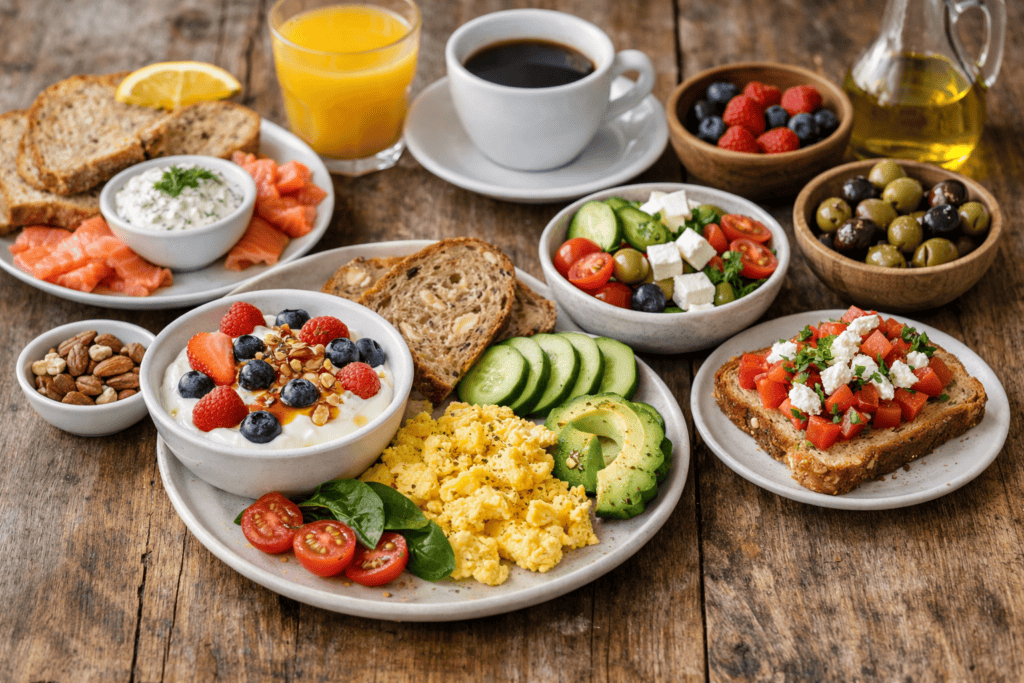
Grocery-List Staples for No-Cook Mediterranean Breakfasts
A no-cook Mediterranean diet breakfast can be as simple as Greek yoghurt, berries, chopped nuts, and a drizzle of extra virgin olive oil. That works because the staples do the heavy lifting: protein from yoghurt, fibre from fruit, and healthy fats from nuts and olive oil.
Stocking a small set of repeat ingredients makes easy Mediterranean breakfast assembly fast and consistent. Aim for items that keep well, mix in different ways, and cover three needs: a protein base, a fibre-rich plant food, and a fat source. With those in place, you can rotate flavours without changing your routine.
- Protein bases: Greek yoghurt, cottage cheese, kefir, tinned fish (sardines or tuna), cooked lentils (ready-to-eat packs)
- Fibre and crunch: oats, chia seeds, ground flaxseed, nuts, seeds, wholegrain bread, crisp veg (cucumber, tomatoes)
- Flavour builders: extra virgin olive oil, lemon, cinnamon, honey, olives, capers, fresh herbs
- Fruit: berries, oranges, apples, dried figs or dates (small portions)
Swap list: for dairy-free, use unsweetened soy yoghurt or coconut yoghurt and add nuts or chia for body. For gluten-free, use certified gluten-free oats or swap bread for rice cakes or extra fruit and nuts. If you want options beyond no-cook, keep a short list of meals you an cook in under 20 minutes for days when you have more time.
5-Minute Greek Yoghurt Bowls (Fruit, Nuts, Seeds, Honey)
Greek yoghurt bowls sit on a clear contrast: Option A uses full-fat Greek yoghurt as the base, while Option B uses a dairy-free yoghurt alternative. Both are true no-cook breakfast ideas, but the base changes the bowl’s protein, texture, and how well it holds toppings.
Option A typically tastes tangier and sets thicker, so fruit and nuts stay on top instead of sinking. Option B often tastes sweeter and looser, so the same toppings can soften faster. For either option, assemble in under 5 minutes: spoon yoghurt into a bowl, add fresh or thawed fruit, scatter nuts and seeds, then finish with a small drizzle of honey.
| Build choice | What you get | Best when |
|---|---|---|
| Greek yoghurt + berries + walnuts + chia + honey | Thick texture, balanced sweet-tart flavour | You want a classic easy Mediterranean breakfast with minimal prep |
| Dairy-free yoghurt + citrus + almonds + flax + honey | Lighter mouthfeel, brighter flavour | You need a dairy-free Mediterranean diet breakfast |
| Greek yoghurt + banana + pistachios + sesame + honey | Creamier, more filling finish | You need longer-lasting energy before a busy morning |
For gluten-free needs, keep toppings to plain nuts, seeds, and fresh fruit, and check that any granola-style add-ons are certified gluten-free. For dairy-free swaps, choose an unsweetened yoghurt and add extra nuts or seeds to keep the bowl satisfying without cooking.
Overnight Oats and Chia Pots with Mediterranean Flavours (No Cooking Required)
Many people skip oats because they assume they need a pan and 10–15 minutes. That turns a Mediterranean diet breakfast into a weekday problem: no time, no heat, and no clean-up.
Overnight oats and chia pots solve this with cold assembly and fridge setting. You mix the base in under 60 seconds, then let time do the work while you sleep. The result is a thick, spoonable jar that travels well and holds fruit, nuts, and olive oil without going soggy.
Use a jar with a lid. Add 40 g rolled oats or 3 tablespoons chia seeds, 150–200 ml milk or yoghurt, and a pinch of cinnamon. Stir well, then add 1 tablespoon chopped walnuts or pistachios and 1 tablespoon raisins or chopped dates. Refrigerate for at least 4 hours.
In the morning, top with berries or sliced figs and 1 teaspoon extra virgin olive oil. For dairy-free, swap to unsweetened soy or coconut yoghurt. For gluten-free, use certified gluten-free oats.
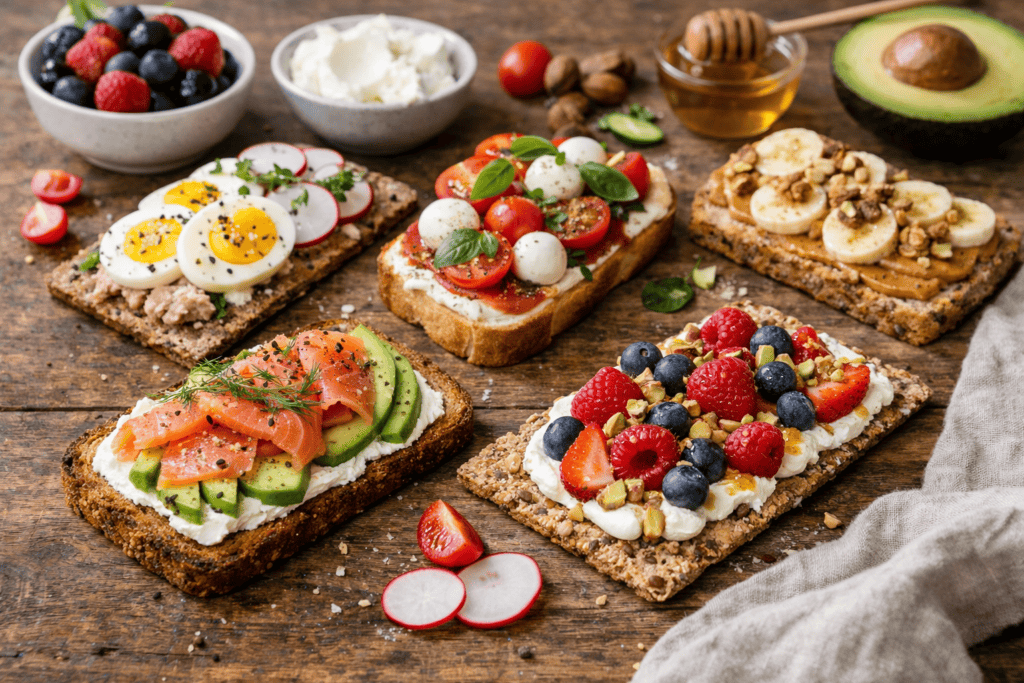
No-Cook Toasts and Crispbreads (Hummus, Avocado, Tomato, Sardines)
Toasts and crispbreads fit that model because you can build a balanced plate in under 5 minutes using 4–6 staples. This format also makes portions easy to control: 1–2 slices of toast or 2–3 crispbreads, plus 1 protein topping and 1–2 vegetable layers.
Keep the base simple and repeatable. Stock items that store well, such as tinned fish, jarred roasted peppers, and hummus. For a broader list, see healthy pantry staples everyone.
- Hummus + tomato: spread hummus, add sliced tomatoes, finish with olive oil and black pepper.
- Avocado + lemon: mash avocado with lemon and salt; top with cucumber or radish.
- Sardines + herbs: layer sardines, chopped parsley, and a squeeze of lemon; add capers if you have them.
Swap list: For gluten-free, use certified gluten-free crispbreads or corn cakes. For dairy-free, avoid feta and use hummus, tahini, or mashed beans for creaminess.
Mediterranean Cottage Cheese and Ricotta Bowls (Sweet and Savoury)
You come back from a morning walk and want something filling, but you do not want to cook. A cottage cheese bowl solves that in under 5 minutes: spoon 200 g cottage cheese into a bowl, add 6–8 halved cherry tomatoes, 1 tbsp extra virgin olive oil, and a pinch of black pepper. Finish with 1 tbsp chopped olives or capers and a handful of rocket.
This works as an easy Mediterranean breakfast because the base brings protein, while the toppings add fibre, polyphenols, and unsaturated fats. Ricotta gives a softer, less tangy option. Use 150 g ricotta, top with 1 sliced peach or 100 g berries, 1 tbsp chopped walnuts, and 1 tsp honey. Add cinnamon or lemon zest for flavour without extra sugar.
- Dairy-free swaps: use unsweetened soy yoghurt or a thick tofu “ricotta” (crumbled tofu + lemon + olive oil).
- Gluten-free swaps: serve with rice cakes, corn thins, or a side of fruit instead of bread.
No-Cook Breakfast Salads and Mezze Plates (Veg, Olives, Beans, Tuna)
Breakfast salads and mezze plates sit on a clear contrast: Option A builds a salad bowl around vegetables and beans, while Option B builds a mezze plate around olives, tinned fish, and dips. Both count as a mediterranean diet breakfast because they rely on plant foods and olive oil, but the layout changes speed and texture.
Option A: tip 120–150 g drained chickpeas or cannellini beans into a bowl, add a large handful of salad leaves, 6–8 halved cherry tomatoes, and 1 tbsp extra virgin olive oil. Option B: plate 2–3 tbsp hummus, 8–10 olives, 1 small tin of tuna or sardines, and sliced cucumber and peppers, then finish with lemon and black pepper.
The key differences are portability and protein style. Salads hold dressing better and travel neatly in one container. Mezze plates suit grazing and make it easier to control salty items such as olives and tinned fish.
Practical swaps keep these no cook breakfast ideas inclusive. For dairy-free, use hummus, tahini, or mashed white beans instead of feta or yoghurt-based dips. For gluten-free, use rice cakes or corn thins instead of bread, and check labels on flavoured tuna and dips for wheat-based thickeners.
Grab-and-Go Jars and Wraps (No-Cook Assembly for Busy Mornings)
Weekday mornings often fail on one point: you need breakfast that survives a commute without spilling, bruising, or going soggy. A jar or wrap fixes that problem because you assemble, seal, and leave in under 5 minutes, with no hob, toaster, or blender.
Use a simple formula for an easy Mediterranean breakfast: a protein base, a fibre layer, and a fat or flavour layer. For a jar, start with 170–200 g Greek yoghurt or skyr, then add 2 tbsp oats or 1 tbsp chia, then 120–150 g fruit. Finish with 1 tbsp chopped nuts or seeds and 1 tsp extra virgin olive oil or honey. Keep wet fruit (citrus, berries) above the oats so the base stays thick.
For wraps, spread 2 tbsp hummus or labneh on a wholegrain wrap, add a handful of spinach, then add a protein such as tinned tuna or smoked salmon (about 80–100 g). Add sliced cucumber and tomatoes, then roll tightly and wrap in foil. For dairy-free swaps, use coconut or soy yoghurt, or replace labneh with hummus or tahini. For gluten-free swaps, use corn tortillas, lettuce wraps, or gluten-free wraps.
These no cook breakfast ideas travel cleanly, keep texture for several hours, and make portions consistent without measuring every ingredient.
Swap Lists: Dairy-Free and Gluten-Free Mediterranean Breakfast Options
A 2024 review in The BMJ found that fermented dairy foods (such as yoghurt) were linked with a lower risk of type 2 diabetes, while the evidence varied by dairy type. If you avoid dairy or gluten, you can still build an easy Mediterranean breakfast by swapping the base and keeping the same structure: protein + fibre + extra virgin olive oil or nuts. Aim to keep assembly to 3 steps and 5 minutes: open, spoon, top.
- Dairy-free swaps: Greek yoghurt → unsweetened soya yoghurt; cottage cheese/ricotta → mashed white beans with lemon and olive oil; feta → firm tofu “feta” cubes (marinated in olive oil, lemon, oregano).
- Gluten-free swaps: toast → certified gluten-free crispbreads; wraps → corn tortillas; oats → certified gluten-free oats (avoid cross-contamination).
Use the same topping ratios: 1–2 tbsp nuts or seeds, 1 tbsp olive oil, and 1–2 handfuls of fruit or veg. This keeps flavour and satiety consistent without cooking.
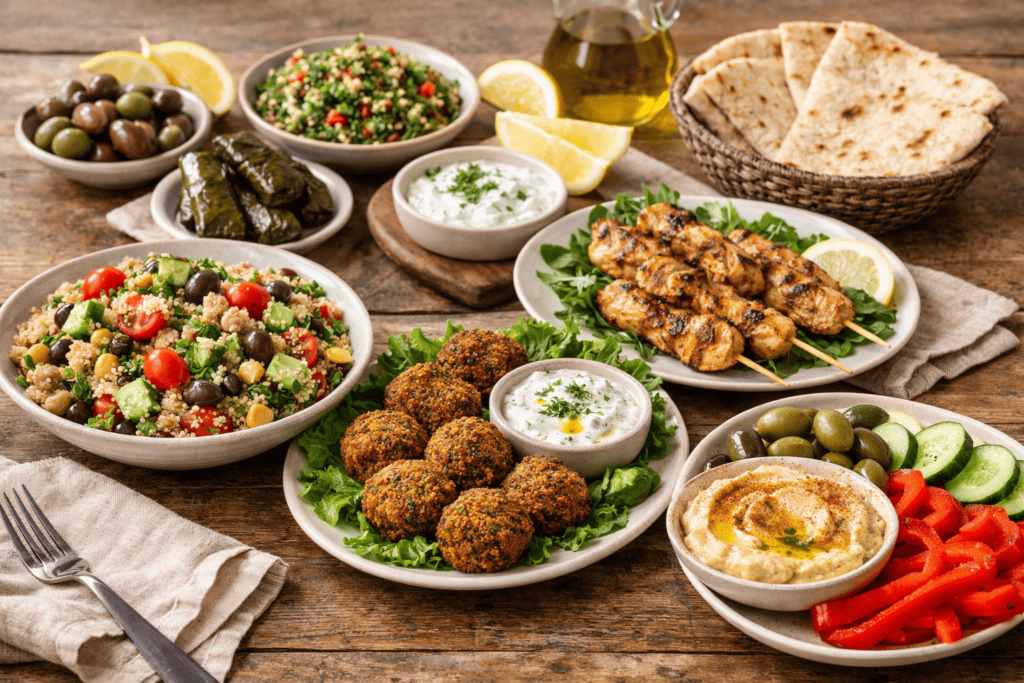
21 No-Cook Mediterranean Diet Breakfast Ideas (5-Minute Assembly List)
How to use this 21-idea list in real life
There is no time for pans, porridge, or washing up. You still want a mediterranean diet breakfast that feels like food, not a snack. A simple solution is a “two-shelf build”: choose one protein base from the fridge shelf, then add fruit, veg, nuts, or tinned fish from the cupboard shelf.
This works because no-cook assembly breakfasts rely on structure, not recipes. You aim for three parts: a protein (yoghurt, eggs, beans, fish), a fibre source (fruit, veg, oats, wholegrains), and a fat or flavour layer (extra virgin olive oil, nuts, seeds, olives). When those parts are in place, the meal stays filling and balanced without cooking.
Use the list below as a rotation. Pick 3–4 options you can repeat on weekdays, then keep the rest for variety. Most ideas use the same staples, so you can shop once and mix-and-match all week.
21 no-cook Mediterranean breakfast ideas (each in 5 minutes)
1) Greek yoghurt, berries, walnuts, and a drizzle of honey. 2) Greek yoghurt, sliced pear, pistachios, and cinnamon. 3) Greek yoghurt, orange segments, toasted almonds, and grated dark chocolate. 4) Skyr or thick yoghurt with cherries, chia seeds, and crushed hazelnuts. 5) Cottage cheese with cucumber, cherry tomatoes, extra virgin olive oil, and black pepper. 6) Ricotta with figs (or dried figs), pumpkin seeds, and lemon zest. 7) Labneh with olives, sliced radish, olive oil, and za’atar.
8) Overnight oats jar topped with raspberries and chopped almonds. 9) Chia pot with cocoa, banana slices, and sesame seeds. 10) Muesli soaked in yoghurt with apple, raisins, and walnuts. 11) Crispbreads with hummus, grated carrot, and sunflower seeds. 12) Toast with mashed avocado, lemon, and chilli flakes. 13) Toast with tomato, olive oil, and a pinch of salt, finished with basil. 14) Crispbreads with sardines, sliced tomato, and capers. 15) Rye toast with smoked salmon, cucumber ribbons, and dill.
16) Mezze plate: hummus, olives, cherry tomatoes, and a handful of nuts. 17) Breakfast salad: rocket, cannellini beans, chopped peppers, olive oil, and lemon. 18) Tuna and white bean bowl with red onion, parsley, and olive oil. 19) Two hard-boiled eggs (batch-cooked), sliced with tomatoes and olives. 20) Jar: yoghurt, oats, berries, and mixed seeds, sealed for commuting. 21) Wrap: hummus, spinach, cucumber, and tinned salmon or tuna, rolled tight.
Swap lists (dairy-free and gluten-free) without changing the format
For dairy-free breakfasts, keep the same “base + topping + fat” structure and swap the base. Replace Greek yoghurt, skyr, labneh, ricotta, or cottage cheese with unsweetened soya yoghurt, coconut yoghurt, or a thicker plant-based “Greek-style” yoghurt. If you need a higher-protein option, choose soya-based products and add 1–2 tablespoons of nuts or seeds for extra staying power.
For gluten-free breakfasts, swap the grain layer rather than rebuilding the whole idea. Replace wheat toast with certified gluten-free bread, corn thins, rice cakes, or gluten-free crispbreads. Replace standard oats or muesli with certified gluten-free oats, or use chia pudding as the base and keep the same fruit-and-nut toppings.
These swaps keep the same assembly time because the steps do not change. You still open, spoon, and top. That is the core of easy mediterranean breakfast planning: repeat a simple build, then vary the flavours with what you already have.
Frequently Asked Questions
What qualifies as a Mediterranean diet breakfast when you are assembling it with no cooking?
A no-cook mediterranean diet breakfast uses whole foods common in Mediterranean eating: fruit or vegetables, whole grains, legumes, nuts or seeds, and olive oil. Include a protein such as Greek yoghurt, cottage cheese, or tinned fish. Keep added sugar low and choose water, tea, or coffee. This creates an easy mediterranean breakfast from simple no cook breakfast ideas.
Which pantry and fridge staples should you keep on hand for easy Mediterranean breakfasts in under five minutes?
Keep these staples for a fast mediterranean diet breakfast:
- Greek yoghurt, kefir, cottage cheese
- Eggs, hummus, feta
- Olive oil, balsamic, lemon
- Oats, wholegrain bread, nuts, seeds
- Tinned chickpeas, tuna, sardines
- Fruit, tomatoes, cucumbers, olives
These basics support an easy mediterranean breakfast and other no cook breakfast ideas in under five minutes.
How can you build a balanced no-cook Mediterranean breakfast with protein, fibre, and healthy fats?
Build a balanced mediterranean diet breakfast by combining 3 parts: protein, fibre, and healthy fats. Choose Greek yoghurt, cottage cheese, or tinned fish (15–25 g protein). Add fibre from oats, fruit, or beans (5–10 g). Finish with olive oil, nuts, or seeds (1–2 tablespoons). This creates an easy mediterranean breakfast from no cook breakfast ideas.
What are the best no-cook Mediterranean diet breakfast options if you need a dairy-free swap list?
For a mediterranean diet breakfast without dairy, use these easy mediterranean breakfast and no cook breakfast ideas:
- Overnight oats with chia and almond or oat milk
- Avocado toast with olive oil, tomato, and seeds
- Hummus with wholegrain pita and cucumber
- Fruit and nuts with coconut yoghurt
- Chickpea salad with lemon and herbs
Dairy-free swaps: use plant yoghurt, plant milk, tahini, hummus, or mashed avocado instead of yoghurt, milk, feta, or cream cheese.
What are the best no-cook Mediterranean breakfast ideas if you need a gluten-free swap list?
For a mediterranean diet breakfast, choose naturally gluten-free, easy mediterranean breakfast options: Greek yoghurt with berries and nuts, chia pudding with milk and cinnamon, cottage cheese with tomatoes and olive oil, smoked salmon with avocado, or hummus with veg sticks. Gluten-free swaps: oats→certified GF oats; bread→corn cakes; couscous→quinoa; barley→buckwheat.
Which no-cook Mediterranean breakfasts travel well for commuting, school runs, or office mornings?
Travel-friendly mediterranean diet breakfast options include overnight oats with Greek yoghurt and berries, chia pudding, a jar salad with chickpeas and olive oil, hummus with wholegrain pitta and sliced veg, and a nut-and-fruit pot. These easy mediterranean breakfast and no cook breakfast ideas pack well in leakproof jars or bento boxes.
How should you portion and store no-cook Mediterranean breakfast ingredients to speed up weekday mornings?
Pre-portion dry staples (oats, nuts, seeds) into jars or tubs for 4–5 breakfasts. Wash and chop fruit and vegetables, then store in airtight containers for up to 3 days. Keep yoghurt, hummus, and cooked grains in the front of the fridge. Portion olive oil and lemon into small pots to build an easy Mediterranean breakfast fast.
Sirius Training (1stc.uk) is a Food safety Training Provider supporting businesses that need clear, practical compliance training. The company delivers structured learning for teams working in food production, storage, and distribution, with content designed to match real workplace risks.
This spotlight reviews Sirius Training’s course focus, including STC Courses and BRCGS Courses, and explains how these options can help organisations build safer processes, improve audit readiness, and keep staff skills current.
Key takeaways
- Sirius Training is a food safety training provider delivering clear, practical compliance learning for organisations working in food production, storage, distribution, retail, and hospitality.
- The company specialises in structured, role-based training that reflects real workplace risks and supports consistent hygiene, allergen control, and safe food handling practices.
- Sirius Training offers flexible delivery formats—including online, on-site, and blended learning—allowing businesses to train teams efficiently while maintaining audit-ready records.
- Its courses align with recognised frameworks such as HACCP and BRCGS, helping organisations strengthen compliance, improve audit readiness, and evidence staff competence.
- Training programmes are organised by job role and risk level, enabling businesses to build capability from entry-level food safety knowledge through to advanced management and verification skills.
- Specialist courses such as VACCP, TACCP, HARA, HACCP Level 4, and Allergen Awareness support organisations in managing fraud prevention, threat control, hazard analysis, and allergen risks.
- Sirius Training also provides health and safety learning tailored to food and hospitality environments, helping teams reduce workplace incidents and maintain safe daily operations.
- Beyond course completion, the company supports ongoing compliance through stronger documentation, clearer decision-making, and improved consistency across teams and audits.
About Sirius Training (1stc.uk): what the business does and who it serves
In 2023, the UK Food Standards Agency reported 2,471 confirmed foodborne outbreaks, affecting 8,034 people and causing 22 deaths (Food Standards Agency). These figures show why structured training matters for businesses that handle, prepare, store, or serve food. Sirius Training, trading via Food Safety Course Supplier, supports organisations that need practical, role-based food safety training that aligns with day-to-day operations.
1stc.uk focuses on helping teams build consistent habits around hygiene, allergen control, and safe handling. This often supports compliance with recognised frameworks such as HACCP (Hazard Analysis and Critical Control Points), which the Food Standards Agency describes as a systematic approach to managing food safety risks. Sirius Training typically serves food manufacturers, catering operations, and retail or hospitality sites where staff turnover, shift work, and varied tasks can make consistency harder to maintain.

Where Sirius Training delivers: online learning, on-site training, and blended options
A quality manager at a small food manufacturer may need to train new starters quickly, refresh supervisors on site, and keep evidence ready for audits. Sirius Training supports that mix by offering online learning for consistent delivery, on-site sessions for hands-on practice, and blended options that combine both.
Online courses suit teams spread across shifts, because staff can complete modules in controlled time blocks and managers can track completion. On-site training works well when a site needs to standardise routines, such as cleaning checks, allergen controls, or record keeping, because trainers can review real processes and correct gaps in real time.
Blended delivery often fits businesses preparing for certification or re-certification. For example, teams can complete pre-learning online, then use classroom time to focus on applying requirements to site documents and daily controls. Businesses exploring BRCGS Courses and Training or booking an STC Training Provider option can choose the format that matches risk, roles, and operational pressure.
Accreditation and compliance focus: aligning training with UK food safety expectations
Some providers teach to a generic syllabus, while others build courses around audit evidence and legal duties. For UK food businesses, the second option usually reduces risk, because managers can show how training maps to controls such as HACCP and allergen management.
Sirius Training (1stc.uk) positions its offer around recognised standards and practical compliance outcomes. That focus matters when a site needs training that supports customer requirements, supplier approval, and third-party audits, not only basic awareness.
For example, STC Courses suit teams that need structured food safety learning with clear outcomes and records. When a business works to a GFSI-benchmarked standard, BRCGS Courses can help align competence with audit expectations and role responsibilities.
The practical implication is simpler: training becomes easier to evidence, easier to refresh, and easier to defend during inspections or customer audits, because course content and documentation link back to the controls a site already uses.
Food Safety training overview: course levels, typical learners, and outcomes
Food businesses often struggle to match training to job risk. A new starter needs safe basics, while supervisors must control hazards and record checks. Audit teams also expect evidence that training fits each role and site process.
Sirius Training (via 1stc.uk) structures food safety learning by level, so teams can build competence without gaps. Entry-level courses focus on hygiene rules, contamination control, and personal practices. Higher levels move into monitoring, corrective actions, and managing staff compliance across shifts.
To implement training, map each job role to a course level, set a completion deadline for starters, and schedule refreshers for supervisors before busy periods. Managers should store certificates and training records in one place, ready for internal checks and external audits.
Typical learners include catering staff, retail handlers, production operatives, and site supervisors. Outcomes usually include clearer day-to-day controls, fewer avoidable errors, and stronger confidence during inspections because training evidence is easy to present.
BRCGS Food Safety Sites Training V9
In 2023, the BRCGS published Issue 9 of the Global Standard Food Safety, replacing Issue 8 and updating audit expectations for certified sites. The change matters because auditors test not only controls, but also how well teams apply them on the shop floor. Sites that train against the current version can reduce non-conformances linked to weak understanding of procedures.
Sirius Training supports this need through its Food Safety Sites Training, built around the structure and intent of BRCGS Food Safety Issue 9. The course focuses on how requirements translate into day-to-day actions, so managers can show clear evidence during audits. That includes consistent records, clear responsibilities, and practical checks that match site risk.
- Version focus: aligned to BRCGS Food Safety Issue 9 (V9), not legacy content.
- Audit readiness: supports evidence that auditors expect to see during certification audits.
- Role clarity: helps sites link training to responsibilities across production, hygiene, and quality.
For businesses running BRCGS certification, V9 training works best when it supports internal audits, corrective actions, and refresher cycles. Sirius Training positions this course as a practical step for sites that need staff understanding to match documented systems.

BRCGS Vulnerability (Fraud) VACCP Training
A technical manager preparing for a BRCGS audit often faces one awkward question: “How do you know your raw materials are not vulnerable to fraud?” A supplier approval file may look complete, yet gaps appear when teams cannot explain risk drivers such as scarcity, price volatility, or complex supply chains.
Sirius Training addresses this through its VACCP Training Course, which focuses on Vulnerability Assessment and Critical Control Points (VACCP). The course helps learners separate food fraud from food safety hazards, then build a practical assessment that stands up to audit scrutiny. Learners review how to score vulnerability, choose proportionate controls, and keep evidence current when suppliers, specifications, or market conditions change.
This training suits roles that own supplier assurance and product integrity, including technical, quality, procurement, and site management. It also supports cross-functional working, because fraud controls often sit across departments rather than in one procedure.
- Risk identification: where fraud can enter your supply chain and why.
- Control selection: testing, supplier checks, and specification controls that match risk.
- Audit-ready evidence: records, review frequency, and clear ownership.
For sites working to BRCGS expectations, a consistent VACCP approach can reduce uncertainty during audits and strengthen day-to-day decision-making on supplier changes and material substitutions.
Effective Hazard & Risk Analysis Course (HARA)
Some sites treat hazard analysis as paperwork, while others use it to run daily controls. The first option often produces generic hazards and weak justifications. The second links hazards to process steps, evidence, and measurable limits.
The HARA Courses from Sirius Training focus on that second approach. Learners identify hazards, score risk, and record controls that stand up to internal review and external audit. The course helps teams separate “what could go wrong” from “what is likely”, keeping risk ratings consistent across products and lines.
The key difference is output quality. A basic approach can leave unclear critical limits, weak monitoring, and corrective actions that do not match risk. A structured HARA approach produces clearer controls, stronger verification, and records that support decisions when processes change.
In practice, this can cut rework during HACCP reviews, speed up change control, and build confidence when auditors ask why a control exists and how the site knows it works.
HACCP training: understanding food safety management systems and link
Many food businesses have a HACCP plan, but struggle to prove that staff understand it. That gap often shows up as weak monitoring records, unclear corrective actions, and inconsistent decisions during audits.
Sirius Training addresses this with HACCP training that explains how a food safety management system works in practice. The course links hazards to controls, critical limits, checks, and evidence, so teams can apply the plan on the shop floor, not only in documents.
- Map your process and confirm product, intended use, and users.
- Identify hazards (biological, chemical, physical, allergen) at each step.
- Set controls, including CCPs where needed, with clear limits and monitoring.
- Define actions for deviations, plus verification and record keeping.
After training, managers can brief teams using consistent terms, tighten monitoring routines, and keep HACCP evidence audit-ready. For course details and booking, see the HACCP training options on 1stc.uk.
Threat Management TACCP Training Course
Food Standards Agency incident reporting shows that intentional contamination remains a live risk, with food incidents logged each year across the UK supply chain. TACCP (Threat Assessment and Critical Control Points) gives sites a structured way to prevent, detect, and respond to malicious acts, from unauthorised access to product tampering. Sirius Training frames TACCP as a management tool, not a one-off exercise, so teams can evidence controls during customer reviews and audits.
The TACCP Training course focuses on practical threat assessment, site vulnerability review, and proportionate controls. Learners typically map threats across key areas such as people, premises, processes, and product, then set clear actions and ownership. Many sites build the output into existing food safety systems, linking TACCP checks to routine verification and incident escalation routes. That approach supports consistent decisions on shift, not just during audit preparation.
Combined HACCP & Food Safety Level 4
A quality manager reviews a ready-to-eat line after a minor allergen near-miss. The site has a HACCP plan, but the supervisor cannot explain why a control is critical, what evidence proves it works, or when to stop production.
Combined HACCP Level 4 targets that gap by joining advanced HACCP with Level 4 food safety knowledge. Learners practise linking hazards to controls, setting measurable critical limits, and defining corrective actions that protect consumers and satisfy audits.
The course suits technical managers, QA leads, and supervisors who sign off monitoring, verification, and change control. It also helps teams justify decisions during investigations, such as why a deviation triggers product hold, rework, or disposal.
Across food manufacturing, catering, and distribution, Level 4 competence supports consistent risk-based decisions. That consistency reduces reliance on “tribal knowledge” and strengthens training records when customers or auditors ask for role-based evidence.

Allergen Awareness training: meeting allergen labelling and handling duties and link
Allergen control often falls into two approaches. Option A treats allergens as a labelling check at the end of production. Option B manages allergens as a process risk, covering ingredient intake, storage, changeovers, cleaning, and verification.
The key difference is where errors start. Labelling-only control can miss cross-contact from shared tools, rework, or poor line clearance. Process-led control builds checks into daily routines, so teams spot issues before product leaves site.
Practical implications are clear for UK duties. Teams must understand how to prevent unintended allergen presence and how to label prepacked and prepacked for direct sale (PPDS) foods correctly. Clear training also supports consistent decisions during audits and customer complaints.
Sirius Training covers this gap through its Allergen Awareness training, designed for food handlers, supervisors, and anyone who signs off labels or specifications. The course links allergen handling to real controls, including:
- allergen identification and risk points across the process
- segregation, changeover, and cleaning checks
- label review steps and escalation when information is unclear
Health and Safety training: workplace essentials for food and hospitality teams and link
Slips, trips and manual handling injuries can stop a shift in minutes, especially in kitchens and busy service areas. The Health and Safety Executive (HSE) lists these hazards as common causes of workplace harm, and food and hospitality teams often face all three in one day. Sirius Training helps businesses close that gap with practical health and safety training that fits real workflows, not just policies.
The approach focuses on the controls teams use daily: safe lifting, clear walkways, correct use of knives and equipment, and simple reporting that managers can act on. Training also supports supervisors who need consistent standards across starters, agency staff and experienced team members.
To implement it, managers can map the highest-risk tasks, assign the right course to each role, and set short refreshers after incidents or process changes. Teams then apply the learning through routine checks, clearer handovers and better hazard reporting, which can reduce disruption and strengthen compliance during inspections.
How to book, support available, and what to expect after completion
In 2023, the UK Health and Safety Executive (HSE) recorded 561,000 working people with a non-fatal workplace injury, and 138 worker fatalities. Those figures explain why competent training matters after the certificate is issued, not only on the training day. Ongoing coaching helps people apply procedures under pressure, spot weak controls early, and keep safe habits consistent across teams.
Booking with Sirius Training starts on 1stc.uk, where each course page sets out the format, who it suits, and the expected outcomes. For sites preparing for audit or updating systems, teams often book targeted options such as BRCGS Food Safety Sites Training V9 or BRCGS Vulnerability (Fraud) VACCP. When the goal is stronger risk control, many choose HARA or HACCP training.
Support typically continues after completion through clearer documentation, stronger decision-making, and better internal conversations about evidence. Learners can also build capability with TACCP, Combined HACCP & Food Safety Level 4, and role-specific refreshers such as Allergen Awareness and Health and Safety training. For most sites, the best outcome is measurable: fewer repeat non-conformances, cleaner corrective actions, and more consistent checks on every shift.
Frequently Asked Questions
What is Sirius Training and what types of businesses does it support?
Sirius Training is a food safety Training Provider delivering STC Courses and BRCGS Courses. It supports businesses that need compliant food safety systems, including food manufacturers, packers, storage and distribution operators, and retailers. Training suits teams responsible for HACCP, internal audits, hygiene controls, and supplier standards.
What food safety training options does Sirius Training offer for different roles and risk levels?
Sirius Training offers food safety training options matched to job role and risk level. As a Food safety Training Provider, it delivers STC Courses and BRCGS Courses for operatives, supervisors, managers, and internal auditors. Options cover low-risk food handling, high-risk production, allergen control, HACCP awareness, and site-specific compliance for manufacturing and storage.
What are STC courses at Sirius Training, and who are they designed for?
STC courses at Sirius Training are structured programmes focused on practical food safety and quality skills. They suit food manufacturers, packers, and distribution teams, including operatives, supervisors, and managers. The courses support day-to-day compliance tasks, strengthen internal audits, and prepare sites for customer standards such as BRCGS Courses. Sirius Training acts as a Food safety Training Provider for these needs.
What does the Sirius Training STC courses page cover, and how do you choose the right course?
The Sirius Training STC courses page outlines STC Courses for food safety and compliance, including course aims, who each option suits, delivery format, duration, and assessment. To choose the right course, match your job role and risk level, check any customer or audit requirements (such as BRCGS Courses), and confirm the required certificate level and refresher timing.
What are BRCGS courses, and how do they support food manufacturing and packaging standards?
BRCGS courses teach the requirements of BRCGS Global Standards for food manufacturing and packaging, including HACCP, site hygiene, traceability, allergen control, and audit readiness. They help teams meet retailer and brand expectations, reduce non-conformances, and build consistent quality systems. A Food safety Training Provider such as Sirius Training can align STC Courses with BRCGS Courses.
What does the Sirius Training BRCGS courses page include, and what prerequisites may apply?
The Sirius Training BRCGS courses page typically lists available BRCGS Courses, course aims, formats (online or classroom), dates, duration, fees, and who each option suits. It may also outline assessment and certification details. Prerequisites can include relevant job experience, prior STC Courses, or basic food safety knowledge, depending on the level.
How can you contact Sirius Training to discuss course suitability, delivery format, and booking?
Contact Sirius Training through the enquiry form on 1stc.uk, or call or email the team to discuss course suitability, delivery format, and booking. Ask about available STC Courses and BRCGS Courses, plus options for on-site, virtual, or classroom delivery. Provide your site location, delegate numbers, and preferred dates for a fast quote.
People who react to meat often struggle to identify the cause. Poultry allergy vs alpha gal can look similar at first, yet the triggers and timing differ. Some people also report histamine intolerance chicken reactions, where symptoms depend on freshness, storage, and individual tolerance. This comparison explains common meat allergy symptoms, how they may present after eating different meats, and why accurate identification matters for safer food choices and clearer discussions with a clinician.
Key takeaways
- Poultry allergy targets chicken or turkey proteins, not the alpha-gal sugar.
- Alpha-gal reactions follow mammal meat exposure and often start 3–6 hours later.
- Histamine intolerance can flare after aged, cured, or leftover meats with higher histamine.
- Timing helps differentiate causes: immediate suggests allergy, delayed suggests alpha-gal.
- Symptoms overlap, but triggers differ: poultry only, mammal meat, or histamine-rich foods.
- Diagnosis often needs targeted testing and a structured elimination-and-rechallenge plan.
How Poultry Allergy, Alpha-Gal Syndrome, and Histamine Intolerance Differ (Triggers and Immune Pathways)
In the United States, the CDC reports that about 110,000 suspected cases of alpha-gal syndrome (AGS) were identified in 2010–2022, and it estimates the true number may be much higher. That scale matters because AGS can look like a general “meat allergy”, yet the trigger and immune pathway differ from a poultry allergy or histamine intolerance.
Poultry allergy is a classic food allergy. The immune system makes IgE antibodies to proteins in chicken or turkey, and symptoms can start within minutes to about 2 hours after eating. This pattern fits many “meat allergy symptoms” reports that happen soon after a meal, including reactions to chicken.
AGS is also IgE-mediated, but the target is alpha-gal, a sugar found in most mammalian meat (beef, pork, lamb) and some products made from mammals. Symptoms often start 3–6 hours after eating, which makes timing a key clue when comparing poultry allergy vs alpha gal.
Histamine intolerance is different. It is not IgE allergy; it reflects an imbalance between histamine intake and breakdown, often linked to reduced activity of the enzyme diamine oxidase (DAO). Reactions tend to depend on dose and food handling, so “histamine intolerance chicken” concerns often relate to leftovers or processed meats rather than fresh, well-stored poultry.
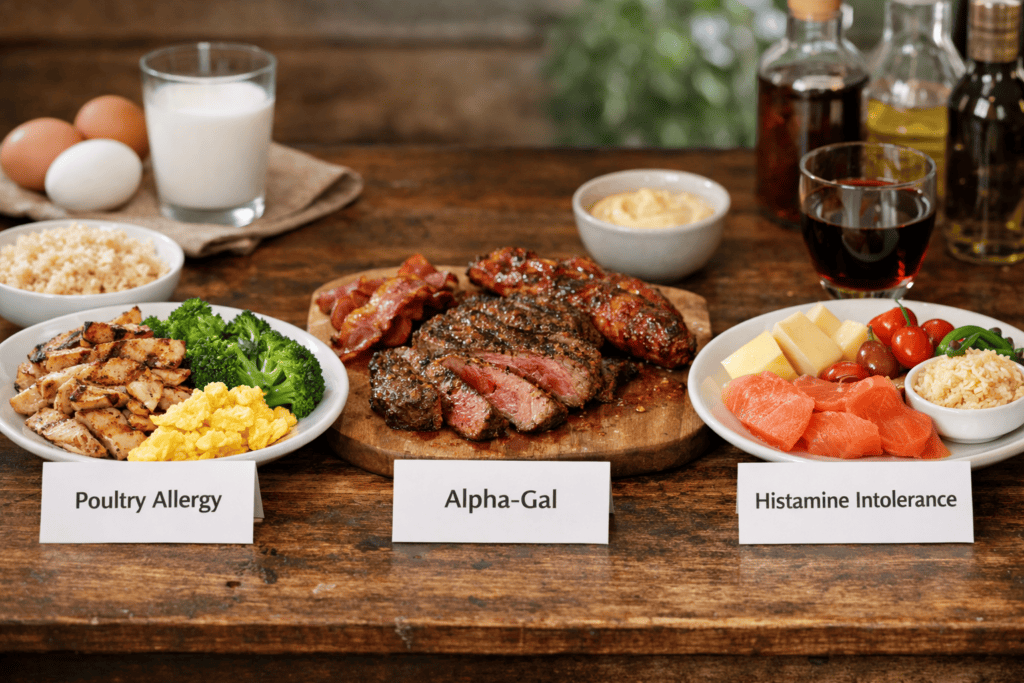
Symptom Patterns and Timing After Eating Meat (Immediate Reactions vs Delayed Reactions)
A person eats a chicken curry at 19:00 and feels fine at the table. By 19:20, itching starts around the lips, the throat feels tight, and hives spread across the chest. That fast pattern points towards an immediate reaction, which fits best with a poultry allergy. Classic food-allergy symptoms often begin within minutes to about 2 hours after eating, and they can include hives, swelling, wheeze, vomiting, or dizziness. If breathing changes or faintness occurs, treat it as an emergency and follow the guidance from the NHS on anaphylaxis.
Now compare that with someone who eats a beef burger at 19:00 and sleeps normally, then wakes at 02:00 with widespread hives, stomach cramps, or breathing symptoms. That delayed timing is a key clue for alpha-gal syndrome, where reactions often start about 3–6 hours after mammal meat. The delay can make the trigger easy to miss, because the meal and symptoms feel disconnected.
Histamine intolerance can sit between these patterns. Symptoms may start during the meal or within a few hours, and can include flushing, headache, runny nose, diarrhoea, or hives. Chicken can still cause issues if the dish is high-histamine (leftovers, slow-cooked stock, or cured ingredients) or if histamine breakdown is reduced.
Which Meats and Products Commonly Cause Problems (Chicken, Turkey, Red Meat, Gelatin, Broths, and Processed Foods)
Chicken and turkey often cause problems in a true poultry allergy, while alpha-gal syndrome (AGS) more often links to mammal meats and mammal-derived ingredients. Histamine intolerance can overlap with both, because reactions often relate to histamine load and storage, not the animal species.
| Food or ingredient | Poultry allergy | Alpha-gal syndrome | Histamine intolerance |
|---|---|---|---|
| Chicken, turkey | Common trigger | Usually tolerated | Can trigger if leftovers or processed |
| Beef, pork, lamb, venison | Usually tolerated | Common trigger | Can trigger, varies by cut and storage |
| Gelatin (capsules, sweets) | Usually tolerated | Can trigger (mammal-derived) | Usually tolerated |
| Broths, stocks, gravies | Risk if made from poultry | Risk if made from mammal bones | Higher risk when long-simmered or stored |
| Processed meats and ready meals | Risk from hidden poultry proteins | Risk from mammal ingredients | Higher risk due to additives and storage |
These differences affect label reading. AGS can hide in beef stock, pork fat, gelatin, and some “natural flavours”. Poultry allergy can hide in chicken powder, turkey stock, and mixed-meat products. Histamine intolerance often worsens with aged, fermented, slow-cooked, or reheated meats.
- If reactions follow red meat or gelatin, discuss AGS testing with an allergist and review guidance from the CDC.
- If reactions follow chicken or turkey, treat it as a potential food allergy and seek specialist advice, especially with breathing symptoms.
- If reactions vary by freshness, freeze portions promptly and avoid long-held broths and processed foods.
Testing, Diagnosis, and Next Steps (Allergy Referral, Alpha-Gal IgE, Histamine Assessment, and Elimination Trials)
People who react to meat often self-test by cutting “all meat”, then reintroducing foods at random. This can miss delayed alpha-gal reactions, confuse meat allergy symptoms with reflux, and delay an adrenaline auto-injector when risk is high.
A structured work-up works better: allergy referral for IgE-mediated reactions, targeted blood testing for alpha-gal, and separate assessment for histamine intolerance. Each pathway has different tests and next steps.
- Book an allergy referral for hives, swelling, wheeze, throat tightness, fainting, or repeated vomiting. Ask about an anaphylaxis plan and an adrenaline auto-injector.
- Request alpha-gal testing if reactions follow beef, pork, lamb, gelatin, or dairy, especially with symptoms hours later. Clinicians typically order serum alpha-gal specific IgE and review tick exposure. See CDC guidance on alpha-gal syndrome.
- Assess histamine intolerance when reactions cluster around leftovers, slow-cooked meats, cured foods, alcohol, or aged products. No single test confirms it; diagnosis often relies on a low-histamine trial and review of medicines that can raise histamine.
- Run a controlled elimination trial for 2–4 weeks with a food-and-symptom diary, then reintroduce one item at a time. Keep portions consistent and avoid testing alone after severe reactions.
Clear testing and a planned trial can show whether the issue is poultry allergy vs alpha gal or a non-allergic trigger such as histamine intolerance chicken, so you avoid only what is necessary and manage risk.
Frequently Asked Questions
What symptoms suggest a poultry allergy compared with alpha-gal syndrome?
Poultry allergy often causes fast meat allergy symptoms within minutes to 2 hours after chicken or turkey, such as hives, lip swelling, wheeze, vomiting, or anaphylaxis. Alpha-gal syndrome usually starts 3 to 6 hours after eating mammal meat (beef, pork, lamb), with hives, stomach cramps, diarrhoea, or breathing trouble. Histamine intolerance chicken may cause flushing and headache.
How does the timing of reactions differ between alpha-gal syndrome and histamine intolerance after eating meat?
Alpha-gal syndrome often causes delayed meat allergy symptoms, starting about 3–6 hours after eating mammal meat. Histamine intolerance chicken reactions usually start faster, often within minutes to 2 hours, and can worsen with leftovers or slow-cooked meats. This timing difference helps when comparing poultry allergy vs alpha gal.
Can histamine intolerance cause reactions to chicken even when red meat is tolerated?
Yes. Histamine intolerance can trigger symptoms after chicken even if red meat is tolerated. Chicken can contain higher histamine if it is not very fresh, stored too long, or reheated. Typical meat allergy symptoms include flushing, hives, itching, headache, stomach cramps, diarrhoea, and a fast heartbeat. This differs from poultry allergy vs alpha gal.
Which meats and animal products most often trigger alpha-gal syndrome reactions?
Alpha-gal syndrome most often triggers reactions after mammal meat and products, including beef, pork, lamb, venison, goat, and organ meats. Some people also react to mammal-derived fats (lard, tallow), gelatine, and high-fat dairy. Poultry and fish usually do not trigger alpha-gal, which helps separate poultry allergy vs alpha gal from histamine intolerance chicken and other meat allergy symptoms.
What tests can help confirm poultry allergy, alpha-gal syndrome, or histamine intolerance?
Clinicians may use:
- Poultry allergy: skin prick testing and serum specific IgE to chicken or turkey; supervised oral food challenge if results conflict with symptoms.
- Alpha-gal syndrome: blood test for alpha-gal specific IgE; history of delayed reactions after mammal meat.
- Histamine intolerance chicken: no single confirmatory test; diagnosis uses symptom diary, low-histamine trial, and review of diamine oxidase (DAO) activity and triggers.
How can people tell whether meat allergy symptoms are caused by histamine build-up in leftovers or by an immune reaction?
Histamine build-up often causes fast symptoms (minutes to 2 hours) after eating leftovers, slow-cooked meat, or poorly stored chicken, and may include flushing, headache, hives, or diarrhoea. An immune reaction in poultry allergy vs alpha gal can trigger hives, swelling, wheeze, or faintness; alpha-gal often starts 3–6 hours after red meat. Allergy testing helps confirm.
What steps can reduce the risk of reactions when eating meat while awaiting a medical diagnosis?
Stop eating meats that trigger meat allergy symptoms, and keep a food-and-symptom diary with times, portions, and exercise or alcohol. Choose fresh, well-cooked meat and avoid leftovers, cured meats, and slow-cooked dishes, which can worsen histamine intolerance chicken. Read labels for hidden meat ingredients. Carry prescribed antihistamines or adrenaline if advised, and seek urgent care for breathing, swelling, or fainting.
Many people ask, is oatmeal anti inflammatory, especially when planning a heart-healthy breakfast. Oats contain beta-glucan, a soluble fibre that can support gut health and may help manage inflammation when part of a balanced diet. Still, the answer depends on what you add and how you prepare it.
This guide explains how oats inflammation can relate, which anti inflammatory oatmeal toppings tend to help, and which common add-ins can reduce the benefit.
Key takeaways
- Oatmeal can support lower inflammation, mainly due to its beta-glucan fibre.
- Choose plain rolled or steel-cut oats to avoid added sugar and additives.
- Add berries, chia, flax, or walnuts to boost antioxidants and healthy fats.
- Stir in yoghurt or nut butter for protein, which helps steady blood sugar.
- Use cinnamon, ginger, or turmeric for flavour without extra sugar.
- Avoid sugary toppings, flavoured packets, and heavy creamers that raise calorie load.
Is oatmeal anti-inflammatory? What the evidence suggests
Oats contain about 10%–15% soluble fibre by weight, and a typical 40 g serving provides roughly 3–4 g of beta-glucan-rich fibre. Beta-glucan can help lower LDL cholesterol, which matters because chronic, low-grade inflammation often travels with poor cardiometabolic health. Oats also supply unique polyphenols called avenanthramides, which lab studies link to reduced inflammatory signalling in blood vessels. These compounds are one reason researchers often describe oats as a heart-supportive whole grain rather than a neutral starch. Oats also bring magnesium and small amounts of iron, which support normal energy and blood function.
Human evidence points in the same direction, but with limits. In a 2021 systematic review and meta-analysis, oat beta-glucan intake reduced LDL cholesterol by about 0.19 mmol/L, with many trials using around 3 g per day of beta-glucan (PubMed). Lower LDL does not prove an anti-inflammatory effect, but it supports a pathway that can reduce inflammatory burden over time. For inflammation markers such as C-reactive protein (CRP), results vary across studies, and benefits depend on the full bowl: minimally processed oats plus fibre- and polyphenol-rich toppings, not sugar-heavy add-ons. Portion size and regular intake also matter, since most trials run for several weeks, not a single breakfast.

How oats may affect inflammation: beta-glucan, fibre, and gut health
You make a bowl of porridge on a cold morning, then add blueberries, chia, and cinnamon. That simple breakfast can do more than keep you full. The way oats deliver fibre to the gut can shape inflammation signals across the body.
Oats contain beta-glucan, a soluble fibre that turns thick when mixed with liquid. In the gut, that viscosity slows digestion and can blunt sharp blood sugar rises after eating. Frequent glucose spikes can push the body towards chronic, low-grade inflammation, so steadier post-meal responses matter.
Oats also feed gut microbes. When bacteria ferment oat fibres, they produce short-chain fatty acids (SCFAs) such as butyrate. These compounds help maintain the gut lining and may reduce “leaky gut” signalling, which can drive immune activation. This is one reason “is oatmeal anti inflammatory” often comes down to gut health, not just one nutrient.
How you build the bowl changes the outcome. Choose anti inflammatory oatmeal toppings that add fibre and polyphenols, such as berries and chia, and keep sweetness modest. If you want a wider framework, use anti-inflammatory foods to include as a guide for mix-ins that support oats inflammation goals without turning breakfast into a dessert.
Build your anti-inflammatory oatmeal bowl: base choices and cooking methods
Plain oats cooked with water or milk give you a high-fibre base. A sweet, ultra-processed “instant” pot with flavoured sachets often brings added sugar and less control over toppings. Both can fit a healthy diet, but the base choice changes how easy it is to keep oats inflammation support on track.
Option A vs Option B: choose the base that keeps ingredients simple
| Choice | What you get | What to watch | Best use |
|---|---|---|---|
| Steel-cut oats | Chewy texture; minimal processing | Longer cook time | Batch-cook for 3–4 days |
| Rolled oats | Quick cooking; easy to flavour | Can turn mushy if overcooked | Weekday porridge or overnight oats |
| Flavoured instant oats | Fast and convenient | Often higher in added sugar and flavourings | Occasional back-up when time is tight |
Key differences that affect inflammation signals
Less processed oats usually digest more slowly, which can help avoid sharp blood sugar spikes. That matters because frequent spikes can worsen cardiometabolic strain. If you are asking is oatmeal anti inflammatory, the answer depends on the full bowl: fibre-rich oats plus minimally processed add-ins tends to work better than oats plus sugary toppings.
Practical cooking methods (and what they change)
- Stovetop porridge: lets you control thickness; stir in chia near the end to avoid clumps.
- Overnight oats: no heat; use plain yoghurt or milk, then add berries at serving to keep texture.
- Microwave: fast; use a large bowl and short bursts to prevent boil-over.
For the most consistent results, start with plain oats, add protein (Greek yoghurt, milk, or soy drink), then finish with anti inflammatory oatmeal toppings such as berries, chia seeds, and cinnamon. Limit sweeteners and ultra-processed crunch (candies, cookie crumbs, sugar-heavy granola) so the bowl stays nutrient-dense.
Best anti-inflammatory oatmeal toppings to add: berries, chia, cinnamon, nuts, and yoghurt
Many oatmeal bowls fail the anti-inflammatory test because toppings push sugar and saturated fat up, which can worsen post-meal blood glucose swings and crowd out fibre-rich foods. The solution is simple: keep the oat base plain, then add toppings that raise fibre, polyphenols, and unsaturated fats without turning the bowl into dessert.
Start with berries. Blueberries, raspberries, and strawberries add colour from plant compounds (polyphenols) and bring volume with relatively little sugar. Aim for a generous handful, fresh or frozen, and stir them in after cooking to keep texture and flavour.
Next, add chia seeds. Chia thickens porridge and adds fibre and omega-3 fats (ALA). Use 1–2 teaspoons, then let the bowl sit for 2–3 minutes so the chia can absorb liquid and reduce runniness.
Use cinnamon for flavour without added sugar. Mix in ¼–½ teaspoon, then taste before sweetening. If you want crunch and staying power, add a small portion of nuts, such as walnuts or almonds, which bring unsaturated fats and extra fibre.
Finish with plain yoghurt. Choose unsweetened natural or Greek yoghurt to add protein and a creamy texture. Limit honey, syrups, chocolate chips, and biscuit crumbs, since these can quickly add concentrated sugars and ultra-processed ingredients that work against oats inflammation support.
What to avoid or limit: added sugars, ultra-processed toppings, and high-sodium add-ins
In the UK, the NHS advises adults to keep “free sugars” to no more than 30 g per day. One flavoured porridge pot or a heavy hand with sweet toppings can take a large share of that limit. High-sugar add-ins can also drive sharper post-meal blood glucose rises, which may work against an anti-inflammatory eating pattern.
For the most benefit, treat oats as a plain base and keep toppings simple. Aim to keep added sugar close to 0 g at breakfast, and use fruit and spices for sweetness instead.
- Added sugars: honey, syrup, brown sugar, chocolate chips, sweetened dried fruit, and flavoured sachets. Check labels; “per 100 g” sugar numbers can look small until you eat a full portion.
- Ultra-processed toppings: biscuit crumbs, sugary granola, dessert sauces, and sweetened nut butters. These often add sugar and saturated fat without adding much fibre.
- High-sodium add-ins: salted nuts, salted nut butters, and processed breakfast “crunch” mixes. The NHS recommends no more than 6 g salt per day for adults, so small extras can add up.
If you want extra protein, choose plain yoghurt and unsalted nuts. If you want sweetness, use berries or a small amount of mashed banana rather than spooning in sugar.
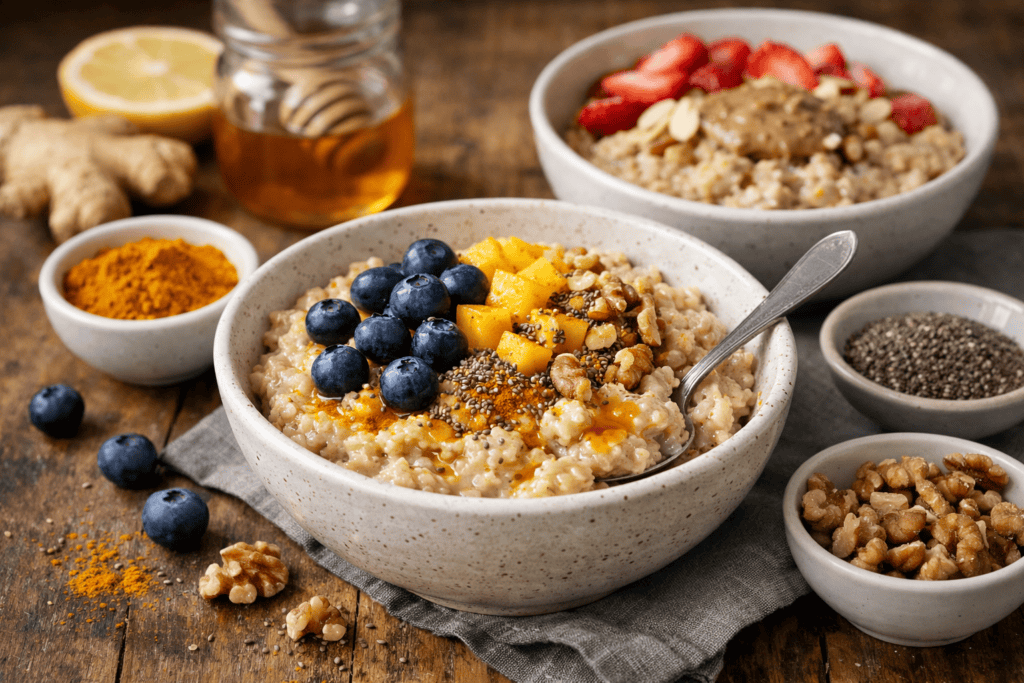
5 anti-inflammatory oatmeal recipes (quick, high-protein, and dairy-free options)
You finish a workout, feel hungry within an hour, and want a breakfast that keeps energy steady. A plain bowl of oats can help, but the toppings decide whether the meal stays anti-inflammatory or turns into a sugar-heavy dessert. Oats also bring beta-glucan, a soluble fibre that supports fullness and steadier blood glucose.
Use this simple rule: keep the base plain, then add fibre, polyphenols (plant compounds), and unsaturated fats. For higher protein without dairy, use soy milk, pea protein, or tofu. Limit sweeteners and ultra-processed toppings, which can push “free sugars” up quickly. The NHS advises adults to keep free sugars to no more than 30 g per day. If you use dried fruit, keep portions small because it concentrates sugar.
5 quick anti-inflammatory oatmeal recipes
- Berry-chia bowl (high fibre): Cook 40–60 g oats in unsweetened soy milk. Stir in 1 tbsp chia seeds and top with a handful of mixed berries plus cinnamon.
- Apple-cinnamon walnut (comforting, low added sugar): Simmer oats with grated apple and cinnamon. Top with chopped walnuts and a spoon of unsweetened yoghurt or soy yoghurt.
- Chocolate-banana protein oats (dairy-free): Cook oats in soy milk. Mix in 1 tbsp unsweetened cocoa and a scoop of unflavoured pea protein. Top with sliced banana and pumpkin seeds.
- Carrot-cake oats (spice-forward): Add grated carrot, cinnamon, and ginger while cooking. Finish with raisins (small handful) and chopped almonds for crunch.
- Savoury miso-sesame oats (no sweeteners): Cook oats in water. Stir in 1 tsp miso, top with spinach, sesame seeds, and a soft-boiled egg or cubed tofu.
To keep “anti inflammatory oatmeal toppings” on track, measure sweet add-ins. Choose fruit, spices, and seeds first, then use honey, syrups, or granola as optional extras rather than defaults. Aim for one sweet element, not three, and balance it with nuts or seeds.
Frequently Asked Questions
Is oatmeal anti-inflammatory, and what makes oats supportive for inflammation management?
Yes. Oatmeal can be anti inflammatory because oats contain beta-glucan fibre and polyphenols such as avenanthramides, which may help calm inflammatory signalling and support gut bacteria. Oats also provide magnesium and steady-release carbohydrates, which can reduce blood sugar spikes that may worsen inflammation. Choose plain oats and limit added sugar.
Which oatmeal toppings are most anti-inflammatory, and how do berries, chia seeds, and cinnamon compare?
Anti inflammatory oatmeal toppings include berries, chia seeds, and cinnamon. Berries supply polyphenols (plant compounds) that help reduce oxidative stress linked to oats inflammation. Chia seeds add fibre and omega-3 ALA fats, which can support a lower inflammatory response. Cinnamon provides antioxidant compounds, but use small amounts due to coumarin in some types.
What oatmeal add-ins should you limit or avoid if you want the most anti-inflammatory benefit?
Limit add-ins that raise sugar, saturated fat, or sodium. Avoid flavoured instant packets, sweetened dried fruit, sugary cereals, and large amounts of honey, syrup, or brown sugar. Limit butter, cream, and full-fat flavoured yoghurt. Skip candy pieces and chocolate chips. Watch salty toppings, such as salted nuts, bacon, and processed meats.
How can you build an anti-inflammatory oatmeal bowl with the right balance of fibre, protein, and healthy fats?
Use rolled or steel-cut oats for soluble fibre. Stir in Greek yoghurt, milk, or soy milk for protein, then add chia or ground flax plus walnuts for healthy fats. Top with berries and cinnamon for polyphenols. Avoid sugary syrups and large dried-fruit portions, which can spike added sugar and calories.
What are five simple anti-inflammatory oatmeal recipes you can rotate through the week?
Rotate these anti inflammatory oatmeal toppings to support oats inflammation goals:
- Blueberry-walnut: oats, blueberries, walnuts, cinnamon.
- Apple-pecan: oats, diced apple, pecans, cinnamon.
- Cherry-almond: oats, cherries, almonds, vanilla.
- Pumpkin-spice: oats, pumpkin purée, cinnamon, pumpkin seeds.
- Banana-flax: oats, banana, ground flaxseed, cinnamon.
- Aim for 150–250 kcal snacks to manage hunger without derailing targets.
- Pre-portion snacks into containers or bags to avoid eating from multipacks.
- Prioritise protein and fibre, such as Greek yoghurt, eggs, or hummus.
- Choose volume-friendly options: air-popped popcorn, berries, or cut vegetables.
- Pair carbohydrates with protein or fat, such as apple slices with peanut butter.
- Limit ultra-processed snacks; select minimally processed foods with short ingredient lists.
Why Portion Control Matters for Weight Management (Calories, Satiety, and Consistency)
In a controlled feeding study, participants served 50% larger portions consumed about 16% more energy per day, with no meaningful rise in self-reported fullness (NIH: PubMed). That gap matters because weight change tracks energy balance: a sustained surplus of 200 kcal per day can add roughly 0.2 kg per week, assuming 7,700 kcal per kilogram of body fat. Portion control reduces that surplus without requiring complex rules, which supports steadier adherence over months rather than days. Calories represent only part of the picture; satiety determines whether a plan remains consistent. A 150–200 kcal snack that includes 10–15 g of protein or 5–8 g of fibre typically produces stronger appetite control than a 150 kcal refined snack with minimal protein and fibre. Protein and fibre slow gastric emptying and blunt post-snack hunger, which helps prevent “calorie stacking” at the next meal. Consistency improves when portions stay predictable. Using pre-portioned servings (for example, 25–30 g of nuts rather than eating from a large bag) narrows day-to-day intake swings and makes progress easier to track. For practical calorie targets and portion guidance, refer to the NHS healthy weight resources.
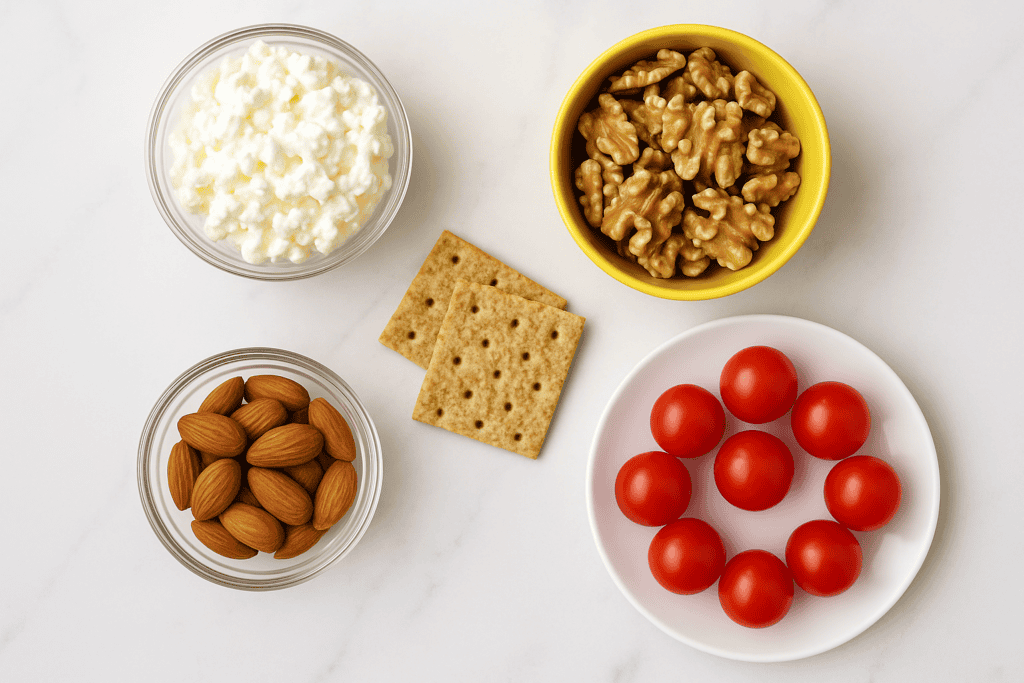
Portion-controlled snack ideas for weight management
Portion-Control Tools and Methods (Hand Guides, Pre-Portioned Packs, and Food Scales)
At 15:30, a commuter buys a “healthy” bag of mixed nuts at a petrol station and eats it during the drive home. The label shows 240 g, which can exceed 1,400 kcal depending on the mix. A simple portion-control method would have changed the outcome: decanting 30 g into a small tub before leaving the house, or weighing 30 g once and learning what that looks like in the palm. Hand guides work when scales are not practical. For energy-dense snacks, a cupped hand typically holds about 25–30 g of nuts or trail mix, which often lands near 150–200 kcal. Pre-portioned packs reduce decision fatigue, but check the net weight: “100-calorie packs” often contain 17–21 g, while standard single-serve crisps commonly sit closer to 25–30 g. A food scale offers the highest accuracy and trains visual judgement quickly. Weighing snacks for one week can calibrate portions so that eyeballing becomes reliable. The NHS Eatwell Guide also recommends using labels to compare per-portion values, which helps keep snacks consistent across brands.
- Hand guide: use a cupped hand for nuts; a closed fist for fruit.
- Pre-portioned packs: choose 100–200 kcal packs for routine snacking.
- Food scale: weigh once, photograph the portion, then repeat by sight.
High-Protein and High-Fibre Portion-Controlled Snack Ideas (Sweet and Savoury Options)
High-protein snacks tend to curb hunger more reliably than high-fibre snacks, while high-fibre options often deliver greater volume for fewer kilojoules. A 170 g pot of 0% Greek yoghurt typically provides about 17–20 g protein for roughly 90–120 kcal, whereas 1 medium apple (about 180 g) supplies around 4 g fibre for about 95 kcal (USDA FoodData Central). Both can fit weight management, but they work through different satiety signals.
| Option A (higher protein) | Option B (higher fibre) | Portion guide |
|---|---|---|
| 0% Greek yoghurt + 50 g berries (sweet) | Apple + 15 g peanut butter (sweet) | 170 g pot; 1 fruit; 1 level tablespoon |
| 2 boiled eggs (savoury) | Carrot sticks + 40 g hummus (savoury) | 2 eggs; 1 cup veg; 2 tablespoons |
| 100 g cottage cheese + cucumber (savoury) | Air-popped popcorn, 3 cups (savoury) | ½ cup cheese; 1 cup sliced veg; 3 cups popped |
Practical implication: choose protein-led portions when the next meal sits 3–4 hours away, and fibre-led portions when you need a larger snack without many calories. Pairing both, such as yoghurt with fruit, often improves satisfaction without increasing portion size.
Planning and Timing Snacks to Support Weight Goals (Hunger Cues, Workday Strategies, and Common Pitfalls)
Unplanned snacking often concentrates calories into the late afternoon. UK time-use data show that adults spend about 9 hours per day sedentary (Office for National Statistics), a pattern that can blur hunger cues and trigger eating from fatigue rather than need. When snacks become reactive, portion sizes drift and daily intake rises without a clear memory of “extra” food. Use timing to protect your calorie budget. Aim for one planned snack between meals when the gap exceeds 4–5 hours, and treat hunger as a 0–10 scale: snack at 4–6 (stomach hunger), not 7–9 (urgent cravings). Keep the snack to 150–250 kcal and pair protein with fibre to slow gastric emptying. Set a calendar reminder for 15:00–16:00 on workdays, then pre-portion the snack before starting tasks. Drink 300–500 ml water first and wait 10 minutes; thirst and stress can mimic hunger. Avoid “desk grazing” by eating only at a table and returning the remainder to a bag or drawer. After 2 weeks, review outcomes: fewer impulse purchases, steadier energy, and a measurable reduction in evening overeating. A consistent 200 kcal daily reduction equates to about 0.18 kg per week, using 7,700 kcal per kilogram as a planning estimate.
Frequently Asked Questions
What portion size defines a snack for weight management in adults?
For adult weight management, a snack typically provides 100–200 kcal and fits in one hand. Aim for 15–25 g protein or 3–5 g fibre to improve fullness, and keep added sugars below 10 g and saturated fat below 3 g per snack. Common portions include:
- 150 g plain yoghurt
- 1 medium fruit
- 20–30 g nuts
Which portion-controlled snacks provide at least 10 g of protein per serving?
Portion-controlled snacks with at least 10 g of protein per serving include:
- 200 g plain 0% Greek yoghurt (about 20 g protein)
- 170 g cottage cheese (about 20 g protein)
- 2 hard-boiled eggs (about 12–13 g protein)
- 1 single-serve protein shake (about 20–30 g protein)
- 100 g cooked edamame (about 11 g protein)
What are practical ways to pre-portion snacks at home to reduce overeating?
Use a kitchen scale to portion snacks into 100–150 kcal servings, then store them in small containers or zip bags. Pre-portion nuts to 20–30 g, hummus to 2 tbsp (30 g), and yoghurt to 150 g. Keep single portions at eye level and put bulk packs out of sight. Avoid eating from the packet.
How can fibre-rich portion-controlled snacks help manage appetite between meals?
Fibre-rich portion-controlled snacks slow digestion and increase fullness, which can reduce cravings between meals. A 10–15 g fibre snack portion supports steadier blood glucose and helps limit extra calorie intake. Aim for 150–250 kcal per snack and pair fibre with protein or unsaturated fat to extend satiety.
Which portion-controlled snacks suit common dietary patterns such as vegetarian, vegan, or gluten-free?
Vegetarian options include 170 g plain Greek yoghurt with 80 g berries, or 2 boiled eggs with 100 g cherry tomatoes. Vegan choices include 30 g roasted chickpeas, or 1 medium apple with 15 g peanut butter. Gluten-free snacks include 25 g mixed nuts, or 3 rice cakes with 60 g cottage cheese.
Iron supports oxygen transport in the blood, which helps muscles and the brain produce energy efficiently. Low iron intake can reduce haemoglobin levels and contribute to tiredness, weakness, and poor concentration. Iron deficiency remains one of the most common nutrient deficiencies worldwide, affecting an estimated 1.6 billion people (WHO). This guide reviews iron-rich foods, explains how the body absorbs iron, and outlines practical choices to help reduce fatigue and support daily performance.
Key takeaways
- Iron supports haemoglobin production, helping oxygen reach muscles and brain for energy.
- Heme iron from red meat, liver, and sardines absorbs better than plant sources.
- Non-heme iron sources include lentils, chickpeas, tofu, spinach, and fortified cereals.
- Pair iron-rich meals with vitamin C foods to increase absorption significantly.
- Tea, coffee, and calcium-rich foods can reduce iron absorption when taken together.
- Persistent fatigue, pale skin, and breathlessness can signal iron deficiency and need testing.
Iron and energy metabolism: how deficiency contributes to fatigue
In the UK, 3% of men and 8% of women aged 16–64 have anaemia, with iron deficiency as the leading cause (UK National Diet and Nutrition Survey). Iron drives energy metabolism because the body uses it to make haemoglobin, the protein that carries oxygen to working muscles and the brain. When iron stores fall, oxygen delivery drops and cells rely more on less efficient pathways, which increases perceived effort and reduces stamina.
Clinical thresholds help explain why fatigue appears early. The World Health Organization defines anaemia in non-pregnant women as haemoglobin below 120 g/L and in men below 130 g/L. Even before haemoglobin falls, low ferritin (a marker of iron stores) can impair physical performance and concentration, because the body prioritises red blood cell production over other iron-dependent processes. This pattern often presents as tiredness, breathlessness on exertion, and reduced exercise tolerance.
Diet influences both iron intake and absorption. Heme iron from meat and fish absorbs more efficiently than non-haem iron from plants, while polyphenols in tea and coffee can reduce absorption when consumed with meals. A diet that also includes anti-inflammatory foods to include can support recovery and appetite, which helps sustain adequate energy intake during periods of fatigue.
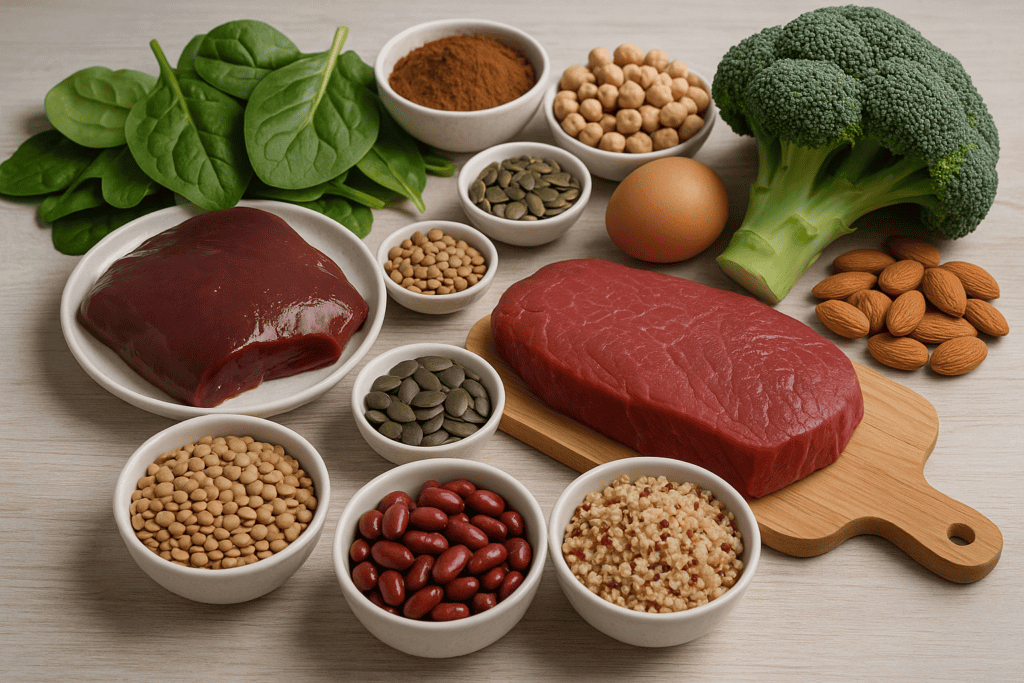
Iron-rich foods for energy and preventing fatigue
Daily iron requirements by age, sex, and life stage (including pregnancy)
A 28-year-old woman books a GP appointment after weeks of tiredness and breathlessness on the stairs. Blood tests show low ferritin, a marker of iron stores, and the clinician explains that her needs rose after heavier periods and a switch to mostly plant-based meals. That conversation often starts with a practical question: how much iron should a person aim for each day?
In the UK, the Reference Nutrient Intake (RNI) for iron is 8.7 mg per day for men aged 19 and over, and 14.8 mg per day for women aged 19–49 (higher to cover menstrual losses). After age 50, the RNI for women matches men at 8.7 mg per day. For children, needs change quickly with growth: 6.9 mg per day at ages 1–3, 6.1 mg at 4–6, and 8.7 mg at 7–10, rising to 11.3 mg at 11–18 for girls and 11.3 mg at 11–18 for boys (UK Government/SACN).
Pregnancy requires careful planning. The UK does not set a higher RNI in pregnancy, but iron requirements increase substantially as blood volume expands and the fetus builds iron stores; NICE advises screening for anaemia and treating confirmed deficiency (NICE). Matching intake to life stage helps reduce fatigue risk and guides when to seek testing rather than self-diagnosing.
Heme iron foods: highest-absorption animal sources and serving ideas
Heme iron from animal foods absorbs more efficiently than non-heme iron from plants. Typical absorption for heme iron sits around 15–35%, while non-heme iron often absorbs at 2–20% and varies more with meal composition (NIH Office of Dietary Supplements). For people managing fatigue linked to low iron stores, that difference can reduce the gap between intake and what the body can use.
Option A focuses on heme iron sources such as red meat, poultry, and seafood. Option B relies on non-heme iron sources such as legumes, wholegrains, and leafy greens. Heme iron absorption remains comparatively stable even when meals contain inhibitors such as phytates, while non-heme iron absorption drops more sharply in high-fibre, tea- or coffee-containing meals.
| Heme iron food (cooked) | Typical portion | Serving idea |
|---|---|---|
| Beef or lamb | 90–120 g | Stir-fry strips with peppers and broccoli; serve with potatoes or rice. |
| Chicken or turkey (dark meat) | 120–150 g | Roast thighs with lemon; pair with a tomato salad for vitamin C. |
| Sardines or mussels | 90–120 g | Fold into pasta with a tomato-based sauce; add parsley and a squeeze of citrus. |
Practical implications: aim for 2–4 heme-iron servings per week if suitable, and combine meals with vitamin C-rich foods (for example, 80 g peppers or one orange) to support total iron absorption. If fatigue persists or heavy periods, pregnancy, or gastrointestinal symptoms apply, request ferritin and full blood count testing via the NHS (NHS).
Non-heme iron foods: plant-based sources, fortified foods, and preparation tips
Plant-based eaters can meet the UK iron RNI on paper yet still feel drained because non-heme iron absorbs less consistently. The NIH Office of Dietary Supplements reports typical non-heme absorption of 2–20%, and tea or coffee with meals can cut absorption by about 50%. When low iron overlaps with chronic stress, fatigue can resemble the signs of burnout, and recovery may stall without nutrition support.
Choose higher-iron plant foods and fortified options, then pair them to improve uptake. Cooked lentils provide about 3.3 mg iron per cup, while cooked spinach provides about 6.4 mg per cup (USDA FoodData Central). Many breakfast cereals supply 4–8 mg per serving when fortified, covering roughly 20–40% of the UK adult female RNI (14.8 mg).
Build meals around a main iron source, then add vitamin C to increase absorption. Squeeze lemon over lentil soup, add peppers to bean chilli, or include an orange with fortified cereal. Keep tea, coffee, and calcium-rich foods 1–2 hours away from iron-rich meals, and use a cast-iron pan for acidic dishes such as tomato sauce.
After 2–4 weeks of consistent pairing, many people notice better stamina during routine tasks, while blood markers such as ferritin typically shift over 6–12 weeks.
Maximising iron absorption and safety: vitamin C pairing, inhibitors, and when to seek testing
Tea and coffee can reduce non-heme iron absorption by about 50% when taken with meals, which can materially slow repletion in people with low stores (NIH Office of Dietary Supplements). Pairing iron with vitamin C improves uptake because ascorbic acid converts iron into a more absorbable form; practical pairings include beans with peppers, or fortified cereal with berries. Calcium can also compete with iron absorption, so spacing high-calcium foods or supplements away from iron-rich meals can help when intake sits near the UK RNI.
- Do: include a vitamin C source at the same meal (for example, 80 g citrus fruit or ½ red pepper).
- Avoid: tea, coffee, or cocoa for 60 minutes either side of iron-rich meals.
- Separate: iron supplements from calcium supplements by 2 hours where possible.
Seek testing if fatigue persists beyond 4–6 weeks despite dietary changes, or if heavy menstrual bleeding, pregnancy, gastrointestinal symptoms, or frequent blood donation applies. Clinicians typically assess full blood count and ferritin; ferritin below 15 µg/L often indicates depleted iron stores (NHS).
Frequently Asked Questions
Which iron-rich foods support energy levels and help reduce fatigue?
Iron-rich foods that support energy include lean red meat (beef, lamb), liver, sardines and mussels, eggs, lentils and chickpeas, tofu, spinach and kale, pumpkin seeds, and iron-fortified cereals. Pair plant sources with vitamin C foods (peppers, citrus, berries) to raise absorption. Avoid tea or coffee with meals, as tannins can reduce uptake.
How does iron deficiency cause tiredness and low energy?
Iron deficiency reduces haemoglobin, the protein that carries oxygen in red blood cells. With less oxygen reaching muscles and the brain, the body produces less energy and fatigue increases. Low iron also impairs myoglobin in muscle and can disrupt thyroid function, which can lower stamina, concentration, and exercise tolerance.
What is the difference between haem and non-haem iron, and which foods contain each type?
Haem iron comes from animal foods and the body absorbs it more efficiently (about 15–35%). Non-haem iron comes from plant foods and fortified products, with lower absorption (about 2–20%). Haem iron sources include beef, lamb, liver, sardines and mussels. Non-haem sources include lentils, chickpeas, tofu, spinach, pumpkin seeds and fortified cereals.
How much iron do adult men and women need per day in the UK, and when does the requirement increase?
In the UK, adult men (19+ years) need 8.7 mg of iron per day. Adult women (19–49 years) need 14.8 mg per day, then 8.7 mg from age 50. Requirements increase during pregnancy to 27 mg per day. Breastfeeding does not increase the UK reference intake.
Which foods and drinks improve iron absorption, and which reduce it?
Vitamin C improves iron absorption: citrus, berries, kiwifruit, peppers, tomatoes, broccoli, and a small glass (150–200 ml) of orange juice with meals. Meat, fish, and poultry also boost non-haem iron absorption. Tea, coffee, and cocoa reduce absorption; avoid them 1–2 hours around iron-rich meals. High-calcium foods and supplements can also reduce absorption.
When should persistent fatigue prompt a blood test for iron deficiency or anaemia?
Arrange a blood test if fatigue persists for more than 2–4 weeks despite adequate sleep, or if it limits daily activities. Seek testing sooner with symptoms such as breathlessness, paleness, dizziness, headaches, brittle nails, or restless legs. Request urgent assessment for chest pain, fainting, black stools, heavy menstrual bleeding, pregnancy, or known gastrointestinal disease.
Seasonal eating means choosing fruit and vegetables harvested at their natural peak. In the United Kingdom, produce in season often travels fewer than 300 miles, compared with 1,500–3,000 miles for many imports, which can reduce transport costs and waste. A 2024 WRAP estimate links household food waste to around £17 billion each year, and planning meals around seasonal produce helps cut that loss. This guide explains what to buy, when to buy it, and how to store it for better nutrition and lower spend.
Key takeaways
- Seasonal produce typically costs less because supply peaks during local harvest windows.
- Fruit and vegetables picked in season often deliver better flavour and higher nutrient retention.
- Use a simple seasonal calendar to plan weekly meals around what is abundant.
- Swap out-of-season imports for frozen seasonal options to cut waste and save money.
- Buy in bulk when prices drop, then batch-cook soups, sauces, and stews.
- Store produce correctly to extend freshness, reducing spoilage and repeat shopping trips.
What Seasonal Eating Means and How It Works in the United Kingdom
In 2024, the United Kingdom imported about 47% of the food consumed domestically, leaving roughly 53% supplied by UK production (UK Government Food Statistics Pocketbook). Seasonal eating means choosing foods when UK growers harvest them at scale, rather than relying on out-of-season imports. This approach matters because it aligns purchases with peak supply, which typically improves freshness and can reduce price volatility driven by transport costs and global shortages.
Seasonality in the UK follows a clear production pattern. British asparagus usually peaks in April to June, while strawberries tend to peak from June to August; apples and pears dominate from September into late autumn. By contrast, tomatoes and cucumbers often shift towards greenhouse supply outside summer, which can change flavour and cost. The practical mechanism is simple: shoppers use harvest timing to guide choices, then rotate staples across the year, such as swapping winter brassicas for summer salad crops.
Seasonal eating also supports nutrition planning. The NHS recommends at least 5 portions of fruit and vegetables per day, and the Eatwell Guide advises that fruit and vegetables should make up just over one third of daily intake. Using seasonal produce helps households meet these targets with a wider rotation across 12 months, while keeping spend predictable.
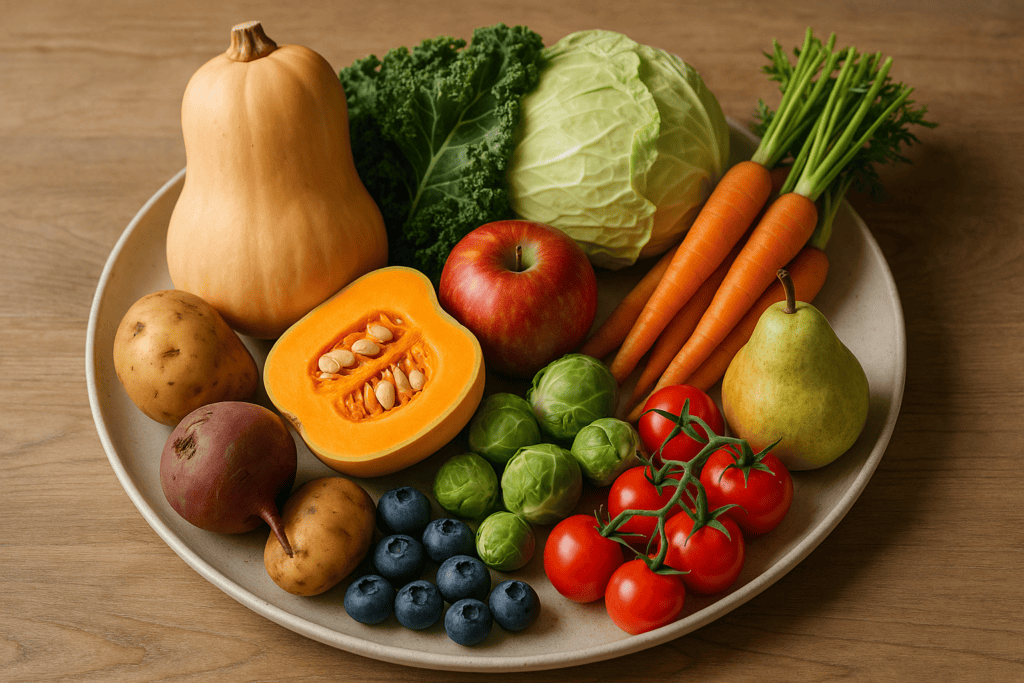
What Seasonal Eating Means
Nutrition Advantages of Seasonal Produce: Micronutrients, Fibre, and Variety
In July, a punnet of UK-grown strawberries bought the same morning at a farm shop often needs little more than a rinse before serving. That short journey from field to plate usually means less time for vitamin C to degrade, which helps explain why fresh strawberries provide about 59 mg of vitamin C per 100 g (around 65% of the UK daily reference intake) (NHS; USDA FoodData Central).
The same principle applies across seasonal produce: quicker harvesting and fewer days in storage can preserve fragile micronutrients, while ripeness improves flavour and encourages higher intake. Fibre remains a consistent advantage, and seasonal choices make it easier to reach the UK recommendation of 30 g per day by rotating vegetables, pulses, and fruit (SACN).
Over a year, variety becomes the main nutritional win. Spring greens, summer berries, autumn brassicas, and winter roots each bring different mixes of folate, potassium, and polyphenols, reducing reliance on a narrow set of staples and supporting a more balanced diet.
Cost Savings from Buying In-Season: Pricing Patterns and Household Budget Impact
Buying produce in season usually means paying for UK peak supply; buying out of season often means paying for imports, storage, and higher energy use. The contrast shows up most clearly in soft fruit and salad crops: UK strawberries and tomatoes tend to fall in price when domestic harvests peak, while winter supply relies heavily on imports and heated production.
Option A (in-season) benefits from short supply chains and higher volumes, which retailers can price more aggressively. Option B (out-of-season) carries extra costs such as longer transport distances, controlled-atmosphere storage, and, for some crops, heated glasshouse production. UK food supply also depends materially on trade: the UK imported about 47% of food consumed domestically in 2024, which exposes shoppers to exchange-rate and freight volatility (UK Government Food Statistics Pocketbook).
| Cost driver | Option A: In-season (UK peak) | Option B: Out-of-season | Budget impact |
|---|---|---|---|
| Supply volume | Higher domestic availability over 6–12 weeks for many crops | Lower availability, reliant on imports or stored stock | More frequent promotions and multi-buy pricing |
| Transport and handling | Shorter journeys and fewer handling stages | Longer journeys and more distribution steps | Higher unit costs, especially for perishable items |
| Energy and storage | Minimal long-term storage for many fruits and salads | Cold storage or heated production more common | Greater price variability across months |
For household budgets, the practical implication is timing: shifting just two weekly purchases to in-season alternatives can reduce the cost per portion without changing meal structure. A simple swap such as winter berries to apples or pears often cuts spend because apples store well and the UK harvest runs from late summer into autumn. Price changes also compound across the basket: if a family buys 5 kg of fruit and vegetables per week, a £0.30 per kg seasonal swing equates to about £78 per year.
Tracking prices by weight helps, because “per item” pricing hides size differences. Using the unit price on shelf labels and planning meals around two or three seasonal staples each week typically delivers the most consistent savings.
Season-by-Season UK Produce Calendar: Spring, Summer, Autumn, and Winter Staples
UK shoppers often miss seasonal value because supermarket ranges stay consistent year-round. In 2024, the average UK household spent about £4,000 on food and non-alcoholic drinks (ONS), so even a 5% seasonal saving equals roughly £200 per year. A simple season-by-season calendar reduces guesswork and shifts purchases towards peak UK supply, when quality and price usually improve.
Use a four-season framework anchored to typical UK harvest windows. Spring (March–May) centres on asparagus, spring greens, watercress, radishes, and early British strawberries from late May. Summer (June–August) peaks for tomatoes, courgettes, cucumbers, peas, sweetcorn, berries, and stone fruit, with the widest UK choice. Autumn (September–November) brings apples, pears, plums, pumpkins, beetroot, mushrooms, and brassicas. Winter (December–February) relies on storage and hardy crops such as leeks, parsnips, swede, carrots, kale, and sprouts.
Implement the calendar in three steps. Step one: plan two dinners each week around one seasonal vegetable and one seasonal fruit. Step two: buy “wonky” grades and larger packs when UK supply peaks, then freeze berries or blanch greens for later. Step three: verify origin on labels and cross-check harvest timing using BBC Good Food’s seasonal calendar or RHS crop guidance.
After four weeks, most households see fewer impulse purchases, better meal variety, and lower spend on out-of-season salad and soft fruit. Tracking receipts for 28 days makes the change measurable and repeatable.
How to Shop Seasonally: Supermarkets, Markets, and Box Schemes
In 2024, the average UK household spent about £4,000 on food and non-alcoholic drinks, so a 5% shift towards in-season produce equates to roughly £200 per year (Office for National Statistics). That saving becomes easier to capture when shopping habits match how retailers source: supermarkets stabilise ranges with imports, while markets and box schemes track UK harvest peaks more closely. As a result, the same budget buys higher-volume staples when domestic supply rises, and fewer premium-priced out-of-season items.
In supermarkets, use price per kilogram and country-of-origin labelling to identify seasonal value quickly; UK-grown lines typically expand during peak months, while imported equivalents dominate in winter. Pair that with reading food labels: what to check for added sugar or salt in “seasonal” ready foods, which can dilute the nutrition benefit. For context, UK production supplies about 53% of food consumed domestically, so origin cues often signal whether a product aligns with UK seasonality (UK Government Food Statistics Pocketbook).
Markets and farm shops usually offer shorter supply chains and clearer variety shifts week to week, which helps you plan meals around what is abundant. Box schemes add predictability: a typical weekly box weighs around 4–6 kg, which suits a household aiming for the NHS target of 5 portions of fruit and vegetables per day (NHS). Choose a “mixed seasonal” option, then build two or three flexible dinners around the contents to reduce waste and protect the savings.
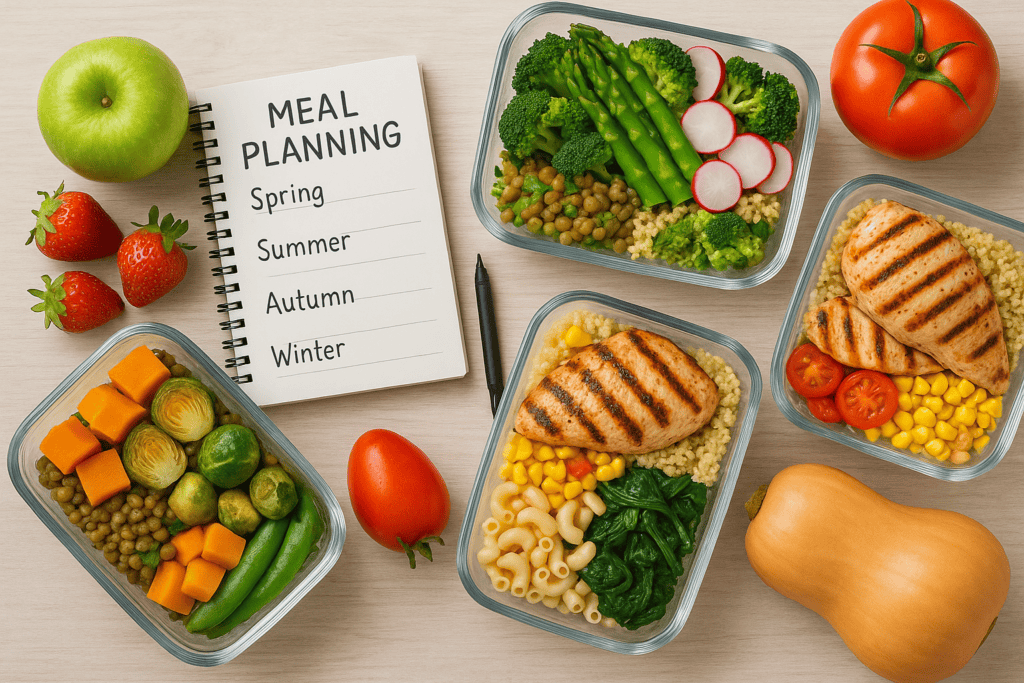
Meal Planning for Seasonal Eating
Meal Planning for Seasonal Eating: Batch Cooking, Freezing, and Reducing Food Waste
On a Sunday in October, a household returns from the market with 2 kg of butternut squash, 1 kg of carrots, and a large bag of onions because prices drop at peak harvest. That same evening, the cook roasts the vegetables, blends them into soup, and portions eight servings into 400 ml containers. Four portions go into the fridge for lunches; four go into the freezer for later weeks.
This approach protects both nutrition and budget. Freezing slows vitamin loss by halting enzyme activity, and research shows many frozen vegetables retain comparable vitamin C to fresh after storage (see NHS; USDA FoodData Central). It also reduces waste: UK households throw away about 6.4 million tonnes of food each year, much of it edible (WRAP).
Apply the same pattern across seasons: cook one large tray of in-season vegetables, convert it into two meals, and freeze portions before leftovers become waste.
Seasonal Eating on Special Diets: Vegetarian, Vegan, Gluten-Free, and Low-Sodium Options
Option A uses seasonal produce as the base for special diets; Option B relies on year-round substitutes and packaged “free-from” foods. A vegan winter plate built around UK brassicas and pulses can reach 25–30 g of fibre per day when meals include 150 g cooked lentils (about 12 g fibre) plus 200 g vegetables (NHS; USDA FoodData Central). By contrast, many gluten-free convenience products contain less fibre than whole grains and cost more per 100 g.
Key differences centre on sodium, protein quality, and ingredient control. Adults should limit salt to 6 g per day (about 2.4 g sodium) (NHS), yet soups, sauces, and meat-free ready meals can exceed 1.5 g salt per portion. Practical implications include choosing naturally gluten-free seasonal staples (potatoes, squash, oats labelled gluten-free) and using herbs, citrus, and roasted alliums to maintain flavour while keeping salt low.
Common Barriers and Practical Fixes: Availability, Time, and Family Preferences
Three barriers block seasonal eating for many UK households: limited local range in winter, lack of time on weekdays, and family resistance to unfamiliar vegetables. The cost of friction is measurable; in 2024 the average household spent about £4,000 on food and non-alcoholic drinks (ONS), so even small plan failures can erase a £200 annual saving from a 5% shift to in-season buying.
A practical fix uses a “core-and-swaps” approach: keep 6–8 repeat meals and change only the vegetables and fruit to match the month. Implementation starts with one 15-minute check of a UK seasonal calendar, then a fixed shopping rule: buy two in-season vegetables (about 2 kg total) and one fruit each week, plus one frozen option for gaps. Next, batch-prep one base (tray-roast or soup) to cover 6–8 portions, and introduce new produce in 10–20% of a familiar dish.
Households usually see faster weeknight cooking, fewer abandoned ingredients, and steadier acceptance from children and partners.
Frequently Asked Questions
How does seasonal eating improve nutrient intake compared with out-of-season produce?
Seasonal produce often reaches peak ripeness before harvest, which raises nutrient density. Vitamin C can drop by 15–55% within 1–2 weeks of cold storage, and some vegetables lose 25–75% of vitamin C after 7 days at room temperature. Shorter supply chains also reduce time, light, and heat exposure.
Which fruits and vegetables are typically in season in the UK during spring, summer, autumn, and winter?
UK seasonal produce typically includes: spring: asparagus, spring greens, radishes, rhubarb; summer: strawberries, raspberries, tomatoes, courgettes, peas; autumn: apples, pears, pumpkins, squash, kale; winter: Brussels sprouts, cabbage, leeks, parsnips, swede, clementines. Peak weeks vary by region and weather, so check local harvest calendars.
How much money can households save by planning meals around seasonal produce, and what factors affect the savings?
Households can typically save 10–30% on fruit and vegetable spending by planning meals around seasonal produce, equal to roughly £150–£450 per year for a £1,500 produce budget. Savings depend on local supply, import reliance, retailer promotions, buying loose versus pre-packed, choosing frozen when fresh is costly, and reducing waste through planned portions.
What are practical ways to store, freeze, or preserve seasonal produce to reduce food waste and extend savings?
Freeze berries and chopped vegetables on a tray, then bag and label; most keep 8–12 months at -18°C. Blanch green beans and broccoli for 2–3 minutes before freezing to retain colour and texture. Store apples and carrots at 0–4°C in perforated bags for 2–6 weeks. Preserve surplus by pickling in 5% vinegar or making jam.
Reducing food waste and eating a healthy diet can support both household budgets and environmental goals. In the UK, households throw away around 6.4 million tonnes of food each year, much of it still edible (WRAP). At the same time, adults should aim for at least five portions of fruit and vegetables daily (NHS). Practical planning, correct storage, and smart use of leftovers help meet nutrition targets while cutting waste.
Key takeaways
- Plan weekly meals and shop with a list to prevent impulse overbuying.
- Build meals around perishable foods first, then use longer-life staples later.
- Store produce correctly and label leftovers with dates to extend freshness.
- Cook flexible recipes such as soups, stir-fries, and salads to use odds and ends.
- Freeze surplus portions, chopped vegetables, and bread to avoid binning edible food.
- Use whole ingredients, including stems and skins, when safe and palatable.
Planning healthy meals to match portions, schedules, and perishability
UK households wasted an estimated 6.4 million tonnes of food in 2021, and 4.7 million tonnes of that waste was edible (WRAP). That scale matters because meal planning can reduce both waste and diet drift: when portions match appetite and schedules, fewer ingredients spoil and fewer meals rely on last-minute, lower-nutrient options. WRAP also estimates the average household could save about £1,000 per year by cutting food waste, which makes planning a health and budget strategy rather than a lifestyle preference.
Start by aligning portions with realistic eating patterns across the week. If two evening meals typically shift due to late work or social plans, plan two flexible options that use long-life staples and frozen vegetables, then schedule highly perishable items for earlier days. WRAP reports that fresh vegetables and salads account for about 19% of UK household food waste by weight, so placing leafy greens and soft fruit into day 1–3 meals reduces the risk of discarding them. Use a simple portion rule to prevent overbuying: plan one main protein serving per person per meal, then scale sides to appetite, not pack size.
Perishability planning works best when it links to storage life. The Food Standards Agency advises refrigerating foods that need chilling within two hours, or within one hour when the room is hot, which protects both safety and shelf life. Build meals around ingredients that can be repurposed within 48–72 hours, such as cooked grains, roasted vegetables, or beans, then reserve delicate items for single-use dishes. This approach keeps nutrition consistent while reducing the common pattern of buying “healthy” produce that spoils before it reaches the plate.
To close the loop, plan one “use-up” meal each week to absorb surplus portions. A fixed slot, such as the night before a grocery shop, creates a predictable outlet for leftovers and near-expiry ingredients, which lowers the chance of discarding edible food and helps maintain a steady intake of vegetables, fibre, and lean proteins.
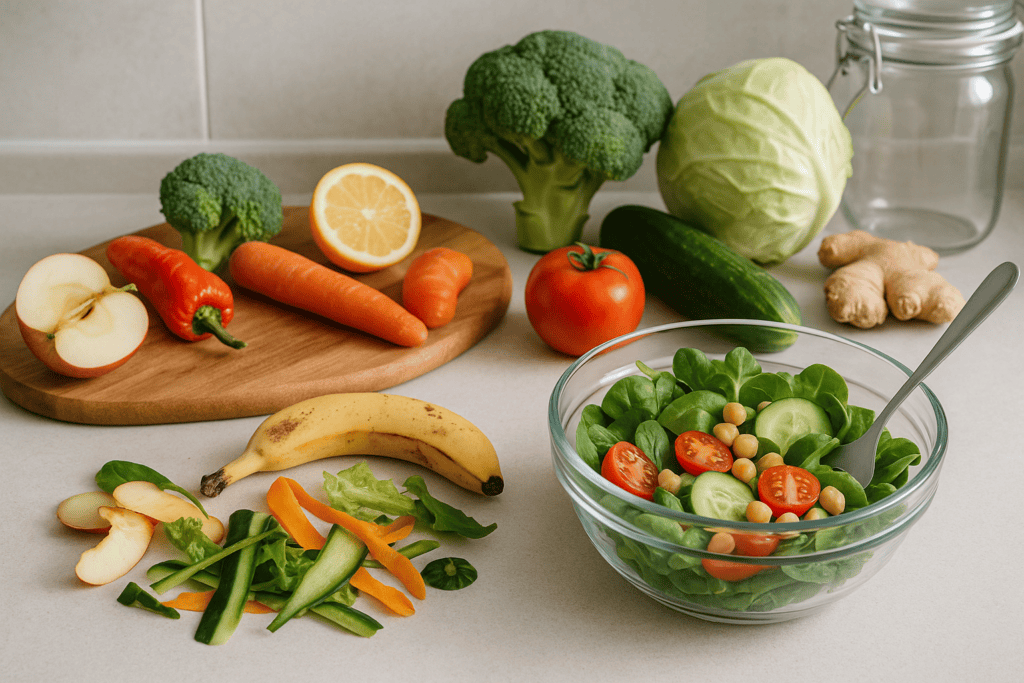
Reducing food waste while eating healthy
Smart shopping and storage systems that extend freshness and reduce spoilage
On Sunday evening, a shopper buys spinach, berries, chicken and yoghurt for weekday lunches. By Thursday, the spinach has liquefied in the crisper and the berries show mould, so two planned salads become a takeaway order. That pattern often comes down to storage systems, not willpower: most fridges sit at 5–7°C, yet the Food Standards Agency advises keeping the fridge at 5°C or below to slow bacterial growth and extend shelf life.
Start by treating temperature and airflow as tools. Keep leafy greens in a breathable container with a dry paper towel to absorb condensation, and store berries unwashed until use because surface moisture accelerates mould. Place raw poultry on the bottom shelf to prevent drips and keep ready-to-eat foods safer. Use the door for condiments, not milk, because the door warms fastest during openings.
Apply the same system to healthy staples that spoil quietly. Freeze sliced bread, chopped peppers and cooked grains in flat portions so they defrost in 10–20 minutes. Label containers with dates and rotate “eat-first” items to the front; WRAP reports UK households wasted 6.4 million tonnes of food in 2021, with 4.7 million tonnes still edible (WRAP). Small storage habits convert that waste into planned meals.
Cooking strategies that use whole ingredients, leftovers, and freezer-friendly batches
Cooking from whole ingredients can either cut waste sharply or increase it, depending on method. Option A relies on “cook once, eat once” meals using fresh items in their original form. Option B uses whole ingredients across multiple meals, then channels leftovers into planned dishes and freezer-friendly batches.
| Approach | Typical waste risk | Nutrition impact | Best use case |
|---|---|---|---|
| Option A: Single-use fresh cooking | Higher for herbs, salad leaves, half-used veg | High, but variable if plans change | Short weeks, predictable schedules |
| Option B: Whole-ingredient + leftovers + freezer batches | Lower when portions and storage are planned | High and consistent across the week | Busy weeks, mixed appetites, budget control |
| Hybrid: Fresh meals plus one batch cook | Medium, but controllable | High with balanced batch recipes | Households new to freezing and leftovers |
Key differences come down to time, temperature, and portioning. The Food Standards Agency advises cooling cooked food quickly and refrigerating within 2 hours; that window determines whether leftovers stay safe and usable. Freezing also extends flexibility: most cooked dishes keep best quality for about 2–3 months in a domestic freezer, which turns surplus vegetables, cooked grains, and lean proteins into future meals rather than bin waste.
Practical implications are straightforward: cook components, not just recipes. Roast a full tray of mixed vegetables, cook 300–500 g of dry pulses or wholegrains, and prepare one protein, then recombine into bowls, soups, and wraps. Freeze in 1–2 portion containers and label with date; a simple “first in, first out” rule prevents forgotten tubs. When leftovers feel repetitive, change the format: yesterday’s roast chicken becomes a vegetable-packed broth, while cooked lentils become a salad base or a tomato stew.
Tracking food waste and nutrition to improve habits and reduce costs over time
Most households underestimate waste because they track purchases, not what reaches the bin. In the UK, households wasted 6.4 million tonnes of food in 2021, including 4.7 million tonnes that was edible (WRAP). At the same time, adults should aim for at least 30 g of fibre per day, yet average intake sits at about 20 g (SACN). Tracking both waste and nutrition turns vague intentions into measurable habits.
Use a simple weekly log that captures quantity, reason, and nutrition impact. Pair it with a short “nutrition tick list” (for example: vegetables, fruit, wholegrains, beans or lentils, oily fish). This approach highlights which items spoil most often and which nutrients drop when plans change.
- Set a baseline: for 7 days, record discarded food by weight (kitchen scales) or volume (cups), plus the reason (expired, cooked too much, forgotten).
- Tag each entry: mark whether the item was a key nutrient source (for example, leafy greens for folate, beans for fibre).
- Review every Sunday: choose 1–2 fixes, such as buying 300 g vegetables instead of 500 g, or swapping fragile salad leaves for cabbage.
- Track cost: note the pack price and estimate the wasted share to quantify savings.
After four weeks, aim for a 25–50% reduction in the top two wasted items and a consistent fibre-focused swap (for example, oats or pulses twice weekly). This creates a feedback loop that lowers spend while improving diet quality over time.
Frequently Asked Questions
How can meal planning reduce food waste while supporting a balanced diet?
Meal planning reduces food waste by matching purchases to specific meals and portion sizes, cutting overbuying and spoilage. Planning 3–5 dinners per week and using a “use-first” list for items expiring within 48–72 hours helps prioritise perishables. A balanced plan also spreads protein, wholegrains, vegetables, and fruit across the week.
Which foods are most likely to be wasted in UK households, and how can shoppers prevent this?
In the UK, households waste most fresh vegetables and salads, fruit, bread, milk, and potatoes. Prevent waste by planning 3–5 dinners before shopping, buying loose produce, checking use-by dates, freezing bread and ripe fruit, storing salad leaves in a sealed box with kitchen paper, and using leftovers within 48 hours.
How should fresh produce be stored to extend shelf life without reducing nutritional value?
Store most produce at 1–4°C in the fridge crisper to slow spoilage while preserving vitamin C. Keep leafy greens in a sealed container with a paper towel; wash just before eating to reduce mould. Store berries unwashed and dry. Keep bananas, tomatoes, potatoes, onions, and garlic at 12–18°C, away from sunlight.
What is the difference between “use by” and “best before” dates, and how does each affect food safety?
Use by dates relate to safety: after this date, high-risk chilled foods (such as meat, fish, and ready meals) can become unsafe even if they look and smell normal. Best before dates relate to quality: after this date, foods may lose flavour or texture but usually remain safe if stored correctly and packaging stays intact.
How can leftovers be repurposed into healthy meals without increasing salt, sugar, or saturated fat?
Repurpose leftovers by building balanced bowls, soups, or salads: combine cooked vegetables, grains, and lean proteins, then add fresh herbs, lemon, vinegar, garlic, or spices for flavour instead of salt. Blend leftover vegetables into sauces, use plain yoghurt or tahini for creaminess, and choose unsalted stock. Avoid sugary glazes and fatty cheese-based toppings.
Which portioning and batch-cooking methods reduce waste while keeping meals varied across the week?
Use a 3–2–1 batch plan: cook 3 proteins, 2 grains, 1 tray of mixed vegetables, then mix into 8–12 meals. Portion into 250–350 g containers and freeze 2–4 servings within 24 hours. Keep variety by changing sauces and spices, and repurposing leftovers into salads, soups, and wraps.
How can households use freezer management to prevent spoilage and maintain food quality?
Set the freezer to -18°C and label items with contents and date. Use a “first in, first out” system and keep an inventory list to cut forgotten food; UK households waste about 6.4 million tonnes annually (WRAP). Freeze in 1–2 portion packs, cool cooked food within 2 hours, and use airtight containers to prevent freezer burn.
Key takeaways
- Stock tinned beans and lentils for 15–18g protein per cooked cup.
- Keep wholegrains like oats and brown rice for fibre-rich, low-cost meals.
- Choose tinned fish such as sardines or salmon for omega-3s and calcium.
- Use canned tomatoes and tomato purée as a base for soups, stews, and sauces.
- Store nuts, seeds, and nut butter for healthy fats and quick snacks.
- Rely on herbs, spices, garlic, and onions to add flavour without extra salt.
Whole grains for steady energy and fibre
Adults should consume at least 30 g of fibre per day, yet average intake sits closer to 18 g in the UK, leaving a gap of about 12 g (as of 2023) (UK Government: SACN Carbohydrates and Health). Whole grains help close that gap because they retain the bran and germ, which carry most of the fibre, B vitamins, and minerals. A practical benchmark is to choose grains providing at least 6 g of fibre per 100 g, which typically includes oats, wholemeal pasta, brown rice, and quinoa. Whole grains also support steadier energy because the intact grain structure slows digestion. For example, rolled oats usually provide about 10 g of fibre per 100 g and around 13 g of protein, which helps maintain fullness between meals. Aim for 48 g of whole grains daily (about 3 servings) to align with common dietary guidance and to make fibre targets easier to reach without relying on supplements.
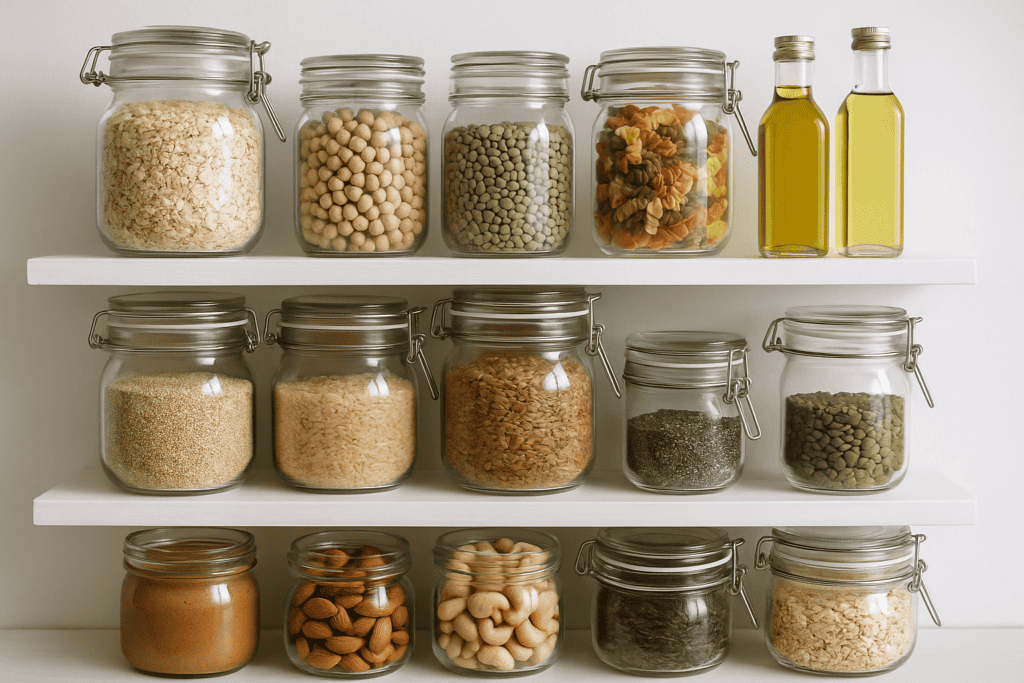
Healthy pantry staples
Protein staples: pulses, tinned fish, and nuts
At 18:30, dinner plans can change fast: the fridge looks bare, but a tin of sardines, a jar of lentils, and a handful of almonds can still produce a meal in 10 minutes. A 120 g tin of sardines typically provides about 25 g of protein, while also supplying omega-3 fats and calcium when eaten with the bones. A 240 g drained tin of chickpeas adds roughly 17–19 g of protein plus fibre, which supports fullness and steadier blood glucose. That combination works because pulses and tinned fish deliver high protein per pound and keep for months, reducing waste compared with short-life meats. Nuts and seeds then raise energy density and micronutrients; a 30 g portion of almonds provides about 6 g of protein and mostly unsaturated fat. For practical use, aim to include one pulse-based meal and one tinned-fish meal each week, and keep nuts for snacks or to finish salads and porridge.
Healthy fats and flavour boosters: oils, vinegars, and spices
Extra virgin olive oil and a jar of mixed dried herbs both add flavour, but they change meals in different ways. Oils raise energy density and help carry fat-soluble vitamins, while vinegars and spices deliver acidity and aroma with negligible calories. Choosing between them depends on whether a dish needs richness, brightness, or a stronger savoury profile. Option A focuses on unsaturated oils such as extra virgin olive oil or rapeseed oil. One tablespoon (15 ml) provides about 120 kcal and 13–14 g of fat, which can improve satiety and mouthfeel. The British Heart Foundation advises swapping saturated fats for unsaturated fats to support heart health, which makes these oils a practical default for roasting vegetables or finishing soups. Option B uses vinegars and spices to lift flavour without adding fat. A tablespoon of vinegar typically contributes 0–3 kcal, yet the acidity can balance salty foods and brighten pulses, grains, and tinned fish. Spices and dried herbs add intensity in small amounts; a 1 g serving often contains under 5 kcal, but it can shift a meal from bland to aromatic through compounds such as capsaicin (chilli) or curcumin (turmeric).
| Staple | Typical serving | Energy impact | Best use |
|---|---|---|---|
| Extra virgin olive oil | 15 ml (1 tbsp) | ~120 kcal; ~14 g fat | Dressings, finishing, gentle sautéing |
| Rapeseed oil | 15 ml (1 tbsp) | ~120 kcal; ~14 g fat | Higher-heat cooking and baking swaps |
| Cider or wine vinegar | 15 ml (1 tbsp) | ~0–3 kcal | Quick pickles, salads, balancing rich dishes |
| Ground spices (for example cumin) | 1–2 g (½–1 tsp) | <5 kcal | Building depth in stews, lentils, and rice |
In practice, keep one everyday oil, one finishing oil, one vinegar, and two core spices. This combination covers most weeknight cooking: oil for texture, vinegar for contrast, and spices for variety, without relying on sugary sauces or excess salt.
Low-sugar basics for quick, balanced meals
In the UK, adults should keep free sugars below 5% of daily energy, which equals about 30 g per day for most adults (SACN: Carbohydrates and Health). A single 500 ml bottle of cola can contain about 53 g of sugar, which can push intake over the daily limit in one drink. High-sugar sauces and snacks also raise calories quickly without improving protein or fibre, which makes meals less filling. A low-sugar pantry solves this by relying on staples that add flavour and structure without sweeteners. Keep tinned tomatoes (choose “no added sugar”), passata, tomato purée, and unsweetened coconut milk for fast bases. Stock low-sugar condiments such as mustard, capers, and olives, plus spices like smoked paprika and cumin to build depth without relying on sweet chilli or sugary ketchup. Start by checking labels: aim for sauces and condiments with no added sugar and, where possible, under 5 g sugars per 100 g. Next, keep two “meal starters” ready: a tomato base (tinned tomatoes plus herbs) and a curry base (coconut milk plus curry spices). Then assemble in 10–15 minutes by simmering the base, stirring through a protein staple already covered, and finishing with lemon juice or vinegar for brightness. These swaps typically cut tens of grams of sugar per meal while keeping flavour high, and they reduce reliance on takeaways when time runs short.
Storage, rotation, and food safety for pantry longevity
In 2024, the Food Standards Agency reported 2.4 million cases of foodborne illness each year in the UK, which makes safe storage a practical part of healthy eating. Pantry longevity depends on controlling moisture, heat, and time, because each factor accelerates rancidity, mould growth, or nutrient loss. Store dry goods in airtight containers and keep cupboards below 20°C where possible, since warmer conditions shorten shelf life for oils, nuts, and whole grains. Rotation prevents waste and reduces risk. Use a “first in, first out” system and label opened packs with the date; many staples lose quality within 4–12 weeks after opening, even when the best-before date sits further away. After opening, aim to use nut butters within 3 months and wholemeal flour within 6 months to limit oxidation and off flavours. Discard any item with visible mould, a swollen tin, or a sharp, paint-like smell, which often signals fat spoilage.
Frequently Asked Questions
Which healthy pantry staples provide the best balance of protein, fibre, and micronutrients?
For balanced protein, fibre, and micronutrients, keep:
- Lentils (18 g protein, 15 g fibre per cooked cup; high in folate and iron)
- Chickpeas (15 g protein, 12 g fibre; rich in manganese and folate)
- Tinned sardines (23 g protein per 100 g; high in vitamin D, B12, and calcium)
- Oats (10 g protein, 8 g fibre per 100 g; magnesium and thiamine)
How long do common healthy pantry staples typically last when stored correctly?
Stored in airtight containers in a cool, dark cupboard (about 10–21°C), most staples last: dried beans and lentils 1–2 years; brown rice 6–12 months (white rice 4–5 years); rolled oats 12–18 months; nuts and seeds 3–6 months (or 9–12 months refrigerated); canned fish and tomatoes 2–5 years; spices 1–3 years.
What are the healthiest tinned and jarred foods to keep for quick meals?
Choose tinned pulses (lentils, chickpeas, beans) and tinned fish (sardines, salmon, mackerel) in water or olive oil. Keep tinned tomatoes and vegetables with no added salt or sugar. For jars, select passata, olives, capers, and sauerkraut or kimchi with minimal additives. Aim for ≤400 mg sodium per 100 g.
Which whole grains and legumes should you stock for versatile, budget-friendly cooking?
Stock whole grains such as rolled oats, brown rice, quinoa, bulgur and wholewheat pasta for meals in 10–30 minutes. Keep legumes including dried lentils, chickpeas, black beans and canned beans for soups, salads and stews. A 500 g bag of lentils yields about 10–12 servings, while 400 g canned beans provide 2–3 servings.
How can you build a healthy pantry on a budget without buying ultra-processed foods?
Prioritise low-cost, minimally processed staples: dried beans and lentils, oats, brown rice, tinned tomatoes, frozen vegetables, and canned fish in water. Buy store brands, choose larger packs, and cook in batches to cut waste. Aim for 20–30g fibre daily and keep added sugars under 30g per day by checking labels.
Chronic, low-grade inflammation links to cardiometabolic conditions such as type 2 diabetes and coronary heart disease. Diet can influence inflammatory markers, including C-reactive protein (CRP), which clinicians use to assess systemic inflammation. A daily pattern rich in fibre, unsaturated fats, and polyphenols can support a healthier inflammatory response.
This guide reviews practical anti-inflammatory foods to include each day, with clear examples and portion-friendly ideas. It focuses on ingredients that fit common meals and snacks, helping you build consistency without relying on supplements or restrictive rules.
Key takeaways
- Prioritise oily fish like salmon or sardines for omega-3 anti-inflammatory fats.
- Use extra virgin olive oil as a main fat, replacing butter and refined oils.
- Eat a wide range of colourful fruit and vegetables to increase polyphenol intake.
- Add nuts, seeds, and pulses for fibre that supports a healthier gut microbiome.
- Choose wholegrains over refined carbohydrates to reduce blood sugar spikes.
- Include spices such as turmeric and ginger regularly to boost antioxidant compounds.
What inflammation is and how diet influences inflammatory markers
In 2021, an estimated 17.9 million deaths were linked to cardiovascular disease worldwide, and chronic inflammation contributes to atherosclerosis and plaque instability (WHO: cardiovascular diseases). Inflammation is the immune system’s chemical response to injury or infection, but persistent, low-grade inflammation can keep inflammatory markers elevated even without an acute threat. Clinicians often track this activity using blood tests such as high-sensitivity C-reactive protein (hs-CRP); values above 3 mg/L indicate higher cardiovascular risk compared with levels below 1 mg/L (CDC: C-reactive protein).
Diet influences these markers through fatty acid balance, fibre intake, and the density of polyphenols (plant bioactives). For example, the Dietary Guidelines for Americans recommend keeping saturated fat below 10% of daily energy intake, because higher intakes tend to raise LDL cholesterol and can amplify inflammatory signalling (USDA: Dietary Guidelines). By contrast, diets that emphasise unsaturated fats, whole grains, and vegetables often correlate with lower hs-CRP and improved insulin sensitivity, two measurable drivers of inflammatory load. Even modest shifts matter: a 5% energy swap from saturated to polyunsaturated fats is associated with meaningful reductions in cardiometabolic risk in large cohort analyses.
Extra-virgin olive oil and nuts: key sources of anti-inflammatory fats
At lunch, swapping a buttered baguette for a salad dressed with extra-virgin olive oil and a small handful of walnuts changes the fat profile of the meal within minutes. A 15 ml tablespoon of extra-virgin olive oil provides about 14 g of fat, most of it monounsaturated oleic acid, while a 28 g serving of walnuts adds roughly 2.5 g of plant omega-3 (ALA) alongside polyphenols.
This matters because the type of dietary fat influences inflammatory signalling. Extra-virgin olive oil contains phenolic compounds such as oleocanthal, which shows ibuprofen-like activity in laboratory models, and higher-polyphenol oils have reduced oxidised LDL in controlled trials. Large cohort data also support the pattern: higher olive oil intake associated with lower cardiovascular and total mortality in long-term follow-up (Harvard T.H. Chan School of Public Health: olive oil).
For broader daily use, treat extra-virgin olive oil and unsalted nuts as default fats rather than occasional “healthy extras”. Aim for 1–2 tablespoons of extra-virgin olive oil across meals and 20–30 g of nuts most days, adjusting for energy needs. Choose oils labelled “extra-virgin” and store them away from heat and light to protect polyphenols and limit oxidation.
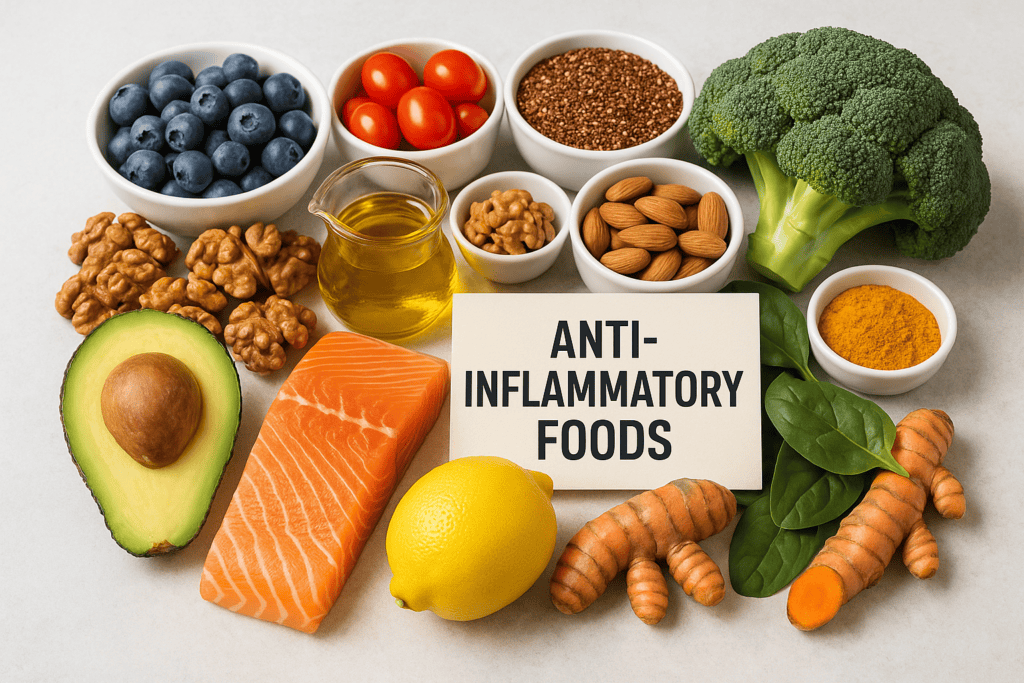
Anti-inflammatory foods
Oily fish and seafood: omega-3 foods to eat weekly
Oily fish provides long-chain omega-3 fats (EPA and DHA), while most other proteins supply little or none. Salmon, sardines, mackerel and trout deliver EPA/DHA directly; chicken, eggs and most plant proteins rely on conversion from ALA, which remains limited in adults.
| Option | Main omega-3 type | Typical EPA+DHA per serving | Practical note |
|---|---|---|---|
| Salmon (cooked, 100 g) | EPA + DHA | Often ~1.5–2.5 g | Reliable weekly staple; choose grilled or baked. |
| Sardines (canned, ~90–100 g) | EPA + DHA | Often ~1.0–1.8 g | Low-cost option; check salt content on the label. |
| Prawns or white fish (100 g) | Small amounts of EPA + DHA | Often <0.5 g | Lean protein; pair with an oily fish meal to meet targets. |
Key differences matter because EPA and DHA influence inflammatory signalling and triglycerides more directly than ALA. For most adults, a practical target is two fish portions per week, including at least one oily portion, aligned with NHS guidance. A standard portion equals about 140 g cooked fish.
Practical implications include choosing gentle cooking methods and managing contaminants. The FDA and EPA advise prioritising lower-mercury seafood; pregnant people and children need stricter limits. If fish intake stays low, discuss omega-3 supplements with a clinician, especially when taking anticoagulants.
Vegetables, fruits, and legumes: high-polyphenol and high-fibre staples
Most UK adults fall short of fibre targets, which matters because low fibre intake links with higher C-reactive protein (CRP), a common inflammatory marker. The Scientific Advisory Committee on Nutrition (SACN) recommends 30 g of fibre per day, yet average intake sits closer to 20 g. Plant variety also matters: the ZOE PREDICT programme popularised 30 different plant foods per week, which correlates with a more diverse gut microbiome.
Vegetables, fruits, and legumes help because they supply polyphenols (bioactive compounds that influence inflammatory signalling) and fermentable fibre that gut bacteria convert into short-chain fatty acids. Those fatty acids support the gut barrier and can reduce inflammatory activity. A 150 g portion of cooked lentils provides roughly 12 g fibre, while 80 g of raspberries adds about 5 g, making the daily target achievable without supplements.
Start with one legume serving per day: add 120–150 g cooked chickpeas to lunch, or swap half the mince in a chilli for 200 g canned beans (drained). Aim for five portions of vegetables and fruit daily, using the NHS 5 A Day guidance (80 g per portion). Use “colour stacking” at dinner: include at least three colours (for example, spinach, red peppers, and purple cabbage) to widen polyphenol intake.
After 2–4 weeks, many people notice easier bowel regularity and steadier appetite, while clinicians often see improved fibre-related markers such as lower LDL cholesterol. Increase legumes by 50–75 g every 3–4 days and prioritise well-cooked beans to reduce bloating.
Herbs, spices, and beverages: turmeric, ginger, green tea, and coffee
A meta-analysis of randomised trials reported that curcumin supplementation reduced C-reactive protein (CRP) by about 0.8 mg/L versus control, indicating a measurable shift in systemic inflammation (see PubMed for indexed trial reviews). In parallel, a large umbrella review found that habitual coffee intake associated with lower all-cause mortality, with the lowest risk typically observed at around 3–4 cups per day. These figures matter because herbs, spices, tea, and coffee deliver concentrated polyphenols that can influence oxidative stress and inflammatory signalling without adding large amounts of energy.
Turmeric and ginger stand out because small culinary doses can meaningfully raise polyphenol exposure. A practical target is 1–2 teaspoons (about 2–6 g) of turmeric powder across meals, paired with black pepper to improve curcumin absorption; piperine can increase curcumin bioavailability by up to 2,000% in pharmacokinetic studies. Ginger works well at 1–2 g per day (roughly ½–1 teaspoon ground, or a 2–3 cm fresh piece) in soups, stir-fries, or yoghurt-based dressings.
Green tea supplies catechins, especially EGCG, which researchers link to lower oxidative stress markers. One brewed cup (250 ml) typically provides about 50–100 mg of EGCG, depending on leaf quality and steep time. Two to three cups per day often fits well with hydration goals while keeping caffeine moderate for most adults.
Coffee contributes chlorogenic acids and other polyphenols, but preparation and timing affect tolerance. For many people, 2–4 cups per day aligns with the range most consistently associated with benefit in population studies, while remaining within the European Food Safety Authority (EFSA) guidance of up to 400 mg caffeine per day for healthy adults. Choose filtered coffee when possible, since paper filters reduce diterpenes that can raise LDL cholesterol.
- Easy daily pattern: turmeric in eggs or lentils, ginger in porridge or stir-fries, 2 cups of green tea, and 1–2 filtered coffees.
- When to be cautious: anticoagulant use, gallbladder disease, pregnancy, or reflux can change suitability; confirm with a clinician if unsure.
Practical daily meal structure: portions, frequency, and food swaps to reduce inflammation
At 07:30, a common breakfast is a large bowl of sweetened cereal with fruit yoghurt and a latte. That combination can exceed 35–45 g of free sugars in one sitting, while providing under 5 g of fibre, which leaves little room for the 30 g daily fibre target set by SACN. By 11:00, hunger often returns, and the next choice tends to be a refined snack rather than a balanced meal.
A practical anti-inflammatory structure starts by anchoring each eating occasion to three measurable elements: 20–30 g of protein, at least 8–10 g of fibre, and a source of unsaturated fat. For breakfast, swapping cereal and yoghurt for 170–200 g plain Greek yoghurt plus 30 g oats, 150 g berries, and 15 ml extra-virgin olive oil or 20–30 g nuts typically lifts fibre into the 10–12 g range while cutting added sugars to near zero. That shift supports steadier glucose exposure, which matters because higher post-meal glucose links with higher inflammatory signalling in metabolic studies.
Apply the same template at lunch and dinner: fill half the plate with vegetables or legumes, keep starchy carbohydrates to a fist-sized portion, and replace butter, cream, and processed meats with olive oil, fish, beans, or yoghurt-based sauces. Over a week, this pattern makes it easier to reach 25–30 g fibre per day and to keep oily fish at 1–2 servings, without complex tracking.
Frequently Asked Questions
Which anti-inflammatory foods have the strongest evidence for reducing C-reactive protein (CRP) levels?
Foods with the strongest evidence for lowering C-reactive protein (CRP) include:
- Extra-virgin olive oil (about 20–50 g/day in Mediterranean-style diets)
- Fatty fish providing 1–2 g/day EPA+DHA (for example, salmon, sardines)
- Tree nuts (about 30 g/day, especially walnuts and almonds)
- High-fibre foods adding 25–38 g/day fibre (oats, beans, berries)
How many servings of oily fish per week support an anti-inflammatory diet, and what portion size should you aim for?
Aim for 2 servings of oily fish per week to support an anti-inflammatory diet. Target a portion size of about 140 g cooked fish per serving (or roughly 100 g when tinned). This intake typically provides around 250–500 mg per day of EPA and DHA omega-3 fats, which help regulate inflammation.
Which spices and herbs provide measurable anti-inflammatory effects, and what daily amounts are commonly used in studies?
Studies most often use turmeric (curcumin) 500–1,000 mg/day, ginger 1–2 g/day, garlic 600–1,200 mg/day (or 1–2 cloves), cinnamon 1–3 g/day, and rosemary extract 200–500 mg/day. Common culinary herbs such as oregano and thyme also show effects, typically at 1–2 teaspoons/day dried.
How can you build an anti-inflammatory breakfast using wholegrains, fruit, and protein without excess added sugar?
Build breakfast around minimally processed wholegrains (porridge oats, rye, barley) and aim for 30–40 g fibre per day. Add 1–2 portions of fruit (berries, apple) for polyphenols, then include 20–30 g protein (Greek yoghurt, eggs, tofu, nuts). Avoid flavoured yoghurts and sweetened cereals; use cinnamon or vanilla instead.
Which common foods and ingredients can increase inflammation, and what practical swaps reduce exposure to them?
Foods linked with higher inflammation include sugary drinks, refined grains (white bread), processed meats, deep-fried foods, and products high in trans fats and omega-6 seed oils. Practical swaps:
- Water or unsweetened tea instead of sugary drinks
- Wholegrains instead of refined grains
- Beans, fish, or poultry instead of processed meats
- Olive oil, nuts, and seeds instead of fried snacks
Simple healthy meals do not require long prep times or specialist equipment. With a small set of staples such as tinned beans, eggs, frozen vegetables, and wholegrains, you can assemble balanced dishes quickly. Many home cooks can complete a nutritious plate in under 20 minutes by using one-pan methods, pre-washed salad leaves, and microwaveable grains.
This guide focuses on fast recipes that prioritise protein, fibre, and colourful vegetables, while keeping added salt and saturated fat low. Expect practical combinations, clear timings, and ingredient swaps that fit common dietary needs.
Key takeaways
- Cook balanced meals in under 20 minutes using high-heat, one-pan methods.
- Build fast plates around lean protein, quick-cooking grains, and pre-cut vegetables.
- Use tinned beans, frozen veg, and bagged salads to cut prep time.
- Rely on flavour boosters such as lemon, herbs, yoghurt, and spice blends.
- Choose healthy fats by measuring olive oil and using nuts or seeds sparingly.
- Batch-cook staples like rice or quinoa to speed up weekday dinners.
What qualifies as a healthy 20-minute meal (nutrition and time rules)
In the UK, the Eatwell Guide recommends at least 5 portions of fruit and vegetables per day and limits free sugars to 5% of energy intake. A healthy 20-minute meal meets those targets in a single sitting by prioritising vegetables, lean protein, and high-fibre carbohydrates while keeping added sugar and salt low. Time matters because short cooking windows often push people towards ultra-processed options, which tend to deliver more salt and saturated fat per calorie than minimally processed foods.
For nutrition, a practical rule is to build the plate around 2 portions of vegetables (about 160 g total) and a protein serving of roughly 20–30 g protein, such as eggs, fish, tofu, or pulses. For carbohydrates, choose wholegrains or starchy vegetables that cook quickly, aiming for at least 6 g fibre per meal to support satiety and glycaemic control. Keep saturated fat below about 10% of total energy by using small amounts of olive or rapeseed oil rather than butter or cream.
For time, “under 20 minutes” should include prep and cooking, not only hob time. Meals qualify when they use fast-cooking formats such as chopped vegetables, tinned beans, or quick-cook grains, while still relying on whole ingredients rather than ready meals.
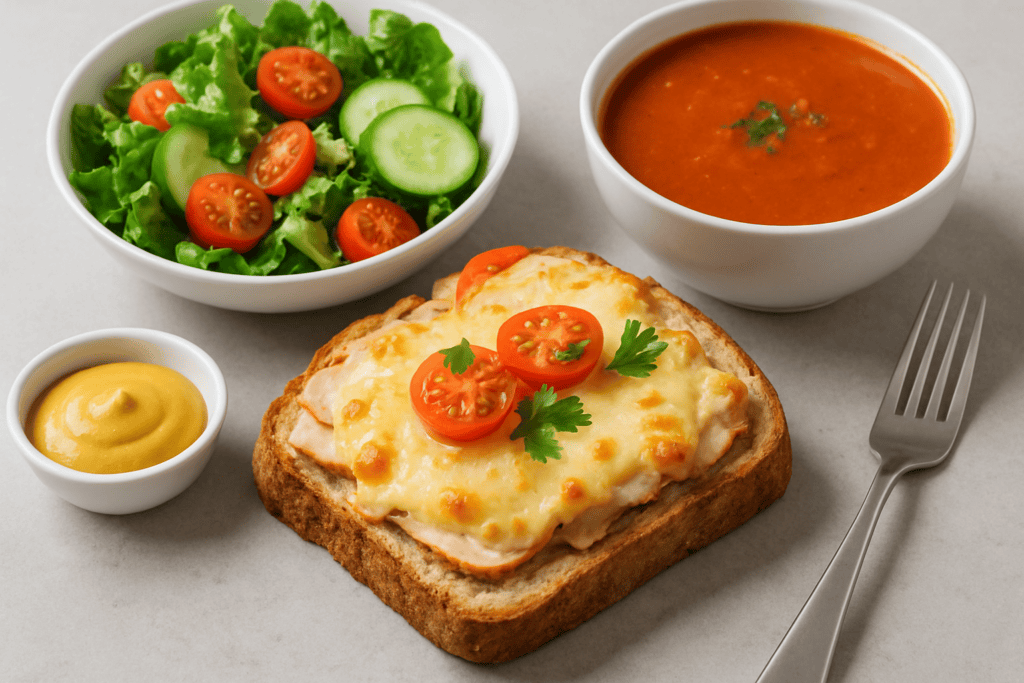
Quick food, not fast food.
Essential kitchen equipment and pantry staples for sub-20-minute cooking
At 18:40, you arrive home with 20 minutes before a video call and a hungry household. A non-stick frying pan, a sharp chef’s knife, and a lidded saucepan let you turn a tin of chickpeas, a bag of spinach, and a jar of passata into a hot, high-fibre meal while wholegrain couscous steams off the heat in five minutes.
This speed comes from reducing set-up time, not cutting corners on nutrition. A reliable hob kettle-boil, a chopping board that does not slip, and a fine grater for garlic and lemon zest can remove 3–5 minutes of prep. A digital kitchen timer helps you overlap tasks, which often saves another 2–4 minutes by preventing overcooking and rework.
For the pantry, keep ingredients that cook fast and lift flavour: tinned beans and lentils, canned fish, passata, wholegrains such as couscous, and frozen vegetables. The NHS Eatwell guidance supports building meals around vegetables and higher-fibre carbohydrates, while choosing lower-salt options where possible.
5-minute prep methods that cut cooking time without sacrificing flavour
Knife-led prep prioritises speed through smaller, even cuts, while heat-led prep prioritises speed by using higher initial temperatures and covered cooking. A 2–3 mm slice of chicken or tofu reaches safe, even doneness faster than a thick piece, while finely chopped onions soften in about 3–5 minutes in a hot pan. By contrast, preheating a pan for 60–90 seconds and using a lid can trap steam, cutting vegetable cooking time by roughly 30–40% compared with open-pan sautéing.
Key differences come down to control and flavour development. Knife-led prep improves consistency and reduces the risk of undercooked centres, while heat-led prep boosts browning through the Maillard reaction, which accelerates above about 140°C. Practical implications are straightforward: when you need reliability, cut ingredients to uniform thickness and start cooking immediately; when you need depth, preheat properly and cover briefly to soften, then uncover to brown. For food safety, cook poultry to 75°C at the thickest point, as advised by the Food Standards Agency.
High-protein breakfasts under 20 minutes (eggs, yoghurt, tofu)
Breakfast often becomes a low-protein, high-sugar meal when time runs short. In the UK, adults need about 0.75 g of protein per kg of body weight per day (British Nutrition Foundation), yet a typical bowl of sweetened cereal can deliver under 10 g protein while adding free sugars.
Use fast-cooking proteins that need minimal prep: eggs, Greek yoghurt, or tofu. Aim for 25–35 g protein by pairing one main protein with fruit or vegetables and a high-fibre carbohydrate.
For eggs, whisk 2–3 eggs with a handful of spinach, cook in a hot non-stick pan for 4–6 minutes, then serve on wholegrain toast. For yoghurt, combine 200 g Greek yoghurt with berries and 30 g oats; the bowl takes 2 minutes and typically provides 20–25 g protein. For tofu, crumble 150 g firm tofu with turmeric and frozen mixed vegetables, then stir-fry for 7–9 minutes.
These breakfasts consistently reach a high-protein target in under 20 minutes, improving satiety and reducing mid-morning snacking.
Fast lunches under 20 minutes (salads, wraps, grain bowls)
In the UK, only 33% of adults ate the recommended 5 portions of fruit and vegetables per day in 2022 (NHS Digital, Health Survey for England). Fast lunches can close that gap because salads, wraps, and grain bowls can deliver 2–3 portions in one meal without using the hob for more than 8–10 minutes. The key is to build a high-fibre base, add a lean protein, then use an acidic dressing to lift flavour without relying on salt.
Time pressure often pushes lunch towards ultra-processed choices, yet a structured “assemble-and-go” lunch can stay within 20 minutes while hitting practical nutrition targets. Aim for 25–35 g protein and at least 8 g fibre where possible, then keep dressings to 1–2 tablespoons to control energy density. This approach suits home working, packed lunches, and post-gym meals because it scales easily and uses common pantry staples.
20-minute salad formula (crunch + protein + dressing)
A fast salad works best when it includes texture and a substantial protein, not only leaves. Use a base of 80–120 g mixed leaves or shredded cabbage, then add a “crunch layer” such as cucumber, peppers, or grated carrot for volume. Choose a protein that needs minimal cooking, such as tinned fish, pre-cooked lentils, or quickly seared chicken strips.
- Example: tuna and bean salad (12–15 minutes) — Mix 1 tin tuna (drained), 120 g cannellini beans (rinsed), 200 g chopped tomatoes, and a handful of rocket. Dress with 1 tbsp olive oil + 1 tbsp lemon juice, then add black pepper and herbs.
- Example: warm halloumi and chickpea salad (15–18 minutes) — Pan-sear 80–100 g halloumi for 2–3 minutes per side, then toss with 150 g chickpeas, spinach, and sliced red onion. Use a yoghurt-lemon dressing to keep salt lower than a brine-heavy vinaigrette.
Acidic dressings improve perceived flavour quickly, which helps reduce reliance on salty sauces. A simple ratio of 1 tbsp oil to 1 tbsp acid (lemon or vinegar) coats a large bowl without turning it oily. If the salad needs extra staying power, add 30–40 g nuts or seeds, or swap in avocado, then reduce added oil.
Wraps that stay high-protein and lower in salt
Wraps become healthier when the filling carries most of the flavour and volume, rather than cheese and processed meats. Choose a wholegrain wrap where possible, then aim for 2 handfuls of salad vegetables inside to increase fibre and crunch. Keep spreads measured, since mayonnaise and creamy sauces can add 100–200 kcal in a few spoonfuls.
- Example: chicken and hummus wrap (10–15 minutes) — Fill a wrap with 120 g cooked chicken (leftovers or quick-seared strips), 2 tbsp hummus, cucumber, and grated carrot. Add chilli flakes or smoked paprika for flavour without extra salt.
- Example: smashed chickpea “tuna” wrap (8–12 minutes) — Mash 150 g chickpeas with 1 tbsp Greek yoghurt, mustard, lemon, and chopped gherkins, then add lettuce and tomatoes. This keeps protein steady while reducing reliance on processed fillings.
For food safety and texture, keep wet ingredients away from the wrap until the last moment if packing ahead. Store chopped vegetables and protein separately, then assemble in under 2 minutes before eating to avoid sogginess.
Grain bowls: fast carbs with fibre and micronutrients
Grain bowls work well for lunch because they combine slow-release carbohydrates with vegetables and protein in one container. Use fast-cooking grains such as couscous or microwave brown rice, then build the bowl around a clear portion structure. A practical target is 150–200 g cooked grain, 200–300 g vegetables, and 100–150 g protein.
- Example: Mediterranean couscous bowl (12–16 minutes) — Pour boiling water over 75 g wholewheat couscous and cover for 5 minutes. Stir through 150 g cooked lentils, chopped cucumber and tomatoes, olives (small handful), and a lemon-herb dressing.
- Example: salmon rice bowl (15–20 minutes) — Microwave a brown rice pouch for 90 seconds, add 120 g hot-smoked salmon, shredded spinach, and grated carrot. Use a quick dressing of yoghurt, lime, and grated ginger to keep sugar low.
To keep bowls balanced, limit high-salt toppings such as soy sauce and cured meats, then use citrus, herbs, garlic, and spices for intensity. When time is tight, pre-wash leaves and pre-chop two vegetables once per week; that single 10-minute batch prep can cut daily lunch assembly to 6–8 minutes.
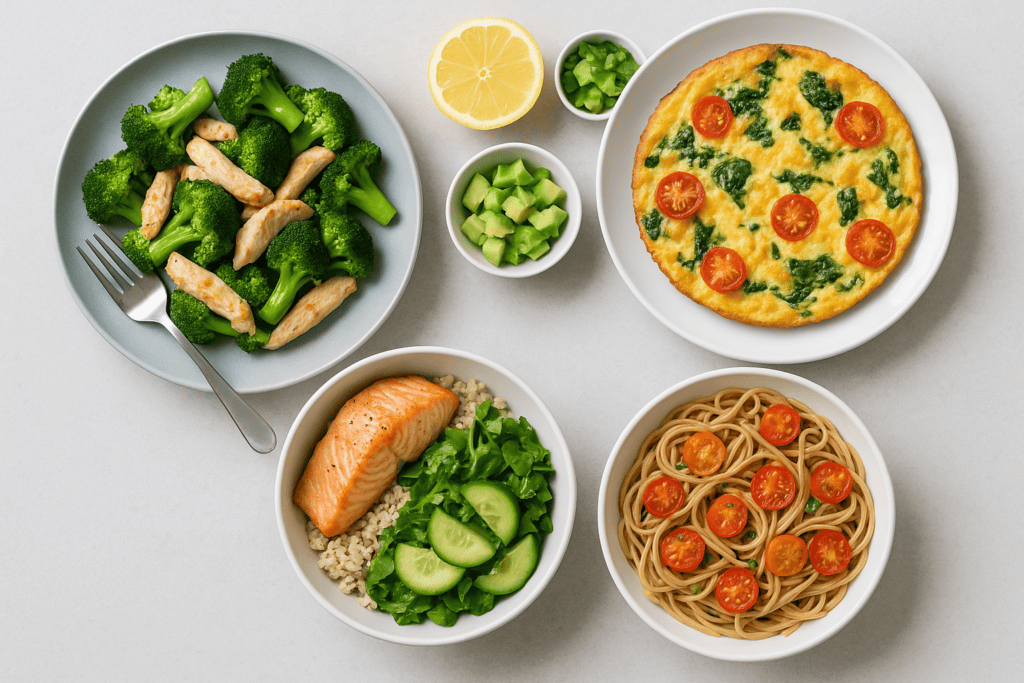
Simple healthy meals you can cook in under 20 minutes
Quick dinners under 20 minutes (stir-fries, fish, lean meats)
At 18:55, you walk through the door with 20 minutes before a child’s bedtime routine and no appetite for a takeaway. You pull a salmon fillet from the fridge, tip a bag of pre-cut stir-fry vegetables into a hot pan, and microwave a pouch of wholegrain rice. By 19:12, dinner sits on the table: salmon with ginger-soy greens and rice, with minimal washing-up and no guesswork.
A worked example: salmon, ginger greens, and wholegrain rice (15–18 minutes)
Start the rice first: most microwave wholegrain pouches heat in 90 seconds. Heat a non-stick frying pan for 60–90 seconds, then add 1 teaspoon of rapeseed oil and a salmon fillet (about 120–150 g). Cook skin-side down for 4 minutes, turn, and cook for 3–4 minutes, or until the centre reaches 63°C for food safety (UK guidance from the Food Standards Agency).
While the salmon cooks, stir-fry 250–300 g of mixed vegetables in a second pan or push the fish to one side if the pan allows. Add 1 grated garlic clove, 1 teaspoon grated ginger, and a quick sauce: 1 tablespoon reduced-salt soy sauce, 1 tablespoon lime juice, and 2 tablespoons water. Finish with a handful of spinach to wilt in 30–45 seconds.
This plate hits the “healthy and fast” criteria without relying on heavy sauces. A 150 g salmon portion typically provides around 30–34 g protein and meaningful omega-3 fats (values vary by product; check the pack). The vegetables contribute 2–3 portions in one meal if you use roughly 240 g or more, aligning with the NHS “5 A Day” portion guidance (NHS).
Why this format works under time pressure
Quick dinners succeed when heat and surface area do the work. Thin proteins (fish fillets, turkey strips, lean pork medallions) cook in 6–10 minutes, while high-water vegetables soften in 3–6 minutes in a properly heated pan. You also avoid the hidden time cost of slow steps such as oven preheating, which often takes 10–15 minutes in many homes.
The method scales across proteins because the structure stays constant: fast carbohydrate, fast protein, fast vegetables, then a bright sauce. Acid (lemon, lime, vinegar) lifts flavour quickly, so you can keep added sugar low and avoid relying on thick, salty bottled sauces.
Fast protein options that stay lean
Choose proteins that cook quickly and tolerate high heat. Aim for portions that deliver roughly 25–35 g protein at dinner, which many adults reach with 120–170 g of lean meat or fish, depending on the food.
- Fish: salmon, cod, haddock, trout; most fillets cook in 8–10 minutes total.
- Lean meats: turkey breast strips, chicken breast sliced to 2–3 mm, pork tenderloin medallions; typical cook time 6–12 minutes.
- Shellfish: prawns turn pink in 2–3 minutes, ideal for vegetable-heavy stir-fries.
Three 20-minute dinner templates you can repeat all week
Use these as plug-and-play patterns rather than fixed recipes. Each keeps cooking to one pan and one fast carb, so you can rotate flavours without adding time.
- Stir-fry: lean protein + 300 g mixed vegetables + rice noodles (often 3–5 minutes) + soy-lime-garlic sauce.
- Pan-seared fish: white fish + frozen peas or spinach + microwaved new potatoes (5–7 minutes) + lemon-caper yoghurt.
- Lean meat “skillet”: turkey mince (5% fat) browned in 6–8 minutes + chopped peppers and courgette + passata; serve with couscous that steams in 5 minutes.
Once you treat dinner as a repeatable format, you stop needing extra time for planning. You only swap the protein, the vegetables, and one high-impact flavour (citrus, herbs, chilli, or a spoon of mustard), while keeping the cook time reliably under 20 minutes.
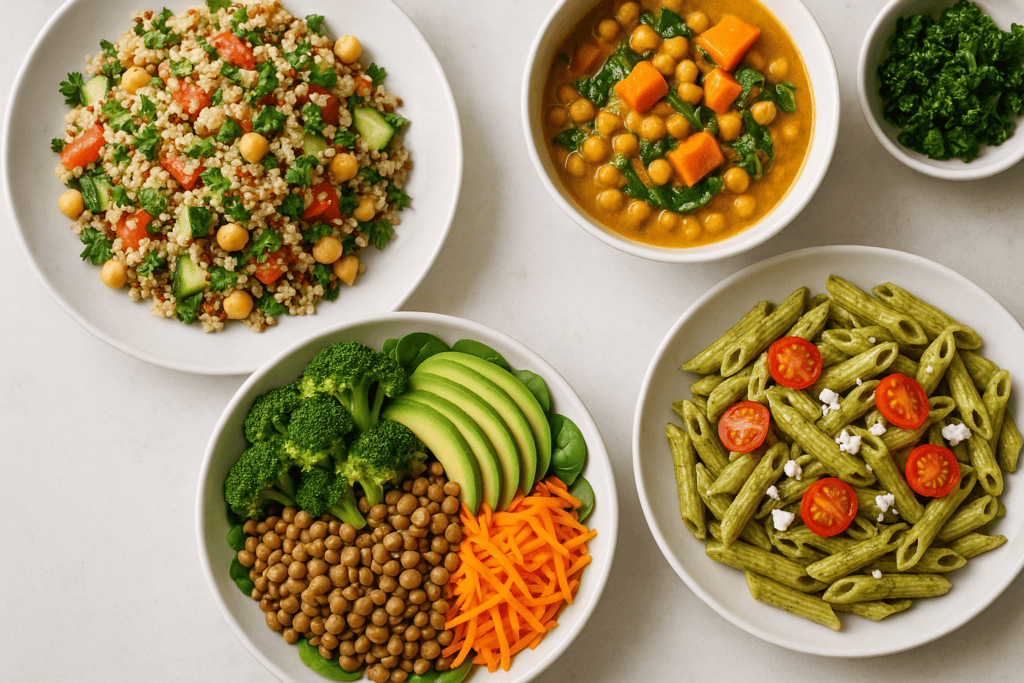
healthy vegetarian meals
Vegetarian and vegan options under 20 minutes (legumes, tempeh, quick curries)
Vegetarian and vegan sub-20-minute meals often split into two fast paths: legume-led dishes (chickpeas, lentils, beans) versus tempeh-led dishes (fermented soya). Legumes cook quickly when tinned or pre-cooked, while tempeh browns fast and delivers a firmer, meat-like bite. Both suit quick curries because spices bloom in 30–60 seconds and sauces thicken in 6–10 minutes.
Option A vs Option B: speed, protein, and texture
Choose legumes when you want minimal prep and a softer texture that absorbs sauce. Choose tempeh when you want rapid browning and a higher-protein centrepiece without relying on dairy or eggs. For protein context, USDA FoodData Central lists cooked lentils at about 9 g protein per 100 g, while tempeh typically provides about 19 g protein per 100 g (brand values vary).
| Criteria | Legumes (tinned/pre-cooked) | Tempeh |
|---|---|---|
| Typical cook time | 3–8 minutes to heat through in sauce | 6–10 minutes to slice and brown |
| Protein density | Moderate (often 7–10 g per 100 g cooked) | Higher (often 15–20 g per 100 g) |
| Texture | Soft, sauce-absorbing | Firm, crisp edges when seared |
| Best use | Quick curries, stews, smashed fillings | Stir-fries, curry “chunks”, wraps |
Key differences that affect nutrition
Legumes raise fibre quickly, which supports satiety and helps balance a fast meal. Tempeh raises protein without adding free sugars, and fermentation can improve digestibility for some people. For salt control, rinse tinned beans; NHS guidance sets an adult maximum of 6 g salt per day, and some tins contribute 0.5–1.0 g per serving before rinsing.
Practical implications: three 20-minute templates
- Chickpea and spinach tomato curry (15–18 minutes): fry curry paste or spices for 1 minute, add passata and chickpeas, simmer 8 minutes, fold in spinach for 2 minutes. Serve with microwaved wholegrain rice (90 seconds).
- Red lentil dhal-style bowl (18–20 minutes): use split red lentils (they soften in about 10–12 minutes), simmer with stock and turmeric, finish with lemon and frozen peas (3 minutes).
- Tempeh green curry (15–19 minutes): sear sliced tempeh 6–8 minutes, add green curry paste and light coconut milk, then add quick-cook vegetables (fine beans, peppers) for 4–6 minutes.
When time is tight, keep one rule: build flavour with aromatics and acid (lime, lemon, vinegar) instead of extra salt, and aim for 2+ portions of vegetables by using frozen or pre-cut options.
Batch-cook shortcuts and safe storage to keep meals under 20 minutes all week
Weeknight cooking fails when prep time competes with eating time: if chopping and washing-up take 12 minutes, only 8 minutes remain for heat. The solution is to shift 45–60 minutes of batch prep to one session, then assemble meals in under 20 minutes using safe storage.
Cook two staples on a low-effort day: 300 g dry wholegrain rice or quinoa (yields about 900 g cooked) and a tray of 1 kg mixed vegetables. Portion into 3–4 containers and cool quickly; the Food Standards Agency advises refrigerating within 2 hours. Store cooked grains for up to 4 days in the fridge, or freeze in 250 g portions for up to 3 months (NHS).
On busy nights, reheat one portion until steaming hot, then add a fast protein: eggs (6–8 minutes), tinned lentils (2 minutes), or fish fillets (8–10 minutes). This method cuts active cooking to 10–15 minutes while keeping fibre and protein consistent across the week.
Frequently Asked Questions
What qualifies as a healthy meal when cooking in under 20 minutes?
A healthy under-20-minute meal combines lean protein, high-fibre carbohydrates, and unsaturated fats, while limiting salt and added sugar. Aim for at least 2 portions of vegetables (about 160 g), 20–30 g protein, and 1–2 tablespoons of olive oil, nuts, or seeds. Keep energy near 400–700 kcal, depending on needs.
Which pantry staples reduce prep time for healthy meals under 20 minutes?
Keep tinned pulses (chickpeas, lentils) for 30–60 second rinsing, tinned fish (tuna, sardines) for instant protein, and wholegrains (couscous, quick oats) that cook in 2–10 minutes. Stock tinned tomatoes, frozen vegetables, olive oil, vinegar, and spice blends to build sauces and flavour in under 1 minute.
Which high-protein ingredients cook fastest for weeknight meals?
Fast-cooking, high-protein options include eggs (6–10 minutes), prawns (3–5 minutes), canned lentils (2–3 minutes to heat), canned tuna (ready to eat), Greek yoghurt (no-cook), and firm tofu (8–12 minutes to crisp). Use pre-cooked chicken for a 2–3 minute reheat.
How can I meal-prep components to assemble healthy meals in under 20 minutes?
Batch-cook proteins (2 chicken breasts or 400 g lentils), grains (2 cups cooked brown rice or quinoa), and vegetables (1 tray roasted mixed veg) once or twice weekly. Wash and chop salad greens, portion nuts, and mix a yoghurt or tahini dressing. Store in airtight containers for 3–4 days, then assemble bowls, wraps, or salads in 10–15 minutes.
What are the quickest healthy vegetarian meals you can cook in under 20 minutes?
Quick healthy vegetarian meals under 20 minutes include:
- Chickpea salad wrap (10 minutes): 1 tin chickpeas, yoghurt, lemon, spinach.
- Vegetable omelette (12 minutes): 2 eggs, peppers, mushrooms; serve with salad.
- Lentil tomato pasta (15 minutes): red lentils, passata, garlic, wholewheat pasta.
- Tofu stir-fry (18 minutes): 200 g tofu, frozen veg, soy sauce, microwave rice.
How can I reduce added salt and sugar without losing flavour in quick meals?
Cut added salt by using lemon or lime juice, vinegar, garlic, ginger, chilli, and fresh herbs. Choose low-salt stock and rinse canned beans to remove up to 40% of sodium. Reduce added sugar with cinnamon, vanilla, citrus zest, and ripe fruit; halve sugar in sauces and balance with acidity and spice.
Which kitchen tools help you cook simple healthy meals faster without compromising nutrition?
Use tools that cut prep time while protecting nutrients: a sharp chef’s knife and stable board for faster chopping; a non-stick or stainless pan for quick sautés; a steamer basket to retain water-soluble vitamins; a microwave for 2–5 minute vegetable cooking; and a blender for smoothies, soups, and sauces.
Sitting for long periods reduces muscle activity and lowers energy use, which can affect circulation and joint mobility. Research links high daily sitting time with higher cardiometabolic risk, even among people who exercise regularly. This guide explains practical ways to stay active during a desk-based day, using brief movement breaks, simple strength work, and walking habits that fit around meetings. Small, frequent changes can raise daily step counts and reduce stiffness without disrupting productivity.
Key takeaways
- Break up sitting every 30–60 minutes with 2–5 minutes of movement.
- Use “exercise snacks”: 10 squats, stair climbs, or brisk corridor walks.
- Set calendar or phone reminders to stand, stretch hips, and reset posture.
- Build activity into work tasks: walk during calls and take stairs, not lifts.
- Try a sit–stand routine: stand 10–15 minutes each hour, then sit.
- Target 7,000–10,000 daily steps by adding short walks before and after work.
Quantify your sitting time and set movement targets
Adults spend about 9.5 hours per day sitting, based on accelerometer data from the US National Health and Nutrition Examination Survey (NHANES). That volume matters because long, unbroken sitting reduces muscle activity in the legs and trunk, which lowers short-term energy expenditure and can worsen post-meal blood glucose control. Measuring your baseline makes the problem concrete and turns “be more active” into a trackable plan.
Start by quantifying sitting time for 7 consecutive days using a wearable or phone tracker. Devices such as Fitbit and Apple Watch estimate sedentary minutes and prompt standing, which helps you identify the longest uninterrupted blocks. Aim to break sitting at least every 30 minutes with 2–3 minutes of light movement, such as walking to fill a bottle or climbing one flight of stairs.
Set a daily target that fits your schedule: the World Health Organization recommends 150–300 minutes of moderate activity per week, which equals 22–43 minutes per day. If that feels high, begin by reducing sedentary time by 60 minutes per day and reassess after two weeks using the same tracker.

How to stay active if you sit all day
Build hourly micro-movement breaks into your workday
At 10:55, a project manager finishes a 50-minute video call, realises the next meeting starts at 11:00, and stays seated to “save time”. By 16:00, four hours have passed with only a brief walk to refill a bottle. The calendar looks productive, yet the body has spent most of the day in the same hip and knee angles, with minimal calf and glute activation.
Hourly micro-movement breaks solve this problem because they interrupt long sitting bouts without derailing focused work. A practical target is 1–3 minutes of movement every 60 minutes, which totals 8–24 minutes across an 8-hour day. That amount sounds small, yet it creates 8 separate “resets” for posture, circulation, and joint range of motion. If reminders help, set a repeating timer on a phone or use a computer prompt; the key is consistency rather than intensity.
Use one simple routine that fits beside a desk, so friction stays low:
- 30 seconds of brisk marching in place or a corridor walk (aim for 60–90 steps).
- 8–12 sit-to-stands from the chair, controlled and steady.
- 20–30 seconds of calf raises (about 15–25 reps), holding the desk for balance.
For broader application, attach the break to an existing trigger: the end of each call, sending an email, or refilling water. If work runs in 90-minute blocks, keep the same rule but shorten the interval to 45 minutes during peak sitting periods. For health context, the World Health Organization links sedentary behaviour with higher cardiometabolic risk, while the CDC recommends regular movement as part of weekly activity goals. Micro-breaks do not replace exercise sessions, yet they make long desk days measurably less static.
Optimise your workstation to reduce prolonged static posture
Option A keeps a fixed desk height and relies on willpower to change position; Option B adjusts the workstation so posture changes happen with less effort. A static set-up often locks hips at roughly 90° and keeps the screen too low, which increases neck flexion and reduces glute and calf activity during long tasks.
| Workstation element | Option A: fixed set-up | Option B: optimised set-up |
|---|---|---|
| Monitor height | Top of screen below eye level | Top of screen at, or slightly below, eye level |
| Chair and desk height | Shoulders elevated or wrists bent | Elbows near 90° with neutral wrists |
| Posture variation | One position for 60–120 minutes | Alternates sitting and standing every 20–30 minutes |
For practical use, set the screen about 50–70 cm from the eyes and keep feet fully supported. If using a sit–stand desk, aim for 2–4 hours of standing spread across the day, aligning with guidance from NIOSH. A simple monitor riser and external keyboard often achieve most benefits without replacing the desk.
Use before-work, lunch, and after-work routines to meet weekly activity guidelines
Desk-based workers often miss the 150 minutes of moderate-intensity activity per week recommended for adults, especially when meetings compress the day into long seated blocks. A typical schedule can leave only 30–45 minutes of discretionary time on weekdays, which makes “exercise later” an unreliable plan.
A routine anchored to three predictable windows solves this problem because it converts spare minutes into a weekly total. Aim for 5 sessions of 30 minutes across the week, or 10–15 minute blocks that accumulate to the same target. The NHS physical activity guidelines also recommend muscle-strengthening activity on 2 days per week, which fits well into short, scheduled sessions.
Before work, complete a brisk walk or cycle for 12–20 minutes at a pace that raises breathing but still allows conversation. At lunch, add 10–15 minutes of continuous walking immediately after eating to support post-meal glucose control and protect the afternoon energy dip. After work, finish with 10–20 minutes of resistance work, such as squats, hip hinges, rows, and calf raises, using bodyweight or a single dumbbell.
After 4 weeks, this structure typically delivers 150–210 minutes of moderate activity plus 2 strength sessions, without relying on long gym visits. A fixed routine also reduces decision fatigue, which improves adherence when workloads peak.
Frequently Asked Questions
How many minutes of movement should you aim for each hour if you sit at a desk all day?
If you sit at a desk all day, aim for 2–5 minutes of movement every hour. This aligns with evidence that 2 minutes of light walking or 15 bodyweight squats every 30 minutes can reduce post-meal blood glucose by about 24–25% compared with uninterrupted sitting.
Which seated stretches and mobility exercises reduce hip and lower-back stiffness during long sitting periods?
Use these seated moves every 30–60 minutes, holding each for 20–30 seconds and repeating 2–3 times per side:
- Seated figure-four stretch (ankle on opposite knee) to open the hip.
- Seated hip flexor glide (scoot forward, extend one leg, tuck pelvis) to ease front-hip tightness.
- Seated spinal twist to reduce lower-back stiffness.
- Pelvic tilts for 10–15 slow reps to restore lumbar motion.
What is the most effective way to structure a daily walking routine around a full-time desk job?
Schedule three walking blocks: 10 minutes before work, 5 minutes every 60–90 minutes during the day, and 15–20 minutes after work. Aim for 30–45 minutes total and 6,000–8,000 steps. Use calendar reminders and take calls while walking to protect consistency.
How can you set up an ergonomic workstation that encourages more movement without reducing productivity?
Set the monitor at eye level and keep elbows at 90–100° with wrists straight. Use a chair with lumbar support and set hips slightly above knees. Place frequently used items 30–60 cm away to prompt reach breaks. Alternate sitting and standing every 30–45 minutes, and take 1–2 minute walking breaks each hour.
Which strength exercises counteract the postural effects of prolonged sitting, and how often should you do them?
Prioritise glute bridges, hip hinges (deadlift pattern), rows, face pulls, planks, and thoracic extensions to offset tight hip flexors and rounded shoulders from sitting. Complete 2–3 sessions weekly, 20–30 minutes each, using 2–4 sets of 8–12 reps (30–60 seconds for planks). Add 5–10 minutes daily for mobility.
Hydration advice often relies on slogans rather than evidence. Claims such as “eight glasses a day” or “thirst means dehydration” can mislead, because fluid needs vary by body mass, climate, diet, and activity.
This guide separates myths from facts using measurable markers such as urine colour, sweat losses, and typical daily intake ranges. Most adults consume about 2–3 litres of total water per day from drinks and food, while endurance exercise can raise losses to 1–2 litres per hour. Understanding these numbers helps prevent both dehydration and overhydration.
Key takeaways
- The “eight glasses a day” rule lacks evidence; needs vary by body size.
- Thirst usually signals hydration needs; most healthy adults can trust it.
- Coffee and tea contribute to fluid intake; moderate caffeine does not dehydrate.
- Clear urine is not a goal; pale straw colour indicates adequate hydration.
- Sports drinks suit long, intense exercise; water works for most daily activity.
- Electrolytes matter during heavy sweating; excess water can cause hyponatraemia.
Hydration basics: how the body regulates water and electrolytes
Water accounts for about 60% of an adult’s body weight, and blood plasma is roughly 90–92% water, which makes fluid balance central to circulation and temperature control (USGS). The body regulates hydration through a tight feedback loop: the brain’s hypothalamus detects rising blood osmolality (concentration) and triggers thirst, while the pituitary releases antidiuretic hormone (ADH) to reduce water loss in urine. Even a small shift in concentration prompts action; normal blood osmolality typically sits around 275–295 mOsm/kg (Merck Manual Professional Edition).
Electrolytes, especially sodium and potassium, govern where water moves between cells and blood. Sodium dominates the fluid outside cells, so sodium losses through sweat can destabilise volume and blood pressure during prolonged exercise or heat exposure. Sweat sodium varies widely, but many adults lose roughly 0.5–1.5 g of sodium per litre of sweat, which explains why plain water alone may not restore balance after heavy sweating (ACSM). The kidneys then fine-tune both water and sodium, filtering about 180 litres of fluid per day and reabsorbing nearly all of it to keep levels within a narrow range.

Hydration myths vs. facts
Myth: everyone needs eight glasses a day — Fact: needs vary by body size, diet, and climate
At 15:00 on a July afternoon in Seville, a 55 kg tourist carries a 1 litre bottle and aims to “hit eight glasses” before dinner. Two streets away, a 95 kg construction worker drinks the same amount, yet finishes the shift with a headache and dark urine. The rule sounds tidy, but the outcomes differ because **fluid needs scale with heat load and body mass**, not a single number.
Water turnover rises with size and activity. The National Academies set adequate intakes at about 3.7 litres/day for men and 2.7 litres/day for women from all beverages and foods, not eight 240 ml glasses. Climate shifts requirements quickly: sweat rates during moderate-to-hard work in heat commonly reach 0.5–1.5 litres per hour (CDC), which can exceed a full day’s “eight glasses” in a single afternoon.
Diet also changes the target. High-salt meals increase thirst, while water-rich foods contribute meaningfully; the USDA estimates foods provide roughly 20% of daily water intake for many adults. A practical approach uses **thirst and urine colour** as day-to-day checks, then increases fluids during heat, long exercise, fever, or diarrhoea.
Myth: thirst is a poor guide — Fact: when thirst works and when it does not
Option A (myth): thirst lags behind dehydration, so it cannot guide drinking. Option B (fact): thirst usually tracks rising blood concentration and helps most healthy adults match intake to losses during routine days.
In controlled studies, people with free access to water often maintain body mass within about 1% across a day, which indicates that thirst and normal drinking habits can keep fluid balance close to baseline. The brain’s osmoreceptors typically trigger thirst after a small rise in plasma osmolality, often corresponding to roughly 1–2% body water deficit.
| Situation | How well thirst works | What to do in practice |
|---|---|---|
| Normal daily activity in temperate conditions | Usually reliable for maintaining near-steady hydration | Drink when thirsty; check urine colour and frequency |
| Prolonged exercise or heavy work in heat | May under-shoot needs as sweat losses rise quickly | Plan fluids; aim to limit body mass loss to <2% (ACSM) |
| Older age or illness affecting thirst | Often blunted; higher risk of under-drinking | Use scheduled drinks and monitor weight and urine output |
Practical implication: treat thirst as a solid baseline signal, then add structure when heat, duration, or physiology reduces its accuracy. For sport and occupational heat, follow guidance from the American College of Sports Medicine and adjust using body mass change and urine cues.
Myth: clear urine means perfect hydration — Fact: practical markers and warning signs
A common mistake in hydration tracking comes from treating crystal-clear urine as a success metric. Urine colour changes quickly with fluid intake, so a single pale sample can mask meaningful losses from sweat or diarrhoea. In endurance settings, athletes can lose 0.5–2.0 litres of sweat per hour depending on heat and intensity, which can outpace casual sipping even when urine looks light (American College of Sports Medicine, ACSM).
Use practical markers that reflect both intake and losses. Aim for urine that stays pale straw across the day, not colourless every time. Pair that with body-mass change: a drop of more than 1% from morning to afternoon often signals underhydration during active or hot days, while rapid gain can indicate overdrinking. For context, the CDC lists diarrhoea and vomiting as key dehydration risks, where fluid and electrolyte replacement matters more than urine colour alone.
Implement a simple routine: weigh once after waking and once after work or training, under similar conditions; note urine colour at midday; and adjust fluids in small doses (200–300 ml) every 20–30 minutes during heavy sweating. Seek medical help if warning signs appear, including confusion, fainting, no urination for 8+ hours, or persistent dizziness.
People who combine these checks usually reduce headaches and fatigue during heat exposure and stabilise day-to-day weight swings to within about 1%, which indicates steadier fluid balance.
Hydration in practice: evidence-based intake ranges, timing, and drink choices
In 2023, the National Academies of Sciences, Engineering, and Medicine set adequate intake for total water at 3.7 litres/day for men and 2.7 litres/day for women, including water from drinks and foods. These figures work as planning anchors, not strict targets, because sweat losses can shift daily needs by more than a litre. Treat the numbers as a baseline, then adjust using body mass change, urine output, and heat exposure.
For most healthy adults, timing matters less than matching intake to losses across the day. A practical check uses body mass: a drop of >1% from morning to evening often signals under-drinking, while repeated gains can indicate over-drinking. During prolonged exercise, aim to limit body mass loss to roughly 0–2%, which aligns with sports medicine guidance for maintaining performance without excessive fluid intake.
- Routine days: drink with meals and between them; include water-rich foods, which contribute roughly 20% of total water intake in many diets.
- Heat or long sessions: use a scale when possible; replace fluids progressively rather than in one large bolus.
- High sweat rates: plan for losses of 0.5–2.0 litres/hour in hot conditions, then tailor intake to tolerance and access.
Drink choice should reflect context. Water suits most situations, while oral rehydration solution (ORS) fits diarrhoea or heavy fluid loss because glucose improves sodium and water absorption in the gut. For exercise lasting over 60–90 minutes, a sports drink can help when it provides carbohydrate and sodium; check the label rather than relying on marketing. Avoid excessive plain-water intake during very long events, since dilution can contribute to hyponatraemia; the CDC highlights that sodium balance matters when fluid losses are high.
Frequently Asked Questions
Is the ‘eight glasses of water a day’ rule evidence-based for most adults?
No. The “eight glasses” rule is a simple guideline, not a universal, evidence-based target for most adults. The US National Academies suggest total daily water intake of about 3.7 litres for men and 2.7 litres for women, including fluids and food. Thirst, urine colour, activity, and climate provide better cues.
Do coffee and tea cause dehydration, or do they contribute to daily fluid intake?
Coffee and tea contribute to daily fluid intake for most adults. Although caffeine has a mild diuretic effect, studies show that moderate intake (about 3–5 cups of coffee per day, roughly 300–400 mg caffeine) does not cause dehydration in habitual consumers. Limit very high caffeine intake if dehydration risk is elevated.
Can clear urine indicate overhydration rather than optimal hydration?
Yes. Very clear or colourless urine can indicate overhydration, especially if it persists and you urinate frequently (for example, every 30–60 minutes). Optimal hydration usually produces pale straw-coloured urine. Drinking far beyond thirst can dilute blood sodium; severe hyponatraemia can cause headache, nausea, confusion, or seizures.
Does drinking water during meals impair digestion or nutrient absorption?
No. Drinking water with meals does not impair digestion or nutrient absorption in healthy people. Water supports saliva and stomach secretions, helping enzymes break down food. Studies show gastric emptying and absorption remain normal with typical fluid intakes (about 200–500 ml). Very large volumes may cause temporary bloating, not malabsorption.
Are electrolyte drinks necessary for hydration during typical daily activities and short workouts?
For most people, electrolyte drinks are not necessary for hydration during normal daily activities or short workouts. Water usually replaces fluid losses effectively, since typical sweat losses in a 30–60 minute session are often under 1 litre. Consider electrolytes after heavy sweating lasting over 60–90 minutes, or if heat increases sweat rates above 1 litre per hour.
Key takeaways
- The gut–brain axis links digestion and mood through nerves, hormones, and immune signals.
- Gut bacteria produce neurotransmitter-related compounds that can influence stress and anxiety symptoms.
- Chronic gut inflammation can raise cytokines, which correlates with low mood and fatigue.
- Dietary fibre supports beneficial microbes, improving bowel regularity and emotional resilience.
- Fermented foods and probiotics may reduce gastrointestinal symptoms and support calmer mood.
- Poor sleep and high stress can disrupt the microbiome, worsening both digestion and mood.
What the gut–brain axis is and how it works
About 90% of the body’s serotonin is produced in the gut, largely by enterochromaffin cells in the intestinal lining (NIH/NLM). This figure explains why researchers describe the gut–brain axis as a two-way communication system rather than a one-directional pathway.
Signals move between the gastrointestinal tract and the central nervous system through neural, immune, and endocrine routes, shaping stress responses, mood regulation, and cognitive function. The vagus nerve provides a fast signalling channel, carrying sensory information from the gut to the brainstem in milliseconds to seconds. In parallel, the gut microbiome contributes chemical messengers: bacteria ferment dietary fibre into short-chain fatty acids, and the colon can produce roughly 50–100 mmol of these metabolites per day, depending on diet and microbial composition. These compounds influence intestinal barrier integrity and can modulate inflammation, which affects brain signalling.
Immune activity forms a third route. The gut-associated lymphoid tissue contains about 70% of the body’s immune cells, making the intestine a major regulator of systemic inflammatory tone (NIDDK). When the barrier weakens, bacterial components such as lipopolysaccharide can enter circulation and raise cytokine levels, which correlates with depressive symptoms in clinical studies. This biology links diet, microbiome balance, and stress physiology through measurable pathways.
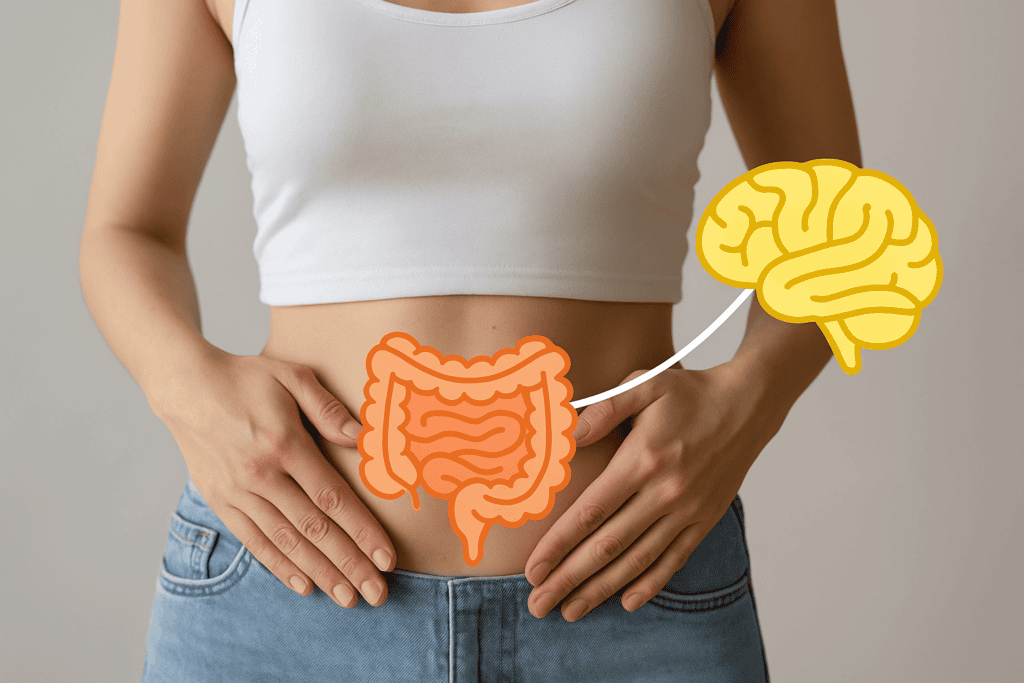
The connection between gut health and mental health
How the gut microbiome influences mood, stress, and cognition
After a week of poor sleep and takeaway meals, a project manager notices a familiar pattern: morning bloating, an anxious “wired” feeling, and slower recall during meetings. The symptoms feel psychological, yet the trigger often starts in the gut. When diet, stress, or antibiotics disrupt the gut microbiome, the balance of microbial metabolites shifts within days, and the brain receives different chemical and immune signals.
One mechanism involves short-chain fatty acids (SCFAs), produced when gut bacteria ferment dietary fibre. In a controlled feeding study, adults who ate a higher-fibre diet for 2 weeks increased SCFA production and showed measurable changes in brain activity linked to emotion regulation (University of Oxford researchers, published in Nature). SCFAs also support the intestinal barrier; when that barrier weakens, inflammatory molecules can enter circulation and amplify stress signalling. Stress can then reinforce the cycle. Acute psychological stress increases intestinal permeability and alters microbial composition, which correlates with higher inflammatory markers such as C-reactive protein (CRP).
In a large 2023 analysis, higher CRP associated with increased risk of depressive symptoms, even after adjusting for lifestyle factors (NIH-indexed evidence). This immune route helps explain why gut disruption can feel like irritability, low mood, or “brain fog” rather than a purely digestive issue. The microbiome also shapes cognition through neurotransmitter precursors. Certain gut bacteria influence tryptophan metabolism, steering it towards serotonin pathways or towards kynurenine compounds linked to stress and cognitive fatigue.
A 2024 review in Nature Reviews Gastroenterology & Hepatology reports that microbiome-driven shifts in tryptophan metabolites can change anxiety-like behaviour and memory performance in both human and animal studies. Applied broadly, the takeaway is practical: mood, stress tolerance, and concentration often respond to gut inputs. When clinicians evaluate persistent anxiety or low mood, they increasingly consider bowel habits, recent antibiotics, and fibre intake as modifiable factors that can change brain-relevant signalling within 2–4 weeks.
Key neurotransmitters and metabolites produced in the gut
Gut-derived signalling can be framed as host-made neurotransmitters versus microbe-made metabolites. Host signalling centres on enteroendocrine and enteric nerve activity, while microbial signalling reflects fermentation and amino-acid metabolism that can shift within 24–48 hours of dietary change. Option A includes serotonin, dopamine, and GABA made or regulated in the gut. Around 90% of serotonin is produced in the gastrointestinal tract, largely by enterochromaffin cells (NIH/NLM). Option B includes short-chain fatty acids (SCFAs) such as butyrate, acetate, and propionate, generated when microbes ferment fibre; SCFAs typically occur in the colon at millimolar concentrations, far exceeding most neurotransmitters.
| Compound group | Main gut source | Primary mental-health relevance |
|---|---|---|
| Serotonin | Enterochromaffin cells | Modulates gut motility and vagal signalling linked to mood regulation |
| GABA and dopamine | Enteric neurons and microbial interactions | Influences stress reactivity and reward-related signalling |
| SCFAs (for example, butyrate) | Microbial fibre fermentation | Supports barrier integrity and immune tone that can affect brain inflammation |
Diets that deliver 25–30 g of fibre per day tend to increase SCFA production, while irregular eating, alcohol excess, and repeated antibiotics can reduce it. When symptoms track meals, clinicians often review fibre intake and bowel patterns before attributing changes solely to psychological causes.
Inflammation, intestinal permeability, and their links to anxiety and depression
Chronic, low-grade inflammation and increased intestinal permeability (“leaky gut”) can amplify anxiety and depressive symptoms by raising immune signals that affect brain function. In a 2024 umbrella review, higher inflammatory markers such as C-reactive protein (CRP) and interleukin-6 (IL-6) showed consistent associations with depression severity (see Nature). Separately, a 2023 meta-analysis reported that people with major depressive disorder often show higher blood markers linked to permeability, including lipopolysaccharide (LPS)-related immune activity (see JAMA Network). The practical solution focuses on reducing inflammatory load while strengthening the gut barrier.
Aim for 25–30 g of fibre per day to increase short-chain fatty acids, which support tight junction integrity. Limit ultra-processed foods and alcohol for 14 consecutive days to reduce gut irritants and stabilise bowel habits. If symptoms flare with certain foods, use a 2-week symptom and stool log to identify patterns rather than removing multiple food groups at once. Implementation works best with measurable checks.
Request a GP review for CRP, ferritin, vitamin D, and coeliac screening when persistent low mood coexists with gastrointestinal symptoms; the NHS recommends medical assessment for ongoing mental health concerns. Over 4–8 weeks, many people report fewer bloating episodes, steadier energy, and reduced “wired” anxiety as sleep and diet consistency improve.

mental health
Dietary patterns that support both gut health and mental wellbeing
In a 2024 meta-analysis of randomised trials, probiotic supplementation reduced depressive symptoms with a small-to-moderate effect (standardised mean difference about -0.34) (PubMed). That signal aligns with dietary patterns that feed beneficial microbes, because fibre fermentation increases short-chain fatty acids that support the gut barrier and immune balance, while also influencing neurotransmitter pathways linked to stress response.
In practice, Mediterranean-style eating offers a useful template: a 2023 umbrella review linked higher adherence with lower depression risk (relative risk about 0.67) (BMJ). Aim for 25–30 g of fibre per day from legumes, oats, vegetables, and berries, and include fermented foods such as yoghurt or kefir several times weekly to maintain consistent microbial input. Keep free sugars below 10% of daily energy, as advised by the World Health Organization, since high-sugar patterns correlate with poorer microbial diversity and mood stability.
Evidence for probiotics, prebiotics, and fermented foods in mental health outcomes
A university student starts eating 150 g of live yoghurt at breakfast and adds a small serving of kimchi with dinner for four weeks. By the end of the month, sleep feels less fragmented and pre-exam rumination eases, even though coursework pressure stays high. The change does not prove cause and effect, yet it mirrors the type of outcome researchers test when they examine whether targeted probiotics, prebiotics, and fermented foods can shift mental health measures. Randomised trials provide the clearest signal for probiotics. A 2024 meta-analysis of controlled studies reported a small-to-moderate reduction in depressive symptoms with probiotic supplementation (standardised mean difference about -0.34) (PubMed).
Effects vary by strain and dose, but many trials use multi-strain Lactobacillus and Bifidobacterium blends at roughly 1–10 billion CFU per day for 4–12 weeks, with outcomes tracked using validated scales such as the PHQ-9 or BDI. Prebiotics work through a different lever: they feed beneficial microbes rather than adding new ones. Several trials use 5–10 g per day of inulin or fructo-oligosaccharides for 2–8 weeks, then measure changes in stress reactivity and mood. Results look more mixed than probiotic findings, which fits the biology: baseline diet, habitual fibre intake, and microbiome composition can change who responds and how quickly.
Fermented foods sit between the two approaches because they deliver microbial products and, in some cases, live cultures. In a 2021 randomised trial, a fermented-food diet increased microbiome diversity and reduced multiple inflammatory markers compared with a high-fibre diet over 10 weeks (Cell). Since inflammation and mood symptoms often move together, that pathway offers a plausible bridge from food choice to mental wellbeing, even when psychological outcomes are not the primary endpoint. For practical application, the evidence supports a measured approach: choose a probiotic with a stated strain and CFU count, trial it for 8–12 weeks, and pair it with consistent prebiotic fibre from foods such as oats, legumes, and onions. When using fermented foods, prioritise regular portions and tolerability, because benefits depend on sustained intake rather than occasional servings.
Lifestyle factors that affect the gut–brain connection (sleep, exercise, stress, medicines)
Option A treats gut–brain health as a nutrition-only issue, while Option B recognises lifestyle inputs that can shift microbial activity and stress signalling within days. Sleep, movement, stress load, and medicines each change gut motility, immune tone, and metabolite production, which can alter mood and cognitive performance even when diet stays stable.
| Factor | Option A: Disruptive pattern | Option B: Supportive pattern |
|---|---|---|
| Sleep | Short sleep (≤6 hours) for 5–7 nights | 7–9 hours nightly for most adults (CDC) |
| Exercise | Sedentary week (0–30 minutes moderate activity) | 150 minutes/week moderate activity (WHO) |
| Stress | Persistent high stress with minimal recovery | Planned recovery blocks (10–20 minutes/day) and consistent routines |
| Medicines | Repeated antibiotic courses without review | Targeted use with clinician review; avoid unnecessary courses (NHS) |
Key differences centre on predictability and cumulative load. Irregular sleep and chronic stress raise cortisol and can speed or slow gut transit, which changes fermentation time and symptom patterns. Low activity reduces mechanical stimulation of the bowel, while meeting the 150-minute guideline often improves constipation and stress reactivity. Medicines matter because antibiotics can reduce microbial diversity within 7–14 days, and recovery may take weeks. Practical implications include treating flare-ups as multi-factor events. If bloating and anxiety rise together, tracking sleep hours, weekly activity minutes, and recent prescriptions often identifies the dominant driver faster than changing foods repeatedly.
When to seek clinical support and which tests or treatments clinicians may consider
Persistent gut symptoms alongside mood change warrant clinical review because overlap can mask treatable disease. Seek support if abdominal pain, diarrhoea, or constipation persists for more than 4 weeks, or if anxiety or low mood impairs work or sleep for at least 2 weeks. Arrange urgent assessment for blood in stool, unexplained weight loss of 5% or more in 6–12 months, fever, or nocturnal symptoms. A clinician will usually start by excluding common medical drivers before attributing symptoms to stress alone. Typical investigations include a full blood count and ferritin for anaemia, coeliac serology (tTG-IgA with total IgA), and inflammatory markers such as CRP.
For bowel inflammation, clinicians often request faecal calprotectin, which helps distinguish inflammatory bowel disease from irritable bowel syndrome. Where infection or antibiotic exposure exists, stool testing may be appropriate. Guidance aligns with NICE pathways for bowel symptoms and mental health assessment. Treatment usually combines symptom control with mental health care. Implementation often includes a structured diet trial (for example, a time-limited low FODMAP plan under a dietitian), targeted medicines for bowel habit, and psychological therapies such as CBT or gut-directed hypnotherapy. Clinicians may also consider antidepressants for moderate-to-severe symptoms, monitoring gastrointestinal effects. With coordinated care, many people report fewer flare-ups, improved sleep, and better day-to-day functioning within 8–12 weeks.
Frequently Asked Questions
How does the gut–brain axis transmit signals between the digestive system and the brain?
The gut–brain axis transmits signals through three main routes. The vagus nerve carries rapid electrical messages between the intestines and brain. The endocrine system sends hormones, including cortisol, via the bloodstream. The immune system uses cytokines to signal inflammation. Gut microbes also produce neurotransmitter precursors and short-chain fatty acids.
Which gut microbiome changes are most strongly associated with anxiety and depression symptoms?
Studies most often link anxiety and depression symptoms with lower gut microbial diversity, reduced butyrate-producing bacteria (for example, Faecalibacterium and Roseburia), and higher levels of pro-inflammatory taxa (often Enterobacteriaceae). Research also reports altered Bifidobacterium and Lactobacillus abundance and reduced short-chain fatty acid production.
Can probiotics, prebiotics, or fermented foods measurably improve mood or stress levels?
Yes, but effects are modest and vary by strain and person. Meta-analyses up to 2023 report small reductions in depressive symptoms with probiotics (standardised mean difference about -0.2 to -0.3), with clearer benefits in people with existing symptoms. Trials also show lower perceived stress and small cortisol reductions after 4–12 weeks. Prebiotics and fermented foods show mixed, less consistent results.
How do chronic inflammation and intestinal permeability affect neurotransmitters such as serotonin and GABA?
Chronic inflammation raises cytokines that can reduce tryptophan availability for serotonin and increase glutamate signalling. In a 2024 meta-analysis, people with depression showed higher CRP by about 1.5 mg/L than controls. Intestinal permeability can allow lipopolysaccharide into blood, activating immune pathways that lower GABAergic tone and disrupt serotonin synthesis.
Which clinical tests or assessments can help evaluate gut health when investigating mental health symptoms?
Clinicians may use a full blood count, CRP, and coeliac serology to screen inflammation and malabsorption. Stool tests can measure faecal calprotectin (often <50 µg/g), pathogens, and pancreatic elastase (typically >200 µg/g). Breath tests assess lactose intolerance and SIBO. Validated tools include the Bristol Stool Chart and IBS symptom questionnaires.
Madrid offers some of Europe’s most rewarding tapas culture, where small plates pair with local wines and lively conversation. From traditional bars serving jamón and tortilla to modern kitchens refining classic flavours, the city caters to every taste and budget. This guide highlights tapas bars worth seeking out, with a focus on quality, atmosphere, and regional specialities. Expect practical suggestions for where to go, what to order, and how to enjoy tapas like a local.
Key takeaways
- Madrid tapas culture rewards bar-hopping, with small plates designed for sharing.
- Classic choices include patatas bravas, croquetas, tortilla, and jamón ibérico.
- La Latina and Malasaña stand out for dense clusters of lively tapas bars.
- Many venues specialise, so ordering the house signature dish improves results.
- Peak evening hours fill quickly, so arriving early helps secure a table.
- Pair tapas with caña, vermouth, or local wine for an authentic experience.
Classic tapas bars in Madrid for traditional specialities
Madrid rewards visitors who seek out classic tapas bars that still serve traditional specialities with care and consistency. These venues often focus on a short list of dishes, prepared quickly and eaten standing at the bar. Expect robust flavours, simple presentation, and a strong link to local drinking culture. Many bars also keep prices modest, which makes it easy to try several dishes in one outing.
For a benchmark bocadillo de calamares (fried squid sandwich), head to El Brillante, close to Atocha. Order it with a caña (small draught beer) and a squeeze of lemon for a straightforward, satisfying combination. Another Madrid staple is the tortilla española. Casa Dani, in Mercado de la Paz, has a strong reputation for a soft-centred tortilla that suits a quick tapa or a fuller snack.
If you prefer seafood, La Revuelta is known for gambas a la plancha (grilled prawns) served hot and simply seasoned. For a more historic setting, Sobrino de Botín offers classic Castilian cooking alongside tapas-style options, with a long-standing place in Madrid’s dining history. Arrive early if you want a seat, as popular bars fill quickly.
- What to order: tortilla española, croquetas, callos a la madrileña (tripe stew), gambas a la plancha, bocadillo de calamares.
- How to eat: share plates, keep orders small, and repeat what you enjoy.
- When to go: lunchtime and early evening often feel most local; peak dinner hours can bring queues.
- What to drink: caña, vermut de grifo (draught vermouth), or a simple tinto (red wine).
Choose one neighbourhood and move between two or three bars rather than committing to a single long meal. This approach matches how many Madrileños treat tapas: a social route, shaped by appetite and conversation. Keep some cash on hand, since smaller venues sometimes prefer it for quick rounds.

Tapas bars in Madrid you should try
Modern tapas bars in Madrid for creative small plates
Madrid also excels at modern tapas, where chefs treat small plates as a space for experimentation. Many contemporary bars keep the sociable rhythm of ordering at the counter, yet present dishes with sharper technique, seasonal produce, and global touches. Expect lighter sauces, careful plating, and a stronger focus on texture, from crisp tempura to slow-cooked meats finished on the grill. Some venues also offer smaller pours of wine or vermouth, which makes it easier to match flavours across several plates.
For a polished introduction, Salmon Guru pairs inventive bites with a serious cocktail programme, which suits an evening that moves between food and drinks. Diners who prefer a chef-led menu can book StreetXO, where bold flavours and open-kitchen energy turn tapas into a more theatrical meal. Another reliable choice, Sala de Despiece, builds plates around market ingredients and often finishes dishes tableside, which keeps the experience lively without feeling formal.
When choosing where to go, aim for early evenings to avoid queues, and order progressively. A mix of one seafood plate, one vegetable dish, and one richer option usually gives the clearest sense of a kitchen’s style. Ask staff for a house speciality, since many kitchens rotate dishes to reflect the day’s best produce.
Neighbourhood tapas routes in Madrid: La Latina, Malasaña and Chamberí
Madrid suits travellers who prefer to eat by area rather than by venue. A neighbourhood route keeps walking time short, helps you pace drinks and food, and lets you compare styles from bar to bar. La Latina, Malasaña and Chamberí each offer a distinct rhythm, from late-night plazas to quieter streets with a local feel.
La Latina: plazas, vermouth and a lively crawl
La Latina works well for an early evening start, especially around Plaza de la Cebada and the streets that lead towards Cava Baja. Begin with a vermouth and a small plate, then move on before queues build. Sundays bring a surge of visitors due to El Rastro, so aim for a weekday if you want more space at the bar. Keep your route compact and choose places that serve quickly, as the area rewards short stops rather than long sittings.
Malasaña: informal bars and late-night energy
Malasaña suits a flexible route, since many bars sit close together around Plaza del Dos de Mayo. The atmosphere tends to be casual, with a younger crowd and later opening hours. Plan to share a few plates and move on, as tables fill fast at peak times. When you order, ask what the kitchen can produce quickly, then add one more dish only if the bar stays calm. That approach keeps the pace sociable and avoids long waits.
Chamberí: a calmer route with a local feel
Chamberí often feels less touristic, which makes it ideal for a slower crawl. Streets near Trafalgar and Alonso Martínez offer plenty of options without the same density as the centre. Choose one bar for a drink and a snack, then walk ten minutes to the next. Since the area attracts residents, you may find more seated service and a steadier pace, especially midweek.
Practical route tips
- Keep it simple: two to three stops per neighbourhood usually feels balanced.
- Order strategically: start with lighter plates, then move towards richer dishes as you go.
- Mind the timing: many kitchens get busy after 21:00, while earlier visits often bring faster service.
- Use public transport: check routes on Metro de Madrid to link neighbourhoods without long walks.
A good tapas route prioritises variety and momentum: one drink, one or two plates, then on to the next bar.
How to choose a tapas bar in Madrid: timing, ordering and etiquette
Timing shapes the experience in Madrid. Many bars fill quickly from about 13:30 to 15:30 and again from 20:30 onwards, so arrive slightly earlier if you want space at the counter and faster service. A short crawl often works best: choose one or two dishes per stop, then move on before fatigue dulls your appetite.
Order with purpose and keep it simple. Start with a drink, then add a small plate or two; repeat as you gauge hunger and pace. Ask what looks best that day, since many kitchens rely on market availability. When a bar offers a house speciality, prioritise it over a long list, as that focus usually signals consistency. If you want a full meal, check whether the venue serves raciones (larger sharing plates) as well as tapas.
Etiquette remains relaxed, yet a few habits help. Stand where staff can see you, keep your order concise, and pay attention to how the bar handles payment, since some expect you to settle each round while others keep a running tab. Respect the flow at busy counters, and keep voices measured in residential streets. For practical guidance on local customs, consult Visit Madrid.
Frequently Asked Questions
Which neighbourhoods in Madrid offer the best selection of traditional tapas bars?
La Latina and El Rastro offer classic taverns and busy tapas streets. Malasaña combines traditional bars with a lively evening crowd. Lavapiés provides long-standing, low-key spots alongside varied small plates. Chamberí and Salamanca feature more refined, traditional venues, often with strong vermouth and wine lists. Centro, near Sol and Plaza Mayor, concentrates historic bars, though prices can be higher.
What tapas dishes should visitors prioritise when trying classic Madrid specialities?
Prioritise patatas bravas, tortilla española, callos a la madrileña (tripe stew), bocadillo de calamares (fried squid sandwich), croquetas, and huevos rotos (broken eggs with potatoes). Choose jamón ibérico and queso manchego for simple, classic flavours. Finish with churros con chocolate for a traditional sweet option.
When is the best time to visit tapas bars in Madrid to avoid queues and secure a table?
Visit tapas bars in Madrid early: arrive at 13:00–13:30 for lunch or 19:30–20:00 for dinner. Queues tend to peak from 14:30–16:00 and 21:00–23:00, especially on Fridays and Saturdays. Weekdays usually feel calmer. If you plan to go late, choose bars with standing space.
How do ordering customs and pricing work in Madrid tapas bars, including free tapas policies?
Order drinks at the bar; staff often bring tapas or you choose from a menu. Prices may list tapas per portion, per unit, or per ración (sharing plate). Ask what size you will receive. Some bars include a free tapa with each drink, but quality and choice vary, and premium items usually cost extra.
What etiquette should diners follow when bar-hopping for tapas in Madrid?
Order at the bar, keep your voice low, and make space for others. Take one or two tapas and a drink, then move on rather than lingering. Pay as you go unless the bar runs a tab. Do not reserve stools with bags. Leave a small tip only for exceptional service.
Hispanic food and culture reflect a rich mix of Indigenous, European, African, and Asian influences across Spain, Latin America, and the Caribbean. Regional climates, local crops, and migration patterns shape distinct cuisines, from maize-based staples to seafood, stews, and grilled meats. Shared traditions also appear through family meals, street markets, and festive dishes prepared for religious and community celebrations. Together, recipes, language, music, and hospitality express identity and continuity across generations.
Key takeaways
- Hispanic cuisine reflects Indigenous, Spanish and African influences across many regions.
- Staple ingredients such as maize, beans and chillies shape everyday meals and traditions.
- Regional dishes vary widely, from Mexican mole to Caribbean rice and plantain dishes.
- Family gatherings and community celebrations often centre on shared meals and recipes.
- Food traditions connect to religious festivals, including Día de los Muertos and Christmas.
- Migration has spread Hispanic flavours globally, while preserving local cooking methods.
Defining Hispanic Cuisine: Regions, Ingredients, and Shared Traditions
Hispanic cuisine describes the food traditions of Spanish-speaking communities, especially across Latin America, the Caribbean, and parts of the United States. Regional geography shapes each table: coastal areas favour seafood and citrus, highlands rely on maize, beans, and potatoes, while tropical zones use plantain, cassava, and fresh fruit. Despite this range, shared ingredients create continuity across borders and generations. Maize forms the base for tortillas, tamales, and arepas, while beans provide steady protein. Chillies add heat and aroma, and cooks balance them with herbs, onions, garlic, and tomatoes. Many dishes also feature slow cooking, which deepens flavour and brings families together at mealtimes.
History also unites these cuisines. Indigenous cooking methods, such as nixtamalisation (treating maize with an alkaline solution to improve nutrition and flavour), meet Spanish influences that introduced wheat, rice, and many livestock foods. Later migrations added new seasonings and techniques, shaping distinctive local staples and sauces. Across regions, family meals, street food, and festival dishes carry cultural meaning, from communal stews to celebratory breads. For clear definitions of regional terms and culinary history, consult Encyclopaedia Britannica.

Hispanic food and culture
Pre-Columbian Foundations: Maize, Beans, Chillies, and Indigenous Techniques
Long before Spanish contact, Indigenous peoples across Mesoamerica and the Andes built complex food systems around maize, beans, and chillies. Many communities treated maize as a staple and a cultural symbol, shaping daily meals and ceremonial foods. Cooks improved maize nutrition through nixtamalisation, a process that soaks and cooks kernels in an alkaline solution, often made with lime (calcium hydroxide). This method softens the grain, enhances flavour, and increases the availability of key nutrients, which supports diets that rely heavily on maize.
Beans supplied protein and fibre, while chillies added heat, aroma, and natural preservation. Indigenous techniques also defined texture and taste. Stone grinding on a metate produced fine doughs and pastes, while earthenware cooking controlled heat for slow simmering. Communities used steaming and pit-roasting to develop deep flavours without heavy fats, and they paired ingredients with herbs, seeds, and wild greens to balance richness and freshness.
These foundations still shape Hispanic cooking across many regions, not as relics, but as living practices that continue to guide staple preparations and everyday seasoning.
Colonial and Migratory Influences: Spain, Africa, and Later Global Exchanges
Spanish colonisation reshaped Hispanic cuisines through new ingredients, livestock, and cooking methods. Wheat, rice, sugarcane, citrus, onions, garlic, and herbs such as coriander entered existing foodways, while cattle, pigs, sheep, and goats expanded access to meat, dairy, and animal fats. Cooks combined these with Indigenous staples to create enduring pairings, including maize with pork, chillies with garlic, and beans with rice. Convents, missions, and urban markets also standardised recipes and spread them across regions.
African peoples, forced into the Americas through the transatlantic slave trade, contributed essential skills and flavours, especially in the Caribbean and coastal Latin America. Many communities adapted familiar techniques to local crops, strengthening traditions of frying, stewing, and seasoning with aromatic blends. Ingredients such as okra and certain rice-growing practices also travelled with African knowledge, shaping dishes that remain central to local identity.
Later migrations and trade routes introduced further change. Asian exchanges, linked to the Manila galleons, helped popularise rice and brought spices and fruits that suited tropical climates. Nineteenth- and twentieth-century arrivals from Italy, the Middle East, and other parts of Europe influenced baking, cured meats, and street foods in countries such as Argentina, Uruguay, Mexico, and Cuba. These influences did not replace older traditions; instead, they created layered cuisines that reflect history, movement, and adaptation.
Hispanic food culture often preserves memory through taste: each new ingredient tends to enter the kitchen by blending with established techniques rather than erasing them.
- Spain: wheat breads, livestock, citrus, and sugar production
- Africa: coastal stews, frying traditions, and rice expertise
- Global exchanges: Asian trade goods and later immigrant food customs
Food as Cultural Expression: Family Meals, Faith, and Community Celebrations
Food often communicates identity more clearly than words. Across many Hispanic communities, family meals structure the day and reinforce respect for elders, hospitality, and shared responsibility. Home cooking also preserves memory: a familiar stew, a hand-pressed tortilla, or a slow-cooked sauce can carry regional accents and family histories across generations and borders.
Faith shapes what people cook and when people gather. Lenten meals may favour fish, pulses, and vegetable dishes, while Christmas tables often feature foods prepared in advance and shared widely. Many households also prepare offerings for remembrance rituals, including pan de muerto during Día de los Muertos, where bread and favourite dishes honour relatives and invite storytelling. For background on this tradition, see Instituto Nacional de Antropología e Historia (INAH).
Community celebrations extend the same values to a wider circle. Neighbours contribute ingredients, labour, and time for festivals, weddings, and patron-saint days, turning cooking into collective work. Large-format dishes suit these occasions because people can serve them easily and eat them together. Shared tables also create social ties, since conversation, music, and food operate as one expression of belonging.

Hispanic culture
Contemporary Hispanic Food Culture: Diaspora, Restaurants, and Culinary Innovation
Migration has reshaped Hispanic food culture, especially in major cities where diaspora communities sustain tradition while adapting to new ingredients, budgets, and tastes. Restaurants often act as cultural anchors, offering familiar dishes alongside regional specialities that may feel rare outside their places of origin. At the same time, chefs and home cooks drive culinary innovation through cross-cultural menus, modern plating, and new formats such as food trucks and pop-ups, while still respecting core techniques such as slow braising, fresh salsas, and masa-based cookery.
Social media and streaming platforms also influence what people cook and order, accelerating the spread of dishes and shaping expectations of “authenticity”. Institutions such as Smithsonian Magazine regularly document foodways and migration, helping audiences understand how identity travels through recipes. This contemporary landscape shows a living cuisine: rooted in memory, yet open to change.
Frequently Asked Questions
How has Hispanic history shaped traditional dishes across different regions?
Hispanic history shaped regional dishes through Indigenous staples, Spanish ingredients and methods, and later African and immigrant influences. Maize, beans, and chillies remain central in Mexico and Central America, while Spanish livestock and wheat spread widely. Caribbean cooking reflects African techniques and seasonings. Andean regions feature potatoes and quinoa, adapted with European meats, dairy, and stews.
What key ingredients define Hispanic cooking, and how do they vary by country?
Hispanic cooking often centres on maize (corn), beans, chillies, rice, tomatoes, garlic, onions, herbs, and citrus. Mexico features maize, chillies, and cacao; the Caribbean uses plantain, coconut, and seafood; Central America highlights beans and maize; the Andes rely on potatoes, quinoa, and ají peppers; Spain favours olive oil, paprika, and saffron.
Which cultural celebrations most strongly influence Hispanic food traditions and seasonal recipes?
Key celebrations include Día de los Muertos, Christmas and Las Posadas, Semana Santa (Holy Week), Carnaval, and regional patron saint festivals. These events shape seasonal dishes such as pan de muerto, tamales, bacalao, buñuelos, capirotada, and festive stews. Harvest and independence celebrations also drive recipes that feature maize, chillies, and local produce.
How do Indigenous, African, and European influences appear in Hispanic cuisine and dining customs?
Indigenous traditions contribute maize, beans, chillies, cacao, and stone-ground methods such as nixtamalisation. African heritage appears in plantains, okra, yams, rice dishes, and deep-frying, plus communal, music-led meals. European influence shows in wheat, dairy, pork, olive oil, wine, and stews, as well as table settings, courses, and festive banquets.
What etiquette and table customs are common in Hispanic households during shared meals?
Common customs include greeting everyone, waiting for the host to invite people to sit, and starting to eat after elders or the host. Guests often accept at least a small portion. Keep hands visible, use cutlery where provided, and avoid rushing. Conversation stays warm and respectful, with phones kept away from the table.
Busy schedules often leave little space for calm, yet mindfulness can fit into ordinary moments. Practical techniques focus on brief, repeatable actions that steady attention and reduce stress without requiring extra time. This guide introduces simple methods you can use at work, at home, or while travelling, using everyday cues such as breathing, posture, and sound. With consistent practice, even short pauses can support clearer thinking and a more balanced mood.
Key takeaways
- Use one-minute breathing pauses between tasks to reset attention and reduce stress.
- Practise mindful commuting by noticing sounds, sights, and body posture without judgement.
- Try a short body scan at your desk to release tension in shoulders and jaw.
- Use single-tasking for ten minutes, then take a brief mindful break.
- Eat one snack mindfully, focusing on texture, taste, and pace of chewing.
- Set phone reminders as cues for three slow breaths during busy periods.
What mindfulness means for busy schedules
Mindfulness means paying steady attention to the present moment, with an attitude of curiosity rather than judgement. For busy schedules, that definition matters because it shifts the goal from long, silent sessions to brief, repeatable moments of awareness. A full timetable does not prevent mindfulness; instead, it shapes how mindfulness fits into the day.
Short practices work best when they attach to existing routines. A person can notice the breath while waiting for a kettle to boil, feel both feet on the floor before a meeting, or take three slow breaths after closing a laptop. These pauses train attention and reduce automatic reactions, which often drive stress and rushed decisions.
Mindfulness also supports better task switching. When attention returns to one clear action, interruptions feel less disruptive and work quality often improves. Evidence-based guidance from the NHS describes mindfulness as a way to become more aware of thoughts and feelings, which helps a person respond with intention. Consistency matters more than duration, so a realistic aim involves small, frequent check-ins that suit real life.

Practical mindfulness techniques for busy people
Two-minute grounding techniques between tasks
Between tasks, attention often stays with the previous activity or rushes ahead to the next. A two-minute grounding practice resets focus by anchoring awareness in the body and immediate surroundings. Use a timer if helpful, then return to work without analysing the exercise. If thoughts intrude, label them as “thinking” and bring attention back to sensation.
- 5–4–3–2–1 sensory check: Name five things you can see, four you can feel, three you can hear, two you can smell, and one you can taste. Keep the pace steady and factual.
- Box breathing (4–4–4–4): Inhale through the nose for four counts, hold for four, exhale for four, then hold for four. Repeat for four cycles. Stop if you feel light-headed.
- Feet-and-seat anchor: Press both feet into the floor and notice contact points. Shift attention to where your body meets the chair. Maintain normal breathing while you track sensations for ten slow breaths.
- Hand temperature reset: Rub your palms together for five seconds, then rest hands on your thighs. Notice warmth, tingling, or pressure until the sensations fade.
For best results, choose one technique and use it consistently at the same transition points, such as after sending an email, before a meeting, or when switching tabs. Consistency trains the brain to associate the cue with a brief pause, which reduces mental carry-over from the previous task. Keep the practice brief enough that you will not avoid it on busy days.
If you want guided options, NHS mindfulness guidance offers clear, practical instructions. Keep the aim simple: notice what is present, then move on. A short reset done several times a day often supports steadier attention than an occasional long session. Track what works with a simple note, such as “after calls” or “before writing”.
Mindful breathing methods for meetings and commuting
Meetings and commutes often trigger shallow breathing, which can raise tension and reduce clarity. A simple reset starts with posture. Place both feet on the floor in a meeting, or sit upright on public transport. Soften the jaw, then breathe in through the nose for a count of four and out for a count of six. Keep the exhale longer than the inhale to support a calmer nervous system. Repeat for five cycles while keeping attention on the air moving at the nostrils.
When speaking or listening, use “micro-breaths” that no one notices. Pause for one quiet breath before responding, then let the next sentence begin on a steady exhale. This approach reduces rushed speech and helps attention stay with the conversation. During commuting, pair breathing with a neutral cue, such as the moment the doors close or the car stops at lights. Each cue becomes a reminder to return to one full breath.
If anxiety rises, try box breathing: inhale for four, hold for four, exhale for four, hold for four. The NHS breathing exercises guidance offers clear, safe options. Avoid breath holds if dizziness occurs, and keep the practice gentle.
Using routine activities as mindfulness cues (eating, walking, washing)
Routine activities offer reliable prompts for mindfulness because they already happen, even on the busiest days. Instead of adding another task, use a familiar action as a cue to return attention to direct experience. Aim for brief check-ins that feel practical, then repeat them often enough to become automatic.
- Eating: Before the first bite, pause for one breath and notice the smell and colour of the food. Take two slow bites while paying attention to texture, temperature, and taste. When the mind shifts to emails or plans, label the distraction as “thinking” and return to chewing. Stop after a few mouthfuls if needed; consistency matters more than duration.
- Walking: Use the first ten steps as an anchor. Feel the heel touch down, the weight shift, and the toes lift. Let the arms swing naturally and notice the air on the face. If walking outdoors, identify three sounds without searching for them. When walking indoors, use doorways as reminders to relax the shoulders and unclench the jaw.
- Washing (hands, dishes, showering): Turn attention to water pressure, warmth, and the movement of the hands. Notice the scent of soap and the sound of running water. If the mind rushes ahead, return to one clear sensation, such as the feeling of water on the fingertips.
Link each cue to a simple phrase, such as “here, now”, said silently once. Keep the practice gentle rather than forced; strain often increases mental noise. For a clear definition and practical guidance, see the NHS guidance on mindfulness. Over time, these small returns to the present can reduce reactivity and support steadier focus between tasks.
Maintaining consistency with realistic goals and simple tracking
Consistency comes from setting goals that match real constraints. Choose one practice you can repeat on most days, such as three calm breaths before opening email or a 30-second body scan after standing up. Keep the target small enough that missing a day does not derail momentum, then increase duration only after the habit feels stable.
Simple tracking helps you notice patterns without turning mindfulness into another performance metric. Use a single tick on a calendar, a brief note in a phone reminder, or a one-line entry in a journal. The aim is visibility, not perfection. If you prefer a structured option, NHS guidance on mindfulness supports short, regular practice. Review your record once a week, identify the easiest cue to keep, and adjust the goal to fit the next seven days.
Frequently Asked Questions
What is mindfulness, and how does it differ from meditation?
Mindfulness means paying attention to the present moment with openness and without judgement. Meditation is a structured practice that trains attention, often by focusing on the breath, sounds, or body sensations. Mindfulness can happen during everyday activities, while meditation usually involves setting aside time to practise.
Which mindfulness techniques work best when you only have one to five minutes?
For one to five minutes, use box breathing (inhale, hold, exhale, hold for four counts), a 5-4-3-2-1 sensory check, or a one-minute body scan from head to toes. Alternatively, try mindful sipping of water or a brief walking focus on foot contact and breath. Choose one method and repeat daily.
How can you practise mindfulness during a busy commute without closing your eyes?
You can practise mindfulness on a commute by keeping your eyes open and placing attention on one anchor:
- Feel your feet on the floor and your hands on your bag or rail.
- Notice three sounds and three sights without judging them.
- Breathe naturally and count five breaths, then restart.
- Relax your jaw and shoulders at each stop.
What is a body scan, and how can you do a short version at your desk?
A body scan is a mindfulness exercise that guides attention through the body to notice sensations without judgement. For a short desk version:
- Sit upright, feet flat, hands resting.
- Breathe slowly for three breaths.
- Scan from head to toes, relaxing each area.
- Notice tension, then soften it on the out-breath.
How can mindful breathing help reduce stress during a hectic workday?
Mindful breathing reduces stress by slowing the breath and signalling safety to the nervous system. This can lower heart rate, ease muscle tension, and steady attention during pressure. Try breathing in for four counts, out for six, for one to three minutes. Use it before meetings, after emails, or between tasks.
What are practical ways to use mindful listening in meetings and conversations?
Use mindful listening by removing distractions, sitting upright, and taking one slow breath before speaking. Maintain soft eye contact and notice tone, pace, and key words. Do not plan a reply while others speak. Pause briefly, then summarise and ask one clarifying question. In meetings, note key points and wait your turn.
How can you build a consistent mindfulness habit when your schedule changes often?
Anchor mindfulness to fixed cues, not fixed times. Use brief practices (one to three minutes) after waking, before meals, or when opening a laptop. Keep a minimum standard you can meet on busy days, then extend when time allows. Track completion, prepare a simple fallback, and resume at the next cue after disruptions.
What common mistakes prevent mindfulness from working, and how can you avoid them?
Mindfulness often fails when people expect instant calm, practise only when stressed, multitask, judge thoughts, or aim for long sessions. Avoid these errors by setting realistic expectations, practising briefly each day, focusing on one task, noticing thoughts without criticism, and using simple anchors such as breathing or body sensations.